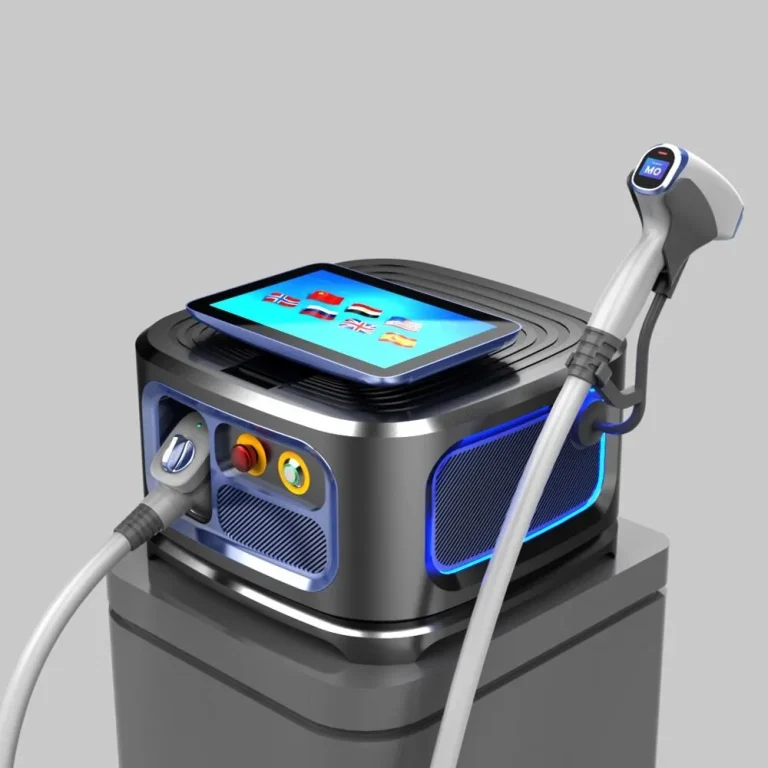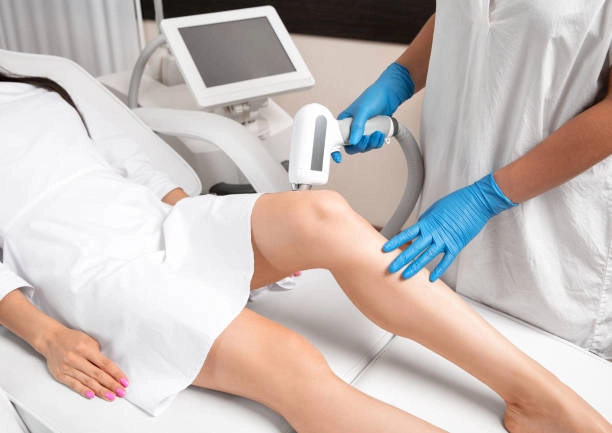

Selecting a professional beauty device can feel much like picking a vehicle for an extended trip. Some vehicles act as upscale sedans—they glide along smoothly, deliver polished performance, and stay finely adjusted for ease on smooth highways. In contrast, others function as versatile SUVs—they get built to adjust easily, haul extra equipment, and switch paths whenever the ground shifts. As you weigh Alma Pixel CO₂ against DEPPLUS MQLASER CO₂, you go beyond just examining the equipment. You end up choosing the path that fits your business approach, your market rhythm, and your plans for steady expansion over time.
Design Philosophy: Comfort-Driven Precision vs Flexible System Architecture
Before you dive into the details of parameters, consider how each product gets crafted at its heart. That foundation shapes everything that follows.
Pixel-Based Energy Refinement
Alma Pixel CO₂ has earned a solid reputation for its Pixel Technology. This approach stems from a mindset that puts ease and quick healing at the forefront. The system does not depend solely on rapid scanning. Instead, it employs DOE diffraction optics to split one beam into several tiny beams all at the same time—often arranged in 7×7 or 9×9 pixel patterns.
Such a technique provides two straightforward benefits for routine use. First, it spreads energy out in a very uniform way. Second, it leaves more untouched areas, like small bridges, between the energy spots. This setup cuts down noticeable healing periods by 30–50% when compared to older point-by-point methods. At the same time, it keeps skin reactions gentle and reliable. The main goal remains targeted surface results paired with strong user comfort, rather than pushing for the deepest possible reach.
Digital Scanning with Expandable Control
DEPPLUS MQLASER CO₂ follows a distinct path. It skips optical beam splitting and turns to high-speed digital galvanometer scanning along with accurate control units. The energy spots get positioned quickly and uniformly via software-guided movement, not through rigid optical splits.
For someone buying this as a business tool, that setup delivers real adaptability. You gain the ability to tweak power settings, pulse durations, distances between points, and scan thickness. Moreover, the identical system handles various setups. Plus, you can fine-tune its capabilities to suit shifting market needs without swapping out the core framework. This kind of build puts versatility ahead of set refinement levels. As a result, it influences directly how you set prices, develop your brand, and grow your services in practical terms.
Energy Output Strategy: Fixed Optimization vs Scalable Options
With the core design ideas in place, the way energy gets handled turns into the following key element to evaluate. It reveals how each device performs under real conditions and supports your goals.
Alma Pixel CO₂: Optimized Within Defined Ranges
Alma Pixel CO₂ units generally run in 30W and 60W setups. They pair these with RF-excited CO₂ sources, which stand out for their reliability and extended lifespan. The available modes—such as continuous, pulse, repeat, and super pulse—get tailored to function smoothly inside these set limits.
What does this offer to you in practice? It ensures steady outcomes that you can count on. It also cuts down on the hassle of initial adjustments. On top of that, results stay uniform no matter who operates the device or where it gets used. That consistency builds trust over time. However, once you pick a specific setup, your options for product placement become quite locked in, limiting shifts as needs evolve.
DEPPLUS MQLASER CO₂: Power as a Market Tool
DEPPLUS MQLASER CO₂ pushes the boundaries wider by offering several power choices that go beyond standard mid-range levels. When you add in tight pulse management and swift scanning, it opens up ways for you to create varied product lines. You can address both beginner and high-end segments using just one base system. Furthermore, you adjust your market stance as regional preferences fluctuate. In this context, power serves not merely as a tech detail. Rather, it acts as a practical tool for business decisions, helping you navigate competitive landscapes with greater control.
The following is a comparison table of core parameters between the two parties.
| Parameter | Alma Pixel CO₂ | DEPPLUS MQLASER CO₂ |
|---|---|---|
| Laser Type | RF-excited CO₂ laser source, optimized for stability and long service life | RF-excited CO₂ laser source with modular architecture, designed for scalable configurations |
| Wavelength | 10,600 nm | 10,600 nm |
| Power Options | 30 W / 60 W systems | 30 W / 60 W / 80 W / 100 W options available |
| Energy per Pixel | Up to 3,840 mJ/pixel (30 W system)Up to 7,680 mJ/pixel (60 W system) | Adjustable per configuration; supports wider output range due to higher maximum power options |
| CW Mode (Continuous Wave) | Available; mainly used for fine, continuous energy output | Available; adjustable output suited for different operating preferences |
| Pulse Mode (Single Pulse) | Available; precise single-pulse energy release | Available; pulse width and spacing can be adjusted via software |
| Repeat Mode | Available; repeated pulse output for consistent energy delivery | Available; repetition rate adjustable to match different market needs |
| Super Pulse Mode | Available; high peak energy released in very short time to minimize surface heat accumulation | Available; narrow pulse design combined with fast scanning for low perceived discomfort |
Operational Efficiency and Large-Area Handling
Alma Pixel CO₂ brings forward an innovative way to boost efficiency: the iPixel rolling handpiece. This feature stands out in how it streamlines tasks, especially for broader treatment zones.
Rolling Pixel Delivery
Rather than applying energy in fixed stamps or line-by-line patterns, the handpiece moves in a rolling motion over the skin. With each turn, it activates seven uniformly placed pixel points. This allows for quicker coverage of bigger zones, like entire facial areas or larger body parts. Operators find their tasks flow more naturally as a result. For clients, it means less downtime and a sense of reduced unease during procedures. Overall, it shows how Alma emphasizes ease for those handling the device and effective surface coverage in everyday scenarios, making sessions more manageable and appealing.
Scanning Speed as an Efficiency Driver
DEPPLUS MQLASER CO₂ tackles efficiency through another lens. Its strength rests in scanning speed combined with software accuracy. Details from the shared technical files show that the digital scanner works multiple times quicker than typical setups. Yet, it still ensures points spread out evenly across the area.
Without needing a custom handpiece, this method drives productivity by focusing on quicker spot application, reduced overall procedure lengths, and user-friendly pattern choices through software. Such elements keep the hardware straightforward while preserving a high degree of flexibility. In busy clinics, this translates to handling more appointments per day, which supports better resource use and client satisfaction without added complexity.
Customization and OEM Value: Where Business Models Diverge

Here, the contrasts show up most clearly for buyers on the business side. These differences can shape how you build and sustain your operations in the long run.
Limited Customization Path
Alma Pixel CO₂ comes as a fully assembled product. Its outer look, user interface flow, and overall behavior stick to a consistent worldwide guideline. While this guards against inconsistencies in branding, it offers little space for personal labeling or major tweaks. If your plan involves syncing with one established global name, then this setup works well. It provides a sense of security and alignment with proven standards, though it may restrict unique market adaptations.
DEPPLUS MQLASER CO₂ as an OEM Platform
DEPPLUS MQLASER CO₂ gets designed specifically for OEM and ODM partnerships. Instead of sticking to preset options, the maker enables a range of adjustments. These include software interface tailoring, changes to the outer shell and casing, tweaks to key technical specs, free logo creation, and even supplied promotional resources.
Supporting all this is a robust inner framework. The firm boasts an experienced research and development group. They channel about 15% of yearly earnings back into fresh product creation. This commitment leads to rapid updates and smooth handling of custom requests. Plus, global approvals like CE and ISO standards help with worldwide rollout and steady quality levels. Through these features, you can craft your distinct brand presence. You do not just adopt someone else’s identity; instead, you develop one that fits your vision precisely, fostering deeper market connections and loyalty.
The following is a clinical Application Comparison
| Feature | Alma Pixel CO₂ | Traditional CO₂ Fractional | DEPPLUS MQLASER CO₂ |
|---|---|---|---|
| Energy Distribution | Extremely uniform (DOE-based pixel technology) | Scanning-based distribution | High-speed digital galvanometer scanning; energy is highly uniform, with operating speed up to 5× faster than conventional fractional systems, resulting in lower perceived discomfort |
| Perceived Discomfort | Relatively low; some superficial modes may not require topical preparation | Relatively high; topical preparation is usually required | Very narrow pulse width; perceived discomfort is extremely low |
| Visible Recovery Period | 3–5 days (very fine, dust-like micro-crusting) | 7–10 days (more noticeable crusting) | 3–5 days (very fine, dust-like micro-crusting) |
| Primary Strengths | Skin texture refinement, pore appearance improvement, mild to moderate surface irregularities, suitable for sensitive areas | Deep surface irregularities and pronounced texture issues | Particularly effective and fast for eye-area refinement; also well suited for other sensitive zones and areas requiring precise, delicate rejuvenation |
| Power Options | 30 W or 60 W | 20 W | 30 W, 60 W, 80 W, 100 W — supports multiple power configurations |
Product Spotlight: DEPPLUS MQLASER CO₂
A key instance from this lineup is the DEPPLUS MQLASER CO₂. It blends easy portability with dependable energy delivery. In doing so, it embodies the wider aim of modular builds, adjustable capabilities, and support tailored for distributors. Far from confining you to a narrow role, it serves as a solid base. From there, you mold it to match diverse market demands, ensuring it evolves alongside your business needs.
Why MQLASER Attracts B-End Partners
Where Alma Pixel CO₂ stands as a polished, ready-to-use tool, MQLASER functions more like a skilled workshop. It crafts tools right alongside you, focusing on collaboration to meet specific goals. The organization zeros in solely on beauty equipment. It aids partners via OEM/ODM teamwork, quick research cycles, preparation for international certifications, help with regional approval papers, and organized upkeep plus post-sale aid. For those distributors eyeing sustained progress, this collaborative style frequently delivers the scalability required to thrive amid changing industry dynamics and expand reach effectively.
Side-by-Side Comparison (B-End Focus)
| Evaluation Dimension | Alma Pixel CO₂ | DEPPLUS MQLASER CO₂ |
|---|---|---|
| Customization Depth | Limited, standardized | Full software, exterior, parameter customization |
| Cost-Performance Ratio | Premium pricing, fixed configuration | Flexible pricing, scalable output |
| Co-Development of New Technology | Manufacturer-led | Joint R&D with partners |
| Market Flexibility | Fixed positioning | High adaptability across regions |
Conclusion
Deciding between Alma Pixel CO₂ and DEPPLUS MQLASER CO₂ does not boil down to declaring one superior overall. It hinges on which underlying approach matches your business direction most closely. If you seek polished comfort, stable system workings, and uniform global standards, then the pixel method brings reassurance and reliability. On the other hand, if adaptability, freedom in branding, and nimble responses to market shifts rank high, a flexible, OEM-focused platform provides the space needed to advance. Ultimately, the ideal choice empowers not just current operations but also future ambitions, ensuring lasting success in a competitive field.
FAQ
Q1: Which system offers more flexibility for regional distributors?
A1: Platforms built for OEM customization grant wider latitude to tailor branding, pricing strategies, and setups to suit varied local markets, enhancing competitive edges.
Q2: Does higher scanning speed affect commercial efficiency?
A2: Yes. Quicker scanning reduces procedure durations and boosts the number of sessions handled daily, which in turn lifts the overall return on your investment significantly.
Q3: Why does R&D investment matter for B-end buyers?
A3: Ongoing R&D spending guarantees swifter enhancements, stronger support for custom needs, and sustained product viability. This minimizes risks over extended periods and keeps your offerings fresh and relevant.