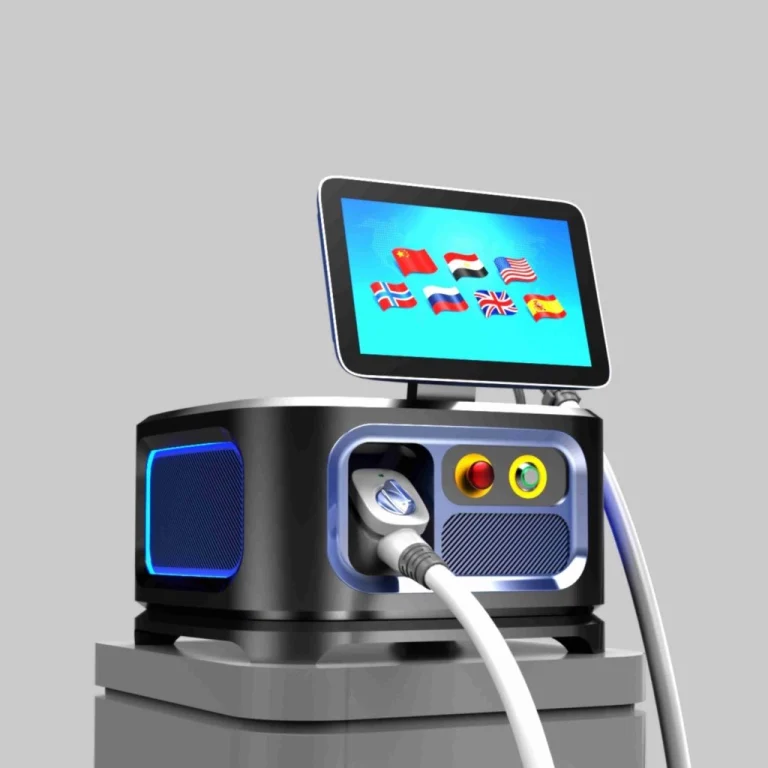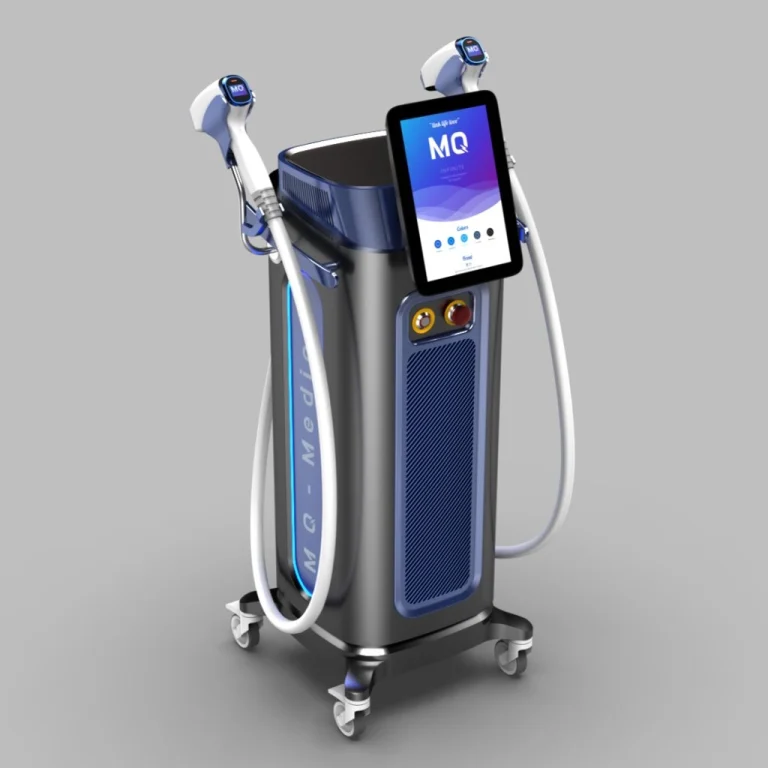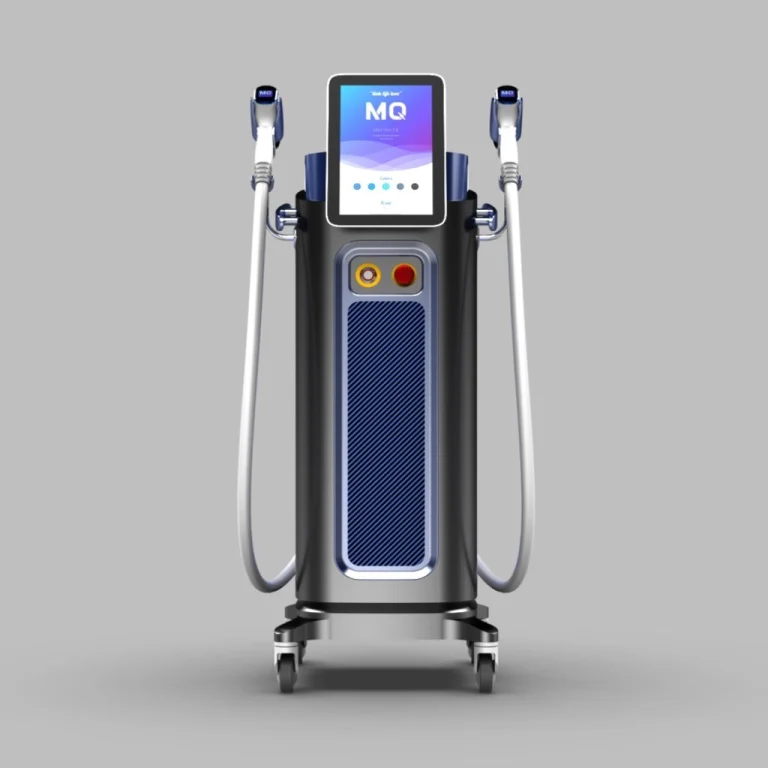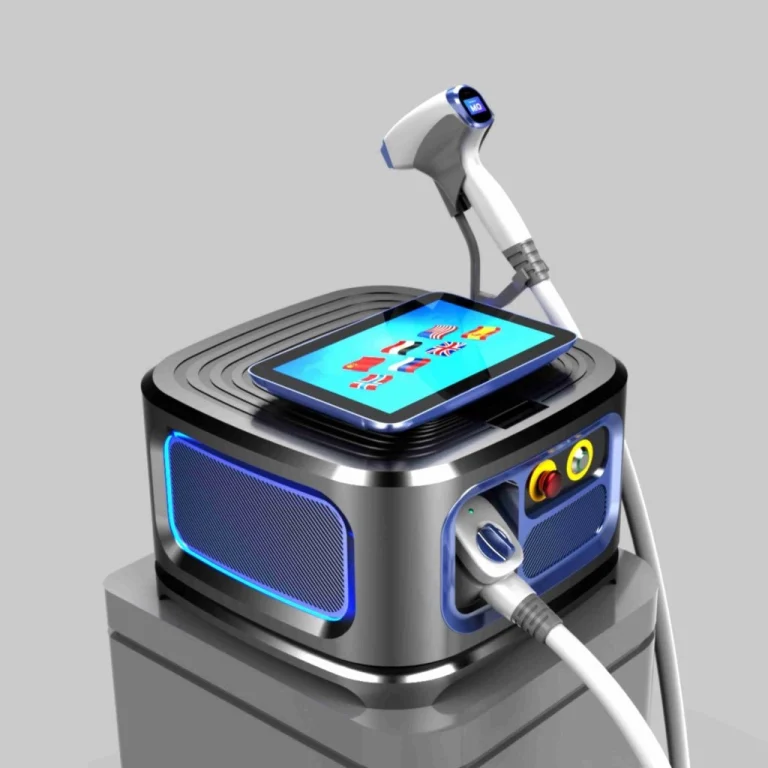

Buying an EMS chair is a bit like choosing an engine for a commercial fleet. From the outside, every unit looks like a chair. You sit, press start, and something happens. But once you operate it in real business conditions—day after day, across different customer profiles, pricing strategies, and markets—you realize the engine inside matters far more than the upholstery.
In the beauty instrument industry, EMS chairs have moved beyond novelty. They are now revenue tools, branding assets, and long-term operational commitments. If you are sourcing equipment for a chain, a distributor network, or a high-traffic studio, your decision affects pricing power, differentiation, and scalability.
This article compares four mainstream EMS chair solutions—BTL Emsella, TeslaCare, DEPMAX, and VTone—from a business and engineering perspective, not a promotional one. The focus is simple: how each option performs when your concerns are customization, cost control, flexibility, and supplier cooperation.
Why EMS Chairs Became a Competitive Category
EMS chairs gained traction because they offer something rare in beauty equipment. Hands-free operation, short session cycles, and high repeatability. From a business standpoint, this means: high room utilization, low staffing dependency, easy service packaging. As a result, many buyers now treat EMS chairs as core revenue equipment, not auxiliary tools. That shift explains why the comparison has become more granular. You are no longer asking “does it work,” but rather: can it adapt to my market? Can it scale with my brand? Can the supplier support growth, not just delivery? These questions frame the comparisons below.
BTL Emsella: The Benchmark That Defined the Category
BTL Emsella is widely regarded as the category benchmark. It established the EMS chair concept as a premium, non-invasive, chair-based solution and shaped customer expectations around simplicity and consistency. From a buyer’s perspective, its strengths are clear: strong brand recognition, stable electromagnetic output, standardized operating logic.
However, that same standardization creates limitations. Configuration options are fixed, branding flexibility is minimal, and adaptation to different market strategies is restricted. For businesses prioritizing uniform deployment and brand prestige, this may be acceptable. For operators seeking differentiation or localization, it can become a constraint. BTL Emsella represents a closed, premium model: reliable, but rigid.
TeslaCare: Expanding Use Scenarios Through Structure
TeslaCare approaches the EMS chair concept from a slightly different angle. It is a high-end imported brand (direct competitor) to BTL Emsella, with technical specifications (Tesla strength, HIFEM technology) and brand premium most similar to BTL. It employs FMS (Functional Magnetic Stimulation) technology, which emphasizes dual-coil or multi-coil configurations, allowing broader use scenarios beyond a single seated focus. It can not only treat the pelvic floor but also simultaneously address the lumbar spine or back. The scope of application is broader, extending beyond the pelvic floor, and is commonly utilized in rehabilitation medicine. This structural design offers advantages, such as wider application logic, potential appeal to diversified service menus, and flexibility in positioning within wellness or recovery environments.
For some buyers, this versatility is attractive. For others, it introduces complexity. Multi-coil systems often require more explanation during sales and more training during operation. That can slow down customer onboarding and reduce throughput in high-volume beauty settings. TeslaCare works best when you want functional breadth, even if it comes at the cost of simplicity.
VTone: Precision at the Cost of Comfort and Scale

VTone is a product under InMode. VTone takes a fundamentally different technical path. It is a functional competitor to BTL Emsella’s different technical approaches. It does not utilize magnetic fields but addresses the same clinical issues (e.g., urinary incontinence, laxity). Instead of electromagnetic fields, it relies on EMS, which changes both the user experience and the business equation. The use of a transvaginal probe is required. Although it offers greater precision and specificity, the patient’s acceptance (comfort level) is significantly lower than that of BTL due to its invasive nature and the need for undressing.
From a control standpoint, electrical stimulation can be highly targeted. From a business standpoint, it introduces challenges, lower customer comfort acceptance, increased preparation steps, and reduced session turnover.
Because it requires more direct interaction and preparation, VTone fits niche positioning rather than large-scale commercial deployment. If your model depends on speed, comfort, and minimal friction, this technical route may limit growth. VTone is best viewed as a functional alternative, not a direct operational substitute.
DEPMAX: Built for Flexibility, Not Just Performance
DEPMAX was developed with a different assumption that EMS chairs are not sold into identical markets. Instead of locking buyers into a fixed configuration, DEPMAX emphasizes adjustable technical parameters, verifiable output consistency, and open customization pathways.
This design philosophy aligns with distributors, chains, and private-label operators who need differentiation. Rather than competing on brand history, DEPMAX competes on adaptability and measurable performance, which explains its growing adoption in cost-sensitive but quality-focused markets. You are not buying a static product. You are buying a platform that can evolve with your positioning.
Side-by-Side Business Comparison
Below is a business-focused comparison table, emphasizing the areas buyers care about most when evaluating long-term value.
| Evaluation Dimension | BTL Emsella | TeslaCare | VTone | DEPMAX (MQLASER) |
|---|---|---|---|---|
| Customization Capability | Very limited | Limited | Limited | High (software, exterior, parameters) |
| Cost-Performance Ratio | Premium pricing | Mid-high | Mid | High value-oriented |
| New Technology Co-Development | No | Limited | No | OEM/ODM collaboration supported |
| Market Flexibility | Low | Medium | Low | High (multi-market adaptable) |
This table highlights a key reality: performance alone no longer defines competitiveness. Flexibility does.
Why Supplier Capability Matters More Than Ever
At this stage, product comparison naturally leads to supplier comparison. A machine is only as scalable as the company behind it. This is where MQLASER becomes relevant—not as a slogan, but as an operational partner. As a manufacturer dedicated to the beauty instrument industry, MQLASER supports global buyers with a structure designed for long-term cooperation.
Through its platform at DEPMAX, the company offers more than hardware. You gain access to a production system built on internationally recognized manufacturing standards, including CE, FDA-related compliance pathways, and ISO-based quality management.
Behind the equipment is an experienced R&D team that continuously reinvests a significant portion of annual revenue into new product development. This investment model allows faster iteration, better efficiency upgrades, and practical OEM/ODM support—especially valuable if you plan to build your own brand or expand regionally.
Equally important, MQLASER provides structured maintenance support, after-sales service, and customization across software interfaces, exterior design, technical parameters, and branding materials. Free logo design and ready-to-use promotional content reduce your time-to-market and marketing costs. You are not just sourcing a chair. You are aligning with a system that supports growth.
How to Choose Based on Your Business Model

When you step back, the choice becomes clearer if you start from your business logic. If brand prestige and fixed operation matter most, BTL Emsella fits. If you want broader functional positioning, TeslaCare offers structural options. If precision matters more than scale, VTone has a role. If flexibility, customization, and cooperation drive your strategy, DEPMAX stands out. There is no universally “best” EMS chair. There is only the best match for how you plan to grow.
Summary Table of Comprehensive Comparison
| Dimension | BTL Emsella | TeslaCare (Slovenia) | DEPMAX (from MQLASER, China) | Invasive Electrical Stimulation (VTone) |
|---|---|---|---|---|
| Core Technology | Patented HIFEM (Focused Magnetic) | FMS (Functional Magnetic Stimulation) | HIFEM (Focused Magnetic) | EMS (Electrical Stimulation) |
| Penetration Depth | Up to 10 cm (Very strong) | 7–10 cm | 7–10 cm | Superficial muscle layers |
| Comfort Level | Very high (No undressing required) | Very high (No undressing required) | Very high (No undressing required) | Moderate (Requires internal probe) |
| Regulatory / Medical Evidence | FDA / CE / NMPA (Global approvals) | CE / Regional approvals | CE / Regional approvals | CE |
| Typical Application Scenarios | High-end aesthetic centers / Private hospitals | Professional rehabilitation centers | Postpartum recovery centers / Beauty salons / Professional rehab centers / Clinics & hospital OB-GYN departments | Hospital OB-GYN departments / Specialized clinics |
| Reference Price (USD) | 100,000USD | 70,000USD | 3,000USD | 500USD |
Final Thoughts: Think Beyond the Chair
An EMS chair is not furniture. It is infrastructure. Your decision affects branding, pricing, customer flow, and supplier dependency for years. Comparing BTL Emsella, TeslaCare, VTone, and DEPMAX through a business lens helps you avoid short-term thinking and focus on scalable value. Choose the engine that matches your road.
FAQ
Q1: What is the biggest mistake buyers make when choosing an EMS chair?
A1: Focusing only on headline performance while ignoring customization, supplier support, and long-term adaptability.
Q2: Why is customization important for distributors and chains?
A2: It allows you to localize branding, pricing, and positioning without changing core equipment, improving competitiveness across markets.
Q3: How do you evaluate whether a supplier is suitable for long-term cooperation?
A3: Look at certifications, R&D investment, OEM/ODM capability, after-sales structure, and whether the supplier supports your growth model—not just the first shipment.