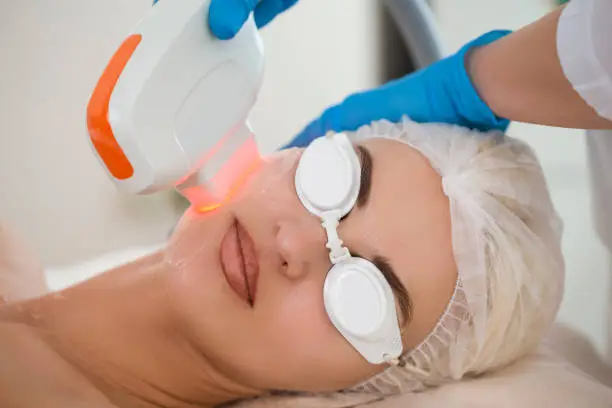
Imagine choosing equipment the way you choose a kitchen knife. Some blades are forged for cutting through frozen bone, others are designed for everyday slicing, and a few are built so the handle, weight, and edge can be reshaped to match how you work. CO₂ laser systems in the beauty equipment industry follow a similar logic. They may share the same core wavelength, yet behave very differently once you place them into real-world operation. This article compares Lumenis UltraPulse, Lumenis AcuPulse, and DEPPLUS by MQLASER from a B-end perspective. The goal is not to praise specifications in isolation, but to help you judge which system aligns with your positioning, workflow frequency, and long-term business plans.
Why CO₂ Systems Differ Even When the Wavelength Is the Same
Although all three systems are CO₂ lasers, their engineering philosophies diverge. The difference is not about “better or worse,” but about how energy is released, controlled, and adapted to use scenarios. One platform is built to reach extreme performance limits. Another is designed to cover most daily needs with stability. The third emphasizes flexibility, customization, and cooperation with the user rather than a fixed operating boundary. To choose correctly, you need to look beyond the surface and ask how each system fits into your actual business environment.
UltraPulse: The Industry Gold Standard for Maximum Output
UltraPulse has long been regarded as the benchmark in the CO₂ laser field. It is known for very high single-pulse energy combined with extremely short pulse width, allowing strong output while limiting unnecessary thermal spread.
Key characteristics include single-pulse energy up to 225 mJ, far exceeding conventional systems. Peak power reaching around 240 W, meaning energy is released very rapidly. Exclusive SCAAR FX mode, with a single-pulse penetration depth of up to 4.0 mm. Minimum spot size of about 0.12 mm with DeepFX handpieces, enabling highly focused output. UltraPulse also offers multiple operating modes—ActiveFX, DeepFX, TotalFX, and SCAAR FX—each designed for a different depth and coverage strategy. From an equipment perspective, this modular mode structure allows one platform to address surface-level refinement and very deep structural tasks. However, this capability comes with trade-offs that matter to you as a buyer. The system investment is high, the learning curve is steep, and the platform is typically used for specific, demanding cases rather than continuous daily throughput. If your institution is positioned at the top end of the market and requires extreme performance, UltraPulse justifies its role. If not, its potential may remain underused.
AcuPulse: A Balanced and Highly Practical Workstation
AcuPulse takes a different route. Using SuperPulse technology, it sacrifices extreme depth in exchange for versatility and efficiency. The uploaded materials show that its output power usually ranges between 30 W and 40 W, with a single-pulse depth of around 1.0 mm. While this is shallower than UltraPulse, it is sufficient for the majority of everyday beauty applications.
What distinguishes AcuPulse is its integrated scanning platform. With up to 11 preset operating modes such as SilkTouch and FeatherTouch, the system is designed to be intuitive and consistent. The SuperPulse structure keeps pulse duration shorter than the material’s thermal relaxation time, which helps maintain controlled energy distribution. From a business angle, AcuPulse is often chosen by institutions that prioritize efficiency, predictability, and broad service coverage. It fits environments where workflows are frequent and standardized. That said, the system architecture is largely fixed. Customization options are limited, and users must adapt their workflows to the machine rather than the other way around.
Where DEPPLUS Takes a Different Path

Here is where the comparison becomes interesting. DEPPLUS by MQLASER is not positioned as a direct replica of either UltraPulse or AcuPulse. Instead, it combines multiple pulse logics—UltraPulse-style, SuperPulse-style, and Continuous Wave—within a single adjustable platform. Rather than locking you into a predefined operating boundary, DEPPLUS allows adjustable penetration from roughly 1 to 4 mm, covering both high-frequency daily use and deeper, more demanding tasks. This makes it especially relevant if your operation handles diverse requests or plans to expand service scope over time.
A Supplier-Level Perspective on MQLASER
Within the beauty equipment industry, MQLASER operates not only as a manufacturer but as a technology partner. Its development team brings long-term experience in system architecture and supports OEM and ODM cooperation. A significant portion of annual revenue—around 15%—is continuously reinvested into new product development, ensuring rapid iteration rather than static product cycles.
From a compliance standpoint, equipment produced under this system framework already aligns with international certifications such as CE, ISO, and RoHS. More importantly for B-end buyers, the company supports customization at multiple levels: software interface logic, hardware appearance, technical parameters, and branding elements. This approach allows you to shape the equipment around your workflow instead of reshaping your workflow around the equipment.
Here is a comparison table:
| Feature Parameter | UltraPulse (Flagship Model) | AcuPulse (Classic Model) | DEPPLUS (MQLASER) |
|---|---|---|---|
| Core Technology | UltraPulse (Ultra-short pulse) | SuperPulse (High-peak pulse) | UltraPulse (UP) + SuperPulse (SP) + Continuous Wave (CW) |
| Maximum Penetration Depth | Up to 4.0 mm (SCAAR FX mode) | Up to 1.0 mm | Adjustable from 1–4 mm |
| Single-Pulse Energy | Extremely high (up to 225 mJ) | Medium to high (suitable for daily use) | Up to 240 mJ |
| Primary Positioning | Severe scars, deep restructuring, research-level applications | Acne marks, pores, anti-aging, general daily use | Severe scars, deep restructuring, acne marks, pores, anti-aging; especially effective for delicate areas such as the eye zone |
| Downtime / Recovery Cycle | Longer in SCAAR FX mode; moderate in standard modes | Relatively short | 7–30 days depending on settings; recovery can be supported with auxiliary light therapy |
| Price Level | Very high | High cost-performance | Very high cost-performance |
Operational Flexibility Versus Fixed Performance
To make sense of these differences, it helps to view them through the lens of daily operation:
UltraPulse focuses on maximum output and depth. You gain extreme capability, but flexibility and cost efficiency are secondary.
AcuPulse emphasizes balance. You gain stability and ease of use, but customization and future expansion are limited.
DEPPLUS emphasizes adaptability. You gain adjustable performance, cooperative development, and cost control, making it suitable for evolving market strategies.
Each system reflects a different answer to the same question: Should the user adapt to the machine, or should the machine adapt to the user?
Side-by-Side Comparison Focused on B-End Priorities

| Evaluation Aspect | UltraPulse | AcuPulse | DEPPLUS |
|---|---|---|---|
| Customization | Very limited | Limited | Extensive (software, hardware, parameters) |
| Cost-Performance Ratio | Very high investment | Balanced | High value for long-term use |
| Cooperative R&D | Closed system | Closed system | Supports OEM/ODM and parameter upgrades |
| Market Flexibility | Best for niche, high-end use | Best for standardized workflows | Suitable for multi-market and scaling strategies |
Choosing Based on Your Real Priorities
If you need extreme output for the most demanding scenarios and brand prestige is central to your positioning, UltraPulse remains unmatched. If you want a reliable, integrated workstation for routine operations, AcuPulse delivers proven stability. If, however, you are building a business that values adaptability, controllable investment, and long-term cooperation, DEPPLUS offers a different kind of advantage. It is not about replacing established systems, but about giving you room to grow, adjust, and compete in diverse markets without being locked into one rigid configuration.
For individuals seeking aesthetic improvement: AcuPulse demonstrates remarkable efficacy in treating common acne scars and fine lines. For severe burn scars or deeply indented ice-pick acne scars, it is recommended to seek treatment at large medical institutions equipped with UltraPulse technology.
For Physicians: The DEPPLUS fractional CO2 laser aesthetic device from MQLASER Factory offers expanded operational flexibility and therapeutic capabilities for complex conditions; DEPPLUS multi-mode scanning is particularly suitable for high-frequency daily outpatient clinics. Additionally, the DEPPLUS fractional CO2 laser aesthetic device factory can customize user-friendly software interfaces for physicians, allowing them to tailor the operational interface according to their needs. Physicians may even propose higher technical specifications for DEPPLUS, and the technical personnel at MQLASER Factory can update the technical parameters based on physician requirements to enhance clinical application demands.
FAQ
Q1: Is DEPPLUS suitable for distributors or private-label projects?
A: Yes. The platform is designed to support OEM and ODM cooperation, including interface logic, appearance, and technical parameter customization.
Q2: How does DEPPLUS compare in long-term cost efficiency?
A: By combining adjustable performance with a lower initial investment and upgrade-ready design, it delivers a strong cost-performance ratio over time.
Q3: Can DEPPLUS adapt as market demands change?
A: Yes. Its flexible system architecture allows parameter updates and functional expansion, making it suitable for evolving service portfolios.