Picking a new laser hair removal device shapes the future of your beauty salon or spa. You naturally want to maximize your return on investment. The market, however, remains crowded with options. Knowing how different machines actually perform in the real world is vital for long-term growth. Buyers often weigh high-end established brands against adaptable, factory-direct suppliers. We will look closely at two strong contenders. These are the well-known Alma Soprano Titanium and the highly flexible MQLASER SUPLASER. This guide compares how both platforms fit into actual business models. We will focus primarily on speed, hardware costs, and building your independent brand.
Evaluating Core Technology: Wavelengths and Speed
The hardware inside your aesthetic devices limits how many clients you can treat each day. It also determines the specific skin profiles you can safely handle. Both the Soprano Titanium and the SUPLASER rely on advanced multiwavelength systems. They also both utilize continuous-motion techniques. However, their engineering approaches differ significantly.
Three Wavelengths vs. Four Wavelengths
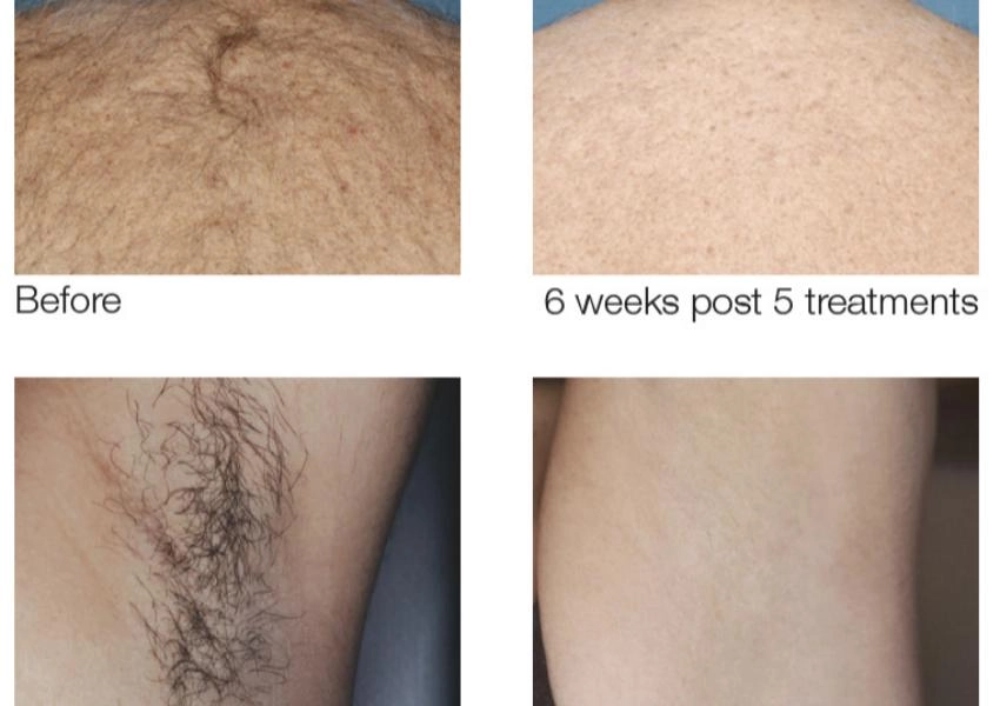
The Soprano Titanium earned its reputation through its Trio 3D technology. This patented system avoids basic mode-switching. Instead, it fires three different laser depths (755 nm, 810 nm, and 1064 nm) at the exact same time from one handpiece. Hitting various parts of the hair root in a single pass makes the process highly effective for mixed hair types. Specifically, the 755nm focuses on lighter hair. The 810 nm acts as a versatile middle ground. Finally, the 1064 nm safely treats darker skin profiles.
The SUPLASER pushes this core concept further. It utilizes a four-wavelength architecture. By combining 755nm, 808nm, 940nm, and 1064nm, operators gain much finer precision. Adding the 940nm wavelength optimizes energy absorption by surrounding microvessels. This gently warms the tissue to safely destroy the root. Such a comprehensive design guarantees maximum adaptability across a huge range of skin tones. You can then confidently offer safe aesthetic procedures to a highly diverse client base.
Spot Sizes and Session Efficiency
Time directly impacts your salon’s bottom line. The Soprano Titanium tackles this using a Quattro 4 cm² spot size applicator. That massive surface area pairs with an “In-Motion” sliding technique. Together, they boost session speed by roughly 40%. A technician can finish a full-back procedure in just 5 minutes. A full-body session generally takes about 20 to 30 minutes. This speed secures excellent daily client turnover.
The SUPLASER tackles high-speed operations via its advanced SLIDE mode. This setting supports fast frequencies up to 10 Hz. The Soprano Titanium relies heavily on one very large spot size. The SUPLASER, on the other hand, gives you multiple spot size options. Your operators can clear large areas like legs swiftly. Then, they can quickly switch to smaller attachments for tight facial contours. You lose zero speed or accuracy during the transition.
Client Comfort and Smart Management
A great client experience keeps your appointment book full. Smooth daily operations reduce costly staff errors. Both platforms feature sophisticated internal engineering to handle these daily demands.
Advanced Cooling Systems
The Soprano Titanium includes the popular ICE Plus cooling mechanism. It relies on a sapphire tip to hold a steady surface temperature of around -4°C. Energy builds up beneath the skin to destroy the root, but the top epidermal layer stays icy cold. Its dual-connector system permits intense, continuous work without overheating. Clients regularly report virtually painless sessions.
The SUPLASER treats thermal control with the same priority. It features a robust cooling design built specifically for premium client experiences. Procedures stay highly comfortable from the first pulse to the last. When operators use the continuous-motion SLIDE mode, the SUPLASER manages heat distribution perfectly. It actively prevents sharp temperature spikes. Happy, comfortable clients always return to finish their purchased session packages.
Operational Control and Flexibility
The Soprano Titanium utilizes deep IoT capabilities. Everything runs through a 15.6-inch Android interface. You get cloud-based data tracking to monitor device usage and session counts remotely. It also packs preset parameters for different skin profiles. This significantly lowers the learning curve for new staff members.
The Soprano Titanium locks you into a closed software ecosystem. The SUPLASER takes a different route. It offers an intuitive, user-friendly interface meant for rapid deployment. The main goal here is operational flexibility. Staff members can quickly navigate the menus to tweak settings for different client profiles. They maintain a smooth workflow without dealing with a rigid, locked software environment.
Key Summary
| Comparison Item | Alma Soprano Titanium | MQLASER SUPLASER |
|---|---|---|
| Wavelengths | 755 nm, 810 nm, 1064 nm | 755 nm, 808 nm, 940 nm, 1064 nm |
| Pain Level | Marketed as virtually painless with SHR and ICE Plus cooling | Designed for comfortable treatment with cooling and SLIDE mode |
| Hair Removal Speed | Promotes faster treatment with Trio MAX and a 4 cm² spot size | Supports up to 10 Hz, multiple spot sizes, and continuous-motion treatment |
| Skin Tone Adaptability | Suitable for Fitzpatrick skin types I–VI | Four-wavelength design supports a wide range of skin tones and hair types |
| Commercial Value | Premium brand option for clinics focused on recognition and established technology | Factory-direct option for buyers seeking flexible configuration, lower investment, and business support |
Business Support, Customization, and ROI
The biggest difference between these systems involves pure commercial value. Your choice of equipment supplier decides how much control you keep over your salon’s brand identity.
Factory-Direct Innovation and Certifications
Buying a Soprano Titanium means paying extra for a famous global name. But a true manufacturing partner should fuel your ongoing growth. MQLASER has a deeply knowledgeable and experienced R & D team that actively supports customers’ OEM/ODM projects. They allocate 15% of their annual turnover purely for new product research and development. This heavy financial investment ensures the leading efficiency of new product development. Furthermore, their devices already hold extensive international certifications, including CE, ISO, RoHS, FDA, MDR, and ISO 13485. These credentials prove that the performance and quality of the products conform completely to strict international standards. You can run your daily operations with total confidence.
Comprehensive Customization and Support
Installing a Soprano Titanium means displaying an external brand to your clients. Leveraging flexible partnerships with the SUPLASER lets you build your own local legacy instead. Every SUPLASER machine is entirely customizable. You can demand bespoke exterior designs or specific technical parameter adjustments. They even customize software interfaces to display your specific salon logo. You will receive free promotional materials to kickstart local marketing campaigns. They also provide reliable equipment maintenance and help navigate local registration requirements. This factory-direct strategy drastically cuts your initial investment. Meanwhile, it maximizes your own brand visibility.
Expanding Your Aesthetic Offerings
Working with an adaptable supplier protects your future growth. Once your hair removal menu is stable, you will probably want to add new aesthetic services. A flexible manufacturing partner makes sourcing high-quality gear much easier. You could easily add tools like the DEPPLUS Stationary Fractional CO2 Laser Scar Wrinkle Removal Machine to treat stubborn skin texture issues. Relying on one trusted manufacturer for multiple platforms ensures consistent quality across your clinic.
Side-by-Side Analysis: Choosing the Right Fit
| Comparison Metric | Alma Soprano Titanium | MQLASER SUPLASER |
|---|---|---|
| Machine Customization | Standardized design; no brand customization. | Superior Advantage: Full OEM/ODM support, custom logos, colors, and tailored software interface. |
| Cost-Effectiveness | High initial investment driven by brand premium. | Superior Advantage: Factory-direct pricing significantly lowers upfront costs, accelerating ROI. |
| Collaborative R&D | Closed ecosystem; fixed updates. | Superior Advantage: 15% of turnover dedicated to R&D, allowing for technical parameter customization based on your needs. |
| Market Flexibility | Rigid packages promote the manufacturer’s brand. | Superior Advantage: Free promotional materials and design support help you build and promote your independent salon brand. |
Conclusion
Buying the right technology shapes your ultimate profitability and local market presence. Both the Soprano Titanium and the SUPLASER offer excellent speed, advanced cooling, and multi-wavelength power. Your decision ultimately comes down to long-term business strategy. The Soprano Titanium makes sense if you depend heavily on an external brand name to get customers through the door. But maybe you want to lower startup costs and build a unique local brand identity. If so, reach out to experts for direct, customizable manufacturing support. The SUPLASER remains an incredibly lucrative, adaptable solution.
FAQ
Q1: How does a four-wavelength system compare to a three-wavelength setup?
A1: A four-wavelength device adds the 940 nm spectrum to provide broader energy distribution. This boosts overall versatility. Your center can safely and effectively treat a wider variety of skin profiles compared to older three-wavelength models.
Q2: Can we customize the equipment to match our salon branding?
A2: Absolutely. Established brands force you to use rigid designs. Flexible manufacturers support complete OEM/ODM modifications. You can tweak the software interface, add your logo, and alter the exterior. This builds your unique brand identity rather than promoting an outside company.
Q3: What long-term support is available for these aesthetic devices?
A3: Premium suppliers offer deep backing. This includes routine equipment maintenance, fast technical troubleshooting, and local registration assistance. They guarantee safety through international certifications like CE and ISO. You gain a highly reliable foundation for your daily clinical operations.