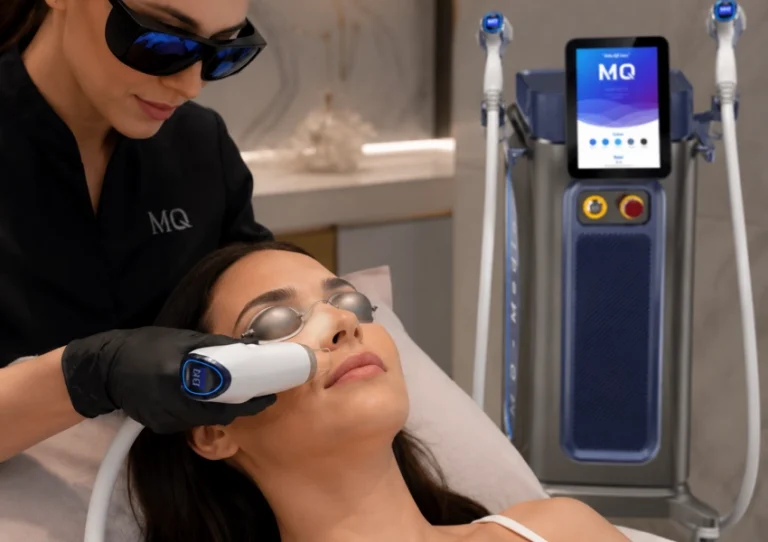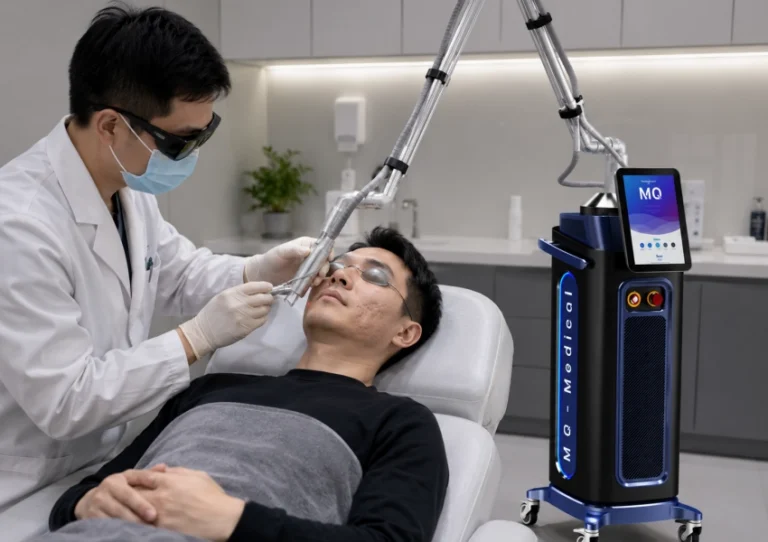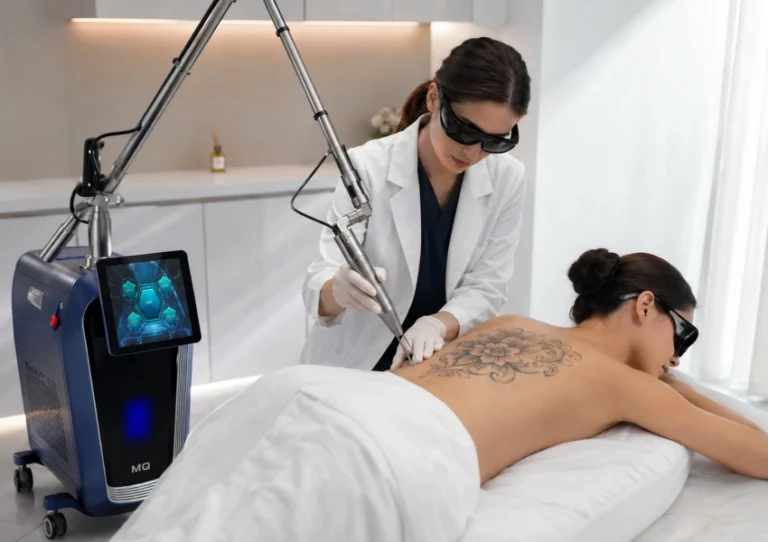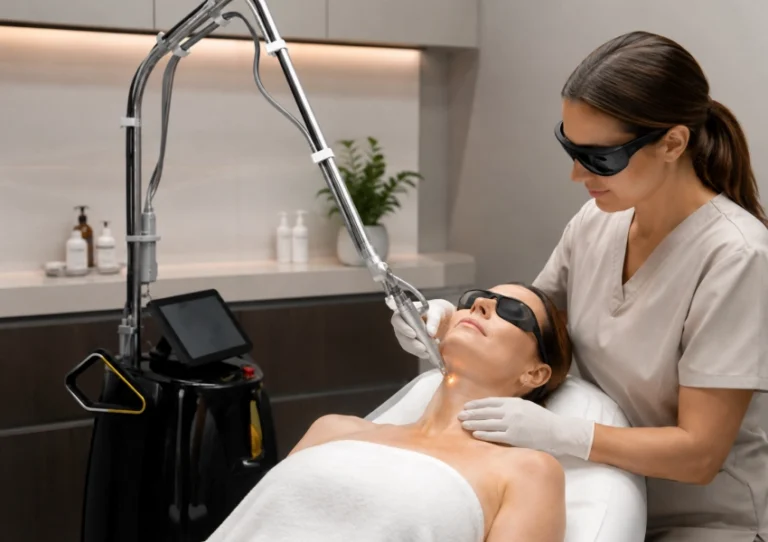
A hair-removal platform can look profitable while its actual utilization remains weak. The machine may be busy on selected days, but idle between packages, used by only one therapist, or supported by records that never reach the owner. That is why the comparison between Alma Soprano Titanium and SPLASER is increasingly a management question. The strongest platform is not simply the one with the most wavelengths. It is the one that helps a clinic connect treatment activity with revenue, repeat visits, and room capacity. The Alma Soprano Titanium vs SPLASER decision should be made against that operating picture.
Google-facing keyword language around laser hair removal machine ROI, clinic utilization rate, aesthetic clinic management software, and hair removal clinic ROI reflects the way buyers now frame this problem. These are planning terms, not verified search-volume claims. The device comparison below uses the supplied product configurations and focuses on what can actually be recorded.
What Smart Management Should Record
A useful management system needs more than a screen on the cabinet. It should give the owner a way to review treatment count, operating time, handle or tip use, energy settings, operator activity, service area, appointment completion, and downtime. Those records can be simple, but they must be consistent enough to compare one room with another.
Soprano Titanium’s Management Story
Soprano Titanium has a 15.6-inch Android interface, cloud-connected treatment reporting, operator data, pulse consumption, and equipment-utilization information. It also describes a Trio 3D arrangement using 755 nm, 810 nm, and 1064 nm in one handpiece, a 4 cm² Quattro spot, In-Motion delivery, ICE Plus contact cooling around -4°C, and dual-handpiece connection.
SPLASER’s Management and Configuration Story
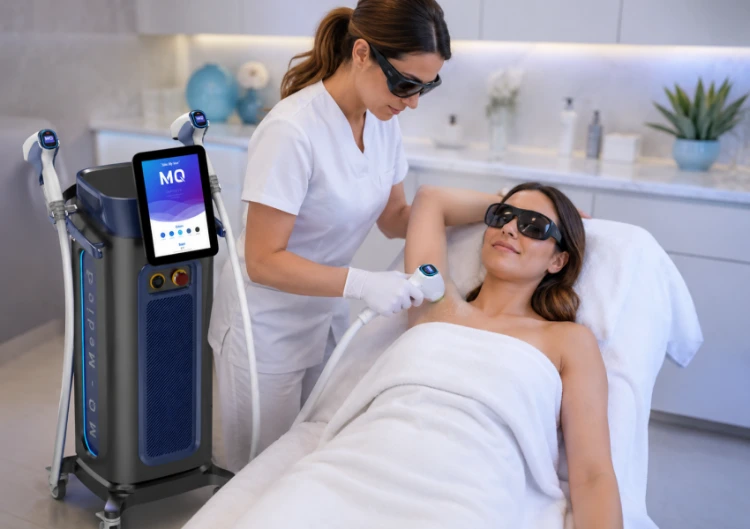
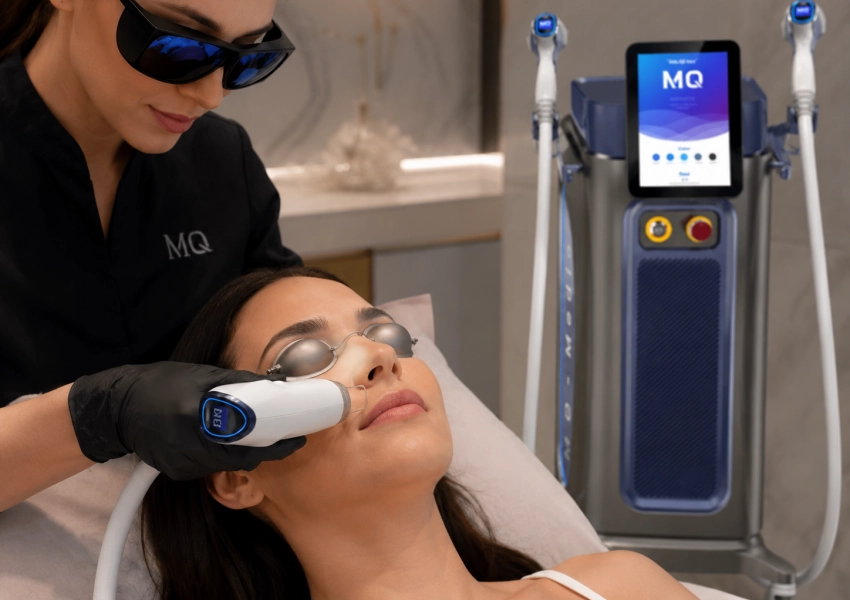
SPLASER‘s 808 nm is the standard wavelength, with 755 nm, 940 nm, and 1064 nm available for customization. The platform lists up to 2400 W peak power, fluence up to 200J/cm², pulse repetition up to 10 Hz, pulse duration from 5-170 ms, seven changeable spot sizes, Pulse and Slide modes, and an IoT module for usage and performance reporting. The applicator temperature is described as being monitored 1,000 times per second.
| Management factor | Alma Soprano Titanium | MQLASER SPLASER |
| Data focus | Cloud reporting for operator activity, pulses, and utilization | IoT reporting for usage and performance; exact dashboard to confirm |
| Wavelength route | 755 nm + 810 nm + 1064 nm in Trio 3D configuration | 808nm standard; 755 nm, 940 nm, 1064 nm customization listed |
| Spot options | 4 cm² Quattro spot in the supplied reference | Seven tips, including 12×12 mm, 12×20 mm, 12×28 mm, 12×34 mm, 4×4 mm, 8 mm, and 10 mm |
| Cooling | ICE Plus sapphire contact cooling around -4°C | TEC cooling; supplied comparison notes state handpiece cooling to about -5°C |
| Clinic use | High-volume, branded, standardized hair-removal workflow | Configurable hair-removal platform with optional multi-purpose positioning |
The distinction is important. A connected device only improves ROI tracking when the clinic defines what counts as utilization. Ten hours powered on is not the same as ten hours treating clients. The report should separate standby, setup, treatment, cleaning, troubleshooting, and unbooked capacity.
Clinical Workflow Should Be Part of the ROI Calculation
The clinical value of a laser platform is closely tied to treatment consistency. Before each session, staff should record the patient’s Fitzpatrick skin type, hair density, treatment area, previous response, recent sun exposure, and any relevant contraindications. These factors influence wavelength selection, fluence progression, pulse repetition, and cooling requirements.
Soprano Titanium may suit clinics that need a repeatable workflow across different skin types and body areas. SPLASER should be assessed by how clearly it supports parameter recording, treatment notes, and follow-up comparisons. A useful management system should connect every session with measurable clinical observations, including temporary erythema, pain score, shedding response, treatment interval, and patient retention. This allows clinicians to adjust the next session instead of repeating identical settings. It also gives clinic owners a more realistic view of ROI by linking revenue with treatment time, consumable use, staff workload, rebooking rate, and the number of sessions needed to achieve a satisfactory result.
How to Calculate Useful Clinic Utilization
A practical clinic utilization rate can be calculated as billable treatment minutes divided by available room minutes. A second number can track revenue per treatment hour. A third can track package completion, because a machine may appear busy while clients fail to finish their recommended course.
For example, a manager can compare four figures each month: booked treatment minutes, completed treatment minutes, collected revenue, and downtime minutes. Add the treating operator, body area, handpiece, and wavelength. The result is not a perfect financial system, but it is enough to see whether a 4cm² high-speed workflow or a multi-tip configuration fits the clinic’s real demand.
Where Soprano Titanium May Have the Edge
Soprano Titanium may suit a chain that wants a recognizable premium platform with a standardized three-wavelength story, a large spot, and a more defined connected-clinic narrative. A regional manager can compare operator activity and treatment volume across locations if the software and reporting permissions work as described in the purchase documents.
That advantage has a price. The clinic is paying for brand recognition, a specific hardware ecosystem, and a management story that may be less open to local customization. If the business does not use the reports, the smart interface becomes an expensive screen rather than a management tool.
Where SPLASER May Be the Better Commercial Fit
SPLASER can make sense for buyers that need a configurable diode laser platform, several spot sizes, pulse and slide modes, and a direct supplier discussion around OEM/ODM. A distributor can shape the interface, cabinet, handpiece package, and training materials around a regional market, subject to the final agreement.
The seven-tip structure can also help a clinic match treatment areas more closely. Large tips support body zones. Small tips can be used for upper lip, bikini line, fingers, or other precision work. The business gain comes from less setup friction and better time estimates, not from listing seven sizes on a brochure.
| ROI question | Soprano Titanium route | SPLASER route |
| Utilization | Cloud and operator reporting are central to the value story | IoT reporting is available to confirm and configure |
| Therapist training | Preset and standardized brand workflow may be easier to roll out | Pulse/Slide and tip selection need a clear local SOP |
| Expansion | Strong fit for branded chain consistency | Strong fit for customized regional or distributor growth |
| Cost tracking | Track premium investment against package price and utilization | Track configuration cost, tip use, service hours, and room output |
| Client comfort | ICE Plus cooling supports a premium comfort message | Real-time TEC monitoring supports a measurable cooling discussion |
What to Request Before Signing a Smart-System Quote
Ask to see the actual dashboard, not only a screenshot. Confirm whether reports are stored locally or in the cloud, who owns the data, whether staff accounts can be separated, what happens when the internet is unavailable, and whether pulse counts can be exported. Ask for a sample monthly report that includes treatment time, operator, area, tip, and downtime.
The clinical side matters too. Confirm the wavelength, spot, fluence, pulse range, cooling method, handpiece weight, and skin-type guidance. The MQLASER support team can discuss the SPLASER configuration together with the clinic’s expected booking mix. The diode laser equipment range also gives buyers a broader view of available platform formats. A smart report cannot correct a poor handpiece choice or an unrealistic service protocol.
Choose Soprano Titanium when a premium, standardized, connected clinic model is already part of the plan. Choose SPLASER when the operator wants IoT-style reporting but also needs more freedom around handpieces, language, private-label configuration, and channel economics. A realistic hair removal clinic ROI model should include idle time, staff hours, package completion, and service support. MQLASER can be used to request the current reporting and customization package. Continue reading our other guide.
FAQ
Q1: Does a smart laser automatically improve clinic ROI?
A1: No. It improves visibility only when the clinic records appointments, treatment minutes, operators, settings, revenue, and downtime in a consistent way.
Q2: Which keyword best describes the management problem?
A2: Terms such as laser hair removal machine ROI, clinic utilization rate, and aesthetic clinic management software describe the planning need, but no search-volume figure is claimed here.
Q3: What should a buyer ask SPLASER about IoT reporting?
A3: Ask for the dashboard, export format, user permissions, offline behavior, stored fields, data ownership, and whether the final machine configuration includes the reporting module.