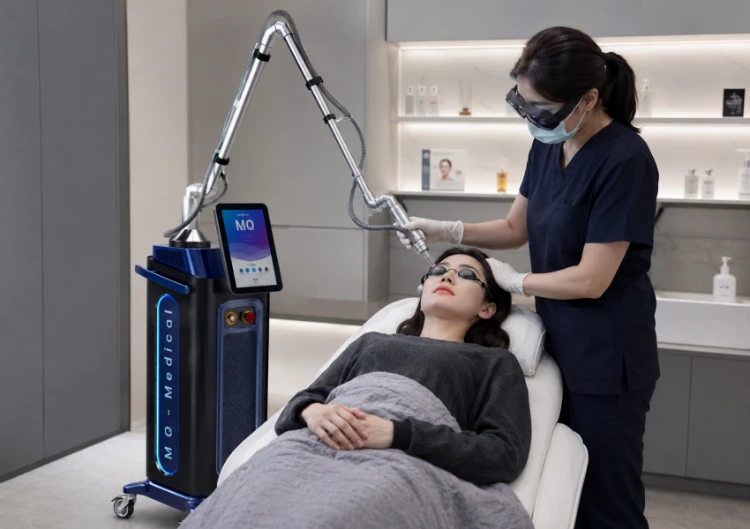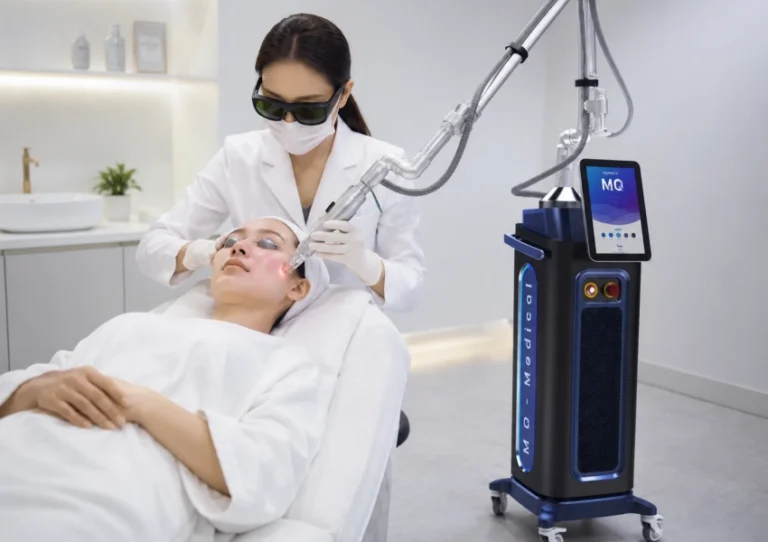
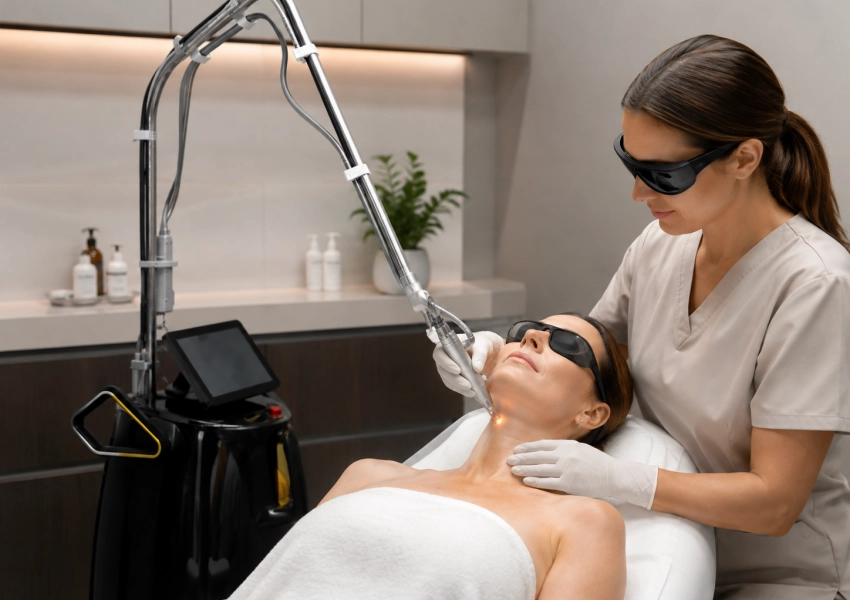
Skin quality clinics are moving toward treatment menus that improve tone, texture, pores, mild acne scarring, and early laxity without making every appointment a major recovery event. That shift helps explain why the 1927 nm thulium laser is receiving more attention in 2026. In the language of aesthetic laser trends in 2026, it sits between very superficial brightening treatments and stronger ablative resurfacing, giving clinics another way to build repeatable skin quality treatment programs.
The wavelength is absorbed by water more strongly than 1550 nm Er: Glass and less aggressively than 10600 nm CO₂. That difference gives a fractional thulium laser a useful treatment position: the lower epidermis and epidermal-dermal junction can be addressed with tunable thermal and micro-ablative effects, while recovery can remain more manageable than a full ablative CO₂ protocol.
Why the 1927 nm Wavelength Suits Skin Quality Work
A skin quality program is not limited to one lesion. A client may have dull tone, enlarged pores, shallow acne marks, uneven pigmentation, and early fine lines at the same time. The 1927 nm wavelength is attractive because its target zone overlaps many of these surface and near-surface concerns.
Depth Changes the Commercial Role of the Laser
The supplied ThuliWave configuration describes a maximum ablative depth of about 200-300 micrometers, a 20W maximum output, a top-hat beam profile, and separate pulse-duration and power settings. A 10mm, 15mm, 20mm, or 30mm tip can be selected according to the treatment area. Those specifications do not replace treatment protocols, but they give a clinic more control over how aggressive a session feels.
| Technology | Main target zone | Typical business role |
| 1927 nm thulium | Lower epidermis and upper dermis; adjustable fractional effect | Tone, pores, texture, mild acne marks, skin quality programs |
| 1550 nm Er:Glass | Deeper dermal thermal effect | Rejuvenation and collagen-focused programs with lower surface disruption |
| 10600 nm fractional CO₂ | Ablative epidermis and controlled dermal coagulation | More intensive resurfacing and deeper scar or wrinkle work |
The distinction matters when a clinic builds a calendar. A CO₂ service may require more pre-treatment explanation and longer aftercare. A very mild non-ablative session may need a longer course before the client sees a visible change. A 1927 nm thulium laser can occupy the middle ground, especially when the clinic wants a visible skin-quality program that can be repeated across the year.
The Treatment Menu is More Important Than the Wavelength Label
The phrase thulium laser benefits can sound broad until it is tied to actual appointments. A skin quality treatment menu can use the platform for brightening, uneven tone, enlarged pores, superficial texture irregularities, fine lines, and selected mild acne-scar cases. The operator still needs to separate pigment-dominant patients from scar-dominant patients and avoid presenting one treatment as a universal fix.
A Practical Menu For a Skin Quality Clinic
A sensible menu can start with a lighter glow and texture session, then add a stronger fractional program for patients who need more visible resurfacing. Tip size, pulse duration, power, coverage, and the number of passes should be documented in the clinic protocol. The ThuliWave interface is designed to be easy to navigate, and the supplied configuration allows brand information to appear on the machine and software interface for private-label programs.
That kind of repeatability is useful in 2026 because clinics are selling plans, not isolated shots. A patient may begin with tone correction, return for pore refinement, and later add a scar-focused session. The device needs to support a conversation about staged care while leaving enough room for professional assessment.
Why Low Downtime Changes the Sales Conversation
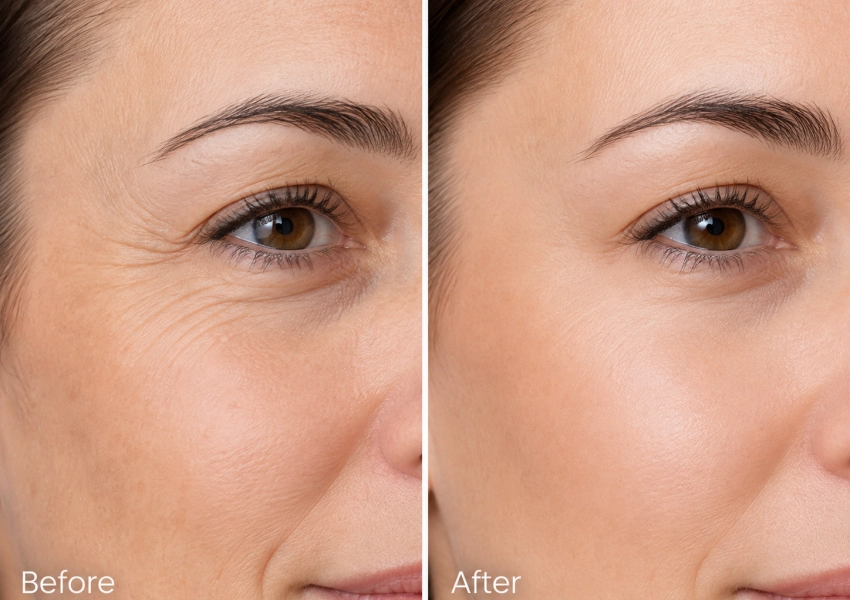
Downtime is not simply a comfort issue. It affects cancellations, treatment timing, seasonal demand, and whether a client will agree to a course. A fractional thulium laser can be positioned for clients who want a stronger result than a basic facial but are not ready for a longer CO₂ recovery window. That makes it relevant to offices, med spas, and skin quality clinics that depend on weekday appointments.
The phrase “low downtime” still needs qualification. Redness, heat, swelling, flaking, pigment changes, and sensitivity can occur. The exact response depends on settings, skin type, sun exposure, concurrent products, and aftercare. Clear patient selection is part of the device value, not a footnote after the sale.
What Clinics Should Check in a Fractional Thulium Laser
The most useful technical questions are straightforward. Ask whether pulse duration and power can be set separately, whether the beam profile is even across the spot, what tips are supplied, how the system handles maintenance, and how the supplier trains operators. A non-consumable long-life thulium fiber is commercially helpful because fewer routine replacements can simplify ownership.
The ThuliWave 1927 nm thulium laser is listed with replaceable tips, a roller option, a 200-micrometer beam diameter, and a full-face treatment time of about 6-8 minutes under the stated configuration. Those figures should be treated as configuration information, not a guarantee for every patient. The useful point is that the platform is built around treatment-area flexibility and a faster skin-quality workflow.
| Buying check | Why it matters in 2026 | What to confirm |
| Beam profile | Uneven energy can produce uneven response across the treatment field | Top-hat or equivalent uniformity evidence |
| Depth and intensity | Skin quality menus need mild and stronger options | Separate pulse and power controls; maximum depth |
| Tips | Small areas and full-face work need different contact areas | 10mm-30mm tips, roller availability, replacement cost |
| Ownership | Repeat treatments require predictable maintenance | Fiber life, consumables, service response, and training |
Where the Technology Fits the 2026 Clinic Landscape
Current aesthetic laser planning is less about chasing one dramatic procedure and more about building a balanced menu. A clinic may combine 1927 nm treatment with injectables, RF microneedling, HIFU, or a fractional CO₂ service, provided treatment intervals and clinical responsibilities are clear. The thulium platform is particularly useful when the business wants a bridge between superficial skin maintenance and deeper resurfacing.
For distributors, the wavelength also offers a clean story for product education. It is specific enough to create a category but broad enough to support several treatment packages. MQLASER presents 1927 nm thulium laser equipment with OEM/ODM and private-label possibilities, which can help regional partners adapt the cabinet, interface, language, and training materials to local markets.
A clinic should still ask for certification documents, operating limits, contraindication guidance, service records, and the intended market classification. The device can be commercially attractive without every marketing phrase being a clinical claim. MQLASER company background adds supplier context for buyers reviewing private-label or distributor support. Good procurement keeps commercial claims and clinical boundaries separate.
The 1927 nm thulium laser is becoming more relevant because it answers a real scheduling problem: clients want meaningful skin improvement, but many will not accept a long recovery period for every concern. A configurable fractional platform gives the clinic more ways to stage treatment, set expectations, and keep the skin-quality service line active throughout the year. These practical thulium laser benefits are strongest when the protocol matches the patient’s concern. It also fits the aesthetic laser trends 2026 conversation because clinics are building staged, repeatable skin-quality services. Product configuration and supplier support can be reviewed through MQLASER. For more detail, see our guide on this article.
FAQ
Q1: Is a 1927 nm thulium laser the same as a CO₂ laser?
A1: No. 1927 nm thulium generally targets more superficial tissue than 10600 nm CO₂ and can offer a different balance between resurfacing intensity and recovery.
Q2: What skin concerns can a fractional thulium laser support?
A2: It can be considered for tone, superficial pigmentation, pores, texture, fine lines, and selected mild acne-scar programs, subject to professional assessment.
Q3: What should a clinic confirm before purchase?
A3: Confirm pulse and power controls, tip sizes, beam uniformity, maintenance, training, local compliance documents, and the recovery profile of the intended protocols.