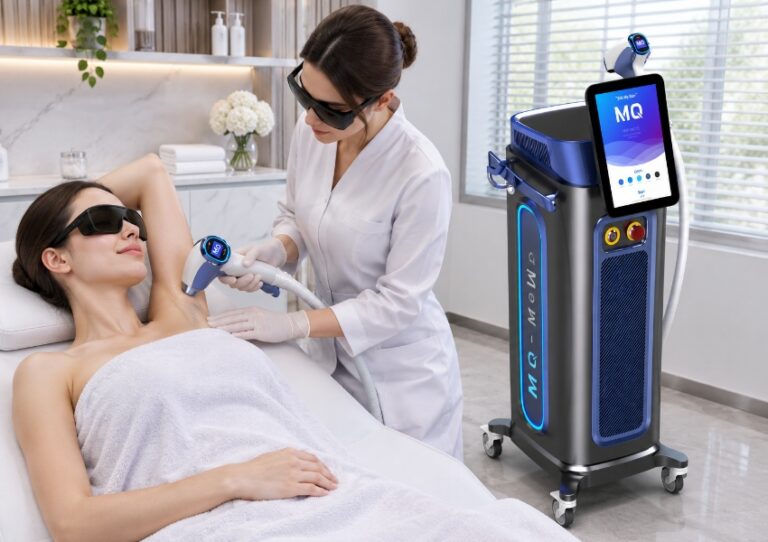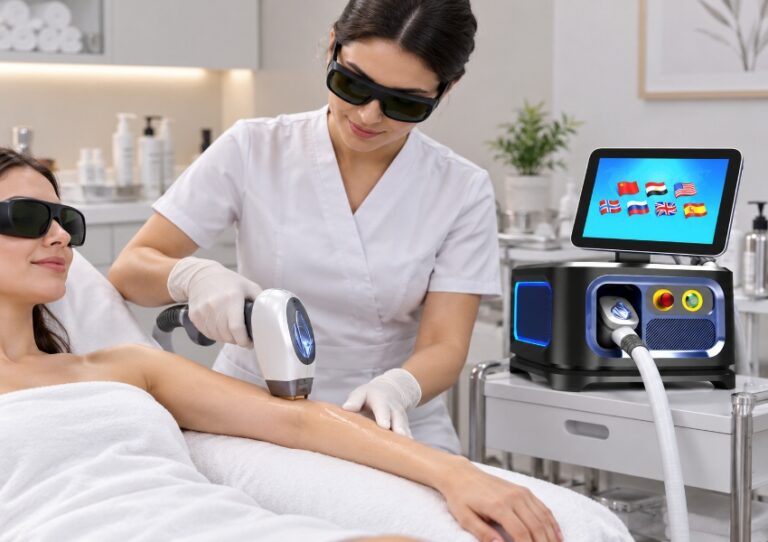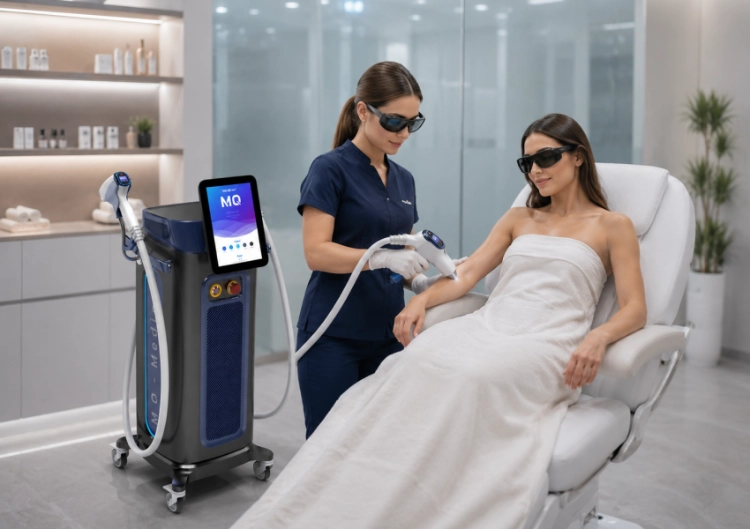
Laser hair removal for darker skin requires a different buying conversation from a standard price comparison. Epidermal melanin competes with follicular melanin for the same light energy. That changes the value of wavelength selection, pulse control, cooling stability, operator judgment, and documented test areas. A clinic can own a technically capable diode laser and still create avoidable risk if its team treats every skin profile with one preset.
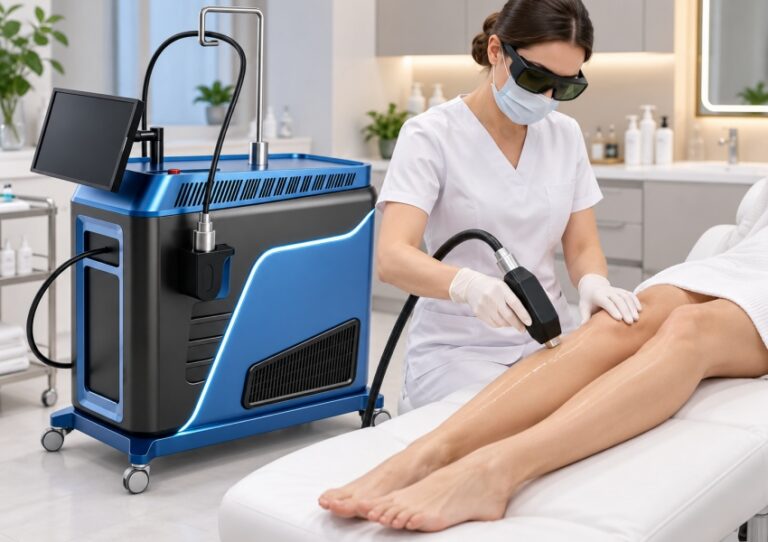
The SUPLASER route combines 755, 808, 940, and 1064 nm options in the supplied four-wavelength configuration. Its air cooling, water cooling, TEC cooling, and compressor cooling arrangement matters because comfort and epidermal protection must hold up during repeated firing. Those features do not make a machine suitable by themselves. The supplier still needs to state the delivered wavelengths, output ranges, tips, protocols, and market documents.
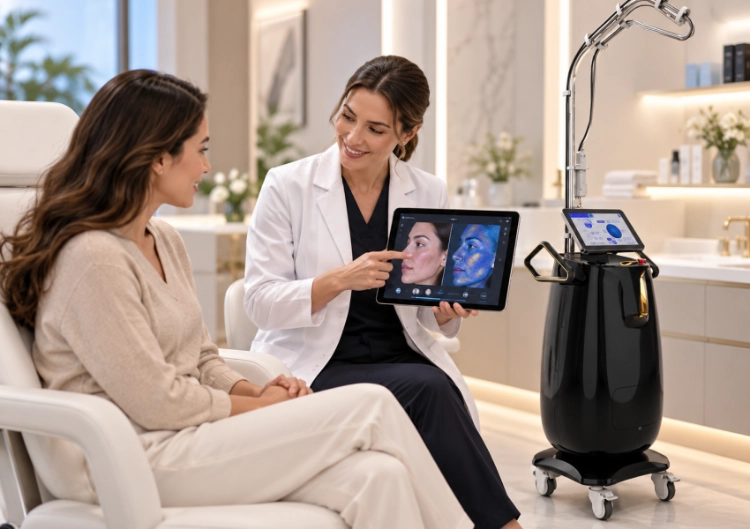
Start With a Skin and Hair Assessment
A darker phototype is not a single treatment category. The consultation should record skin tone, recent tanning, hair color and diameter, treatment area, previous energy-based services, pigment-change history, medication, photosensitivity, and the client’s ability to follow aftercare. Coarse, deeply seated hair on the underarm or bikini area presents a different target from fine facial hair. A purchaser should ask whether the system makes it practical to keep these records rather than relying on a generic skin-type label.
Why the 1064 nm Route Matters
A 1064 nm Nd:YAG hair removal route is commonly considered where deeper penetration and lower epidermal melanin absorption are helpful. It can be relevant for darker skin and coarse, deeper hair when the exact platform protocol supports that use. Hair density, skin response, pulse duration, fluence, cooling, overlap, and the operator’s ability to stop when an endpoint is excessive remain part of every appointment.
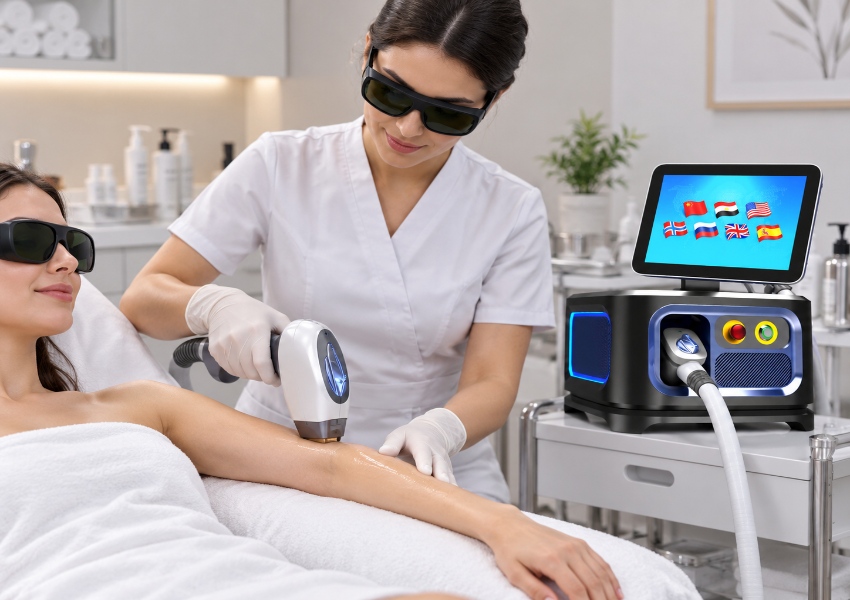
Ask for a live demonstration on a representative area, not only a display-screen tour. The team should photograph baseline skin, perform a conservative test area where appropriate, record the channel and settings, check the immediate response, and arrange a delayed review before a full-body package is sold. This sequence is slower than a walk-in promotion, but it creates a usable clinical record and protects the client relationship.
Where a Diode Laser Fits
Many hair-removal services like to use a diode laser in the 800 nm range, and this may fit well with your clinic that must treat many different body areas. For dark skin it becomes, is the operator able to modify the whole protocol instead of just titrating up energy because hair is coarse? The provided diode laser range provides a basis for buyers to compare platform formats. Verify the channel type, pulsing range, spot sizes, and multiple-use temperature performance, as well as whether it includes training on the unit being quoted.
Cooling Is a System, Not a Sales Line
Cooling under load should be assessed for laser hair removal dark skin services. The air cooling water cooling TEC compressor method is called the SUPLASER. The important question is the behavior of the handpiece, contact surface, and internal cooling loop after a couple large-area appointments, as well as whether they will work fine together with fault alerts. A block tip at the start of a cold day does not mean that it will persist throughout a busy evening slot.
What to Test During a Demonstration
Perform a demo in which you execute setting your limit and half-face area with the body. Tip: tip quality contact, breakpoints, handpiece temperature, and client sensation/tilt recovery of cooling/positive handling in the cable for response to interface time cleaning (timer). Q: What is the warning when water flow, TEC operation, or temperature moves outside the specified range? In addition, the supplier must explain in writing every day’s check-ups of water and filters (in their absence) along with handpiece cables.
So long as something was properly validating the user experience (because cooling gives a better time but can’t fix an inappropriate wavelength/overlap/tan after tan/run-off choice). Staff require a clear rule for pausing and reviewing regarding excessive pain, unexpected whitening or blistering, and persistent erythema acting as an indicator of pigment alteration. You teach that rule together with the menu of possible wavelengths. That might be a rule you need to teach together with the menu of available wavelengths.
Build a Darker-Skin Service Workflow
The appointment begins before the machine is turned on. Implement a consultation form that differentiates between face, neck, underarm, and bikini area as well as leg and back; these areas have varying hair diameter, degree of curvature, amount of skin contact, optimal number of cycles, and rate of expectation from clients. A standardized photography process and a treatment map allow the next operator to see what has been done. This record should consist of parameters such as selected wavelength, tip or spot, pulse duration, fluence level, and cooling setting, to name a few.
Aftercare is customized, not performative. Heat exposure, friction, sun protection, hair-removal methods in between sessions. Lastly, why should a client call the clinic? Do not commit to a specific number of sessions. It depends on the hair cycles, the skin area affected, their pigmentation contrast with skin color, and adherence to the interval of treatment changes. An ideal review appointment should always ask: What shed? What regrew, and has the residual hair changed in caliber before changing settings?
Use Local Marketing to Improve Consultation Quality
In other words, local promotions for darker skin should not be “all skin types” as a headline claim per se but begin with assessment and individualized planning. Post brief, concise responses to the frequently asked questions: why does one get a patch test? What is the reason if it comes close to tanned skin? A photo of progress with consent should be taken in the same light, angle, and interval between hair growth. Redness immediately after treatment does not equal longer-term reduction.
After the clinic has defined its client mix, MQLASER can discuss the recommended SUPLASER specifications and your OEM or ODM requirements as well as the training scope. A distributor putting together the configuration can utilize its experienced R&D team and product development investment but must specify the precise handpiece, cooling arrangement, warranty, service response, and documents within the purchase order. Check those before you roll out, using the MQLASER website and support contact.
Conclusion
The best wavelength count is not what’s best for a machine for darker skin. That can only be defined by the clinic’s ability to assess skin and hair accurately, choose an adequate route of administration (whether it is adjuvantly during or after), and maintain cooling adequately throughout all over some sessions whilst documenting a trial field area for review with their client. SUPLASER provides a starting point with multi-wavelength support. Clinical value derives from the protocol but also from patients and lives that were changed due to the team’s and operational discipline around it. For more detail, see our guide on this article.
FAQ
Q1: Is 1064 nm always required for darker skin?
A1: Not always. It is commonly considered for darker phototypes and coarser, deeper hair, but the final plan depends on assessment, device protocol, and test response.
Q2: Does strong cooling make higher settings safe?
A2: No. Cooling supports comfort and epidermal protection but cannot correct an unsuitable wavelength, pulse, overlap pattern, or treatment timing.
Q3: What should a clinic record after a test area?
A3: Record skin and hair features, selected channel, spot or tip, pulse, fluence, cooling, immediate endpoint, client sensation, and delayed response.