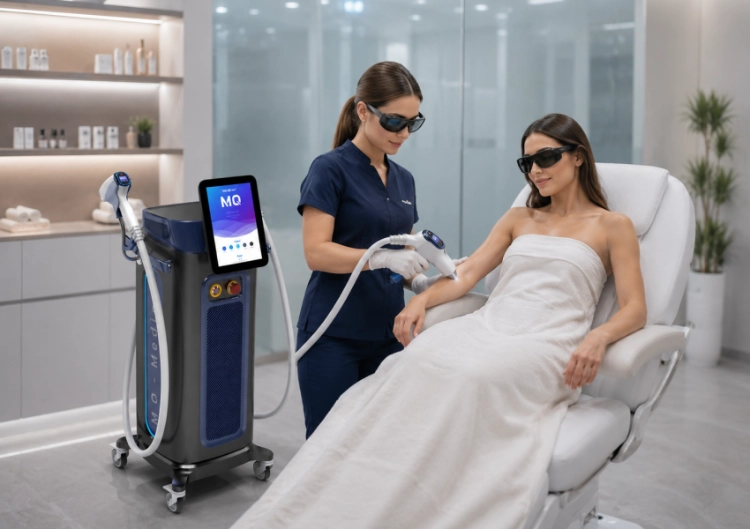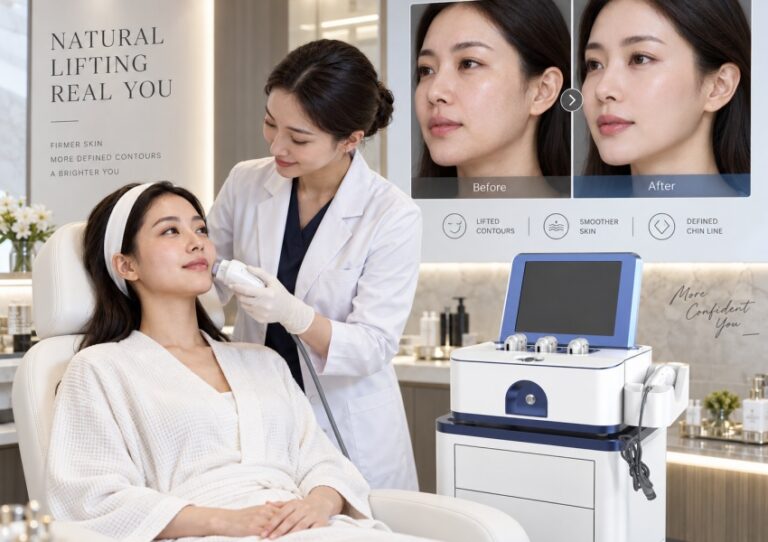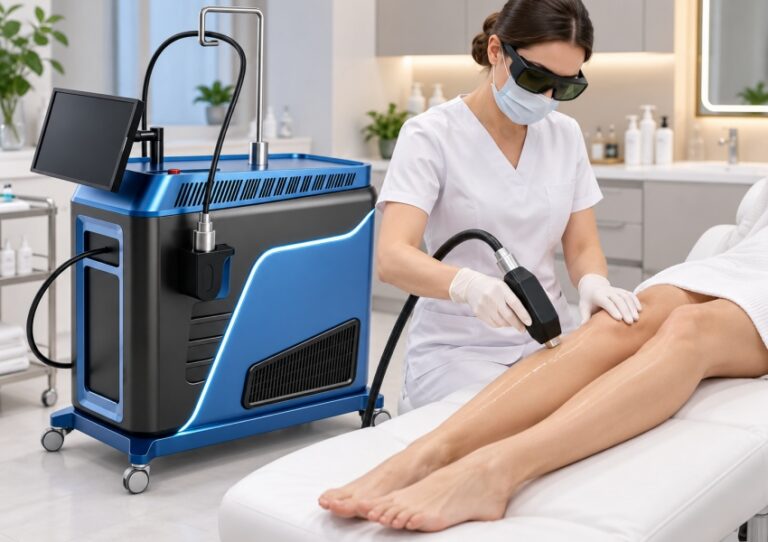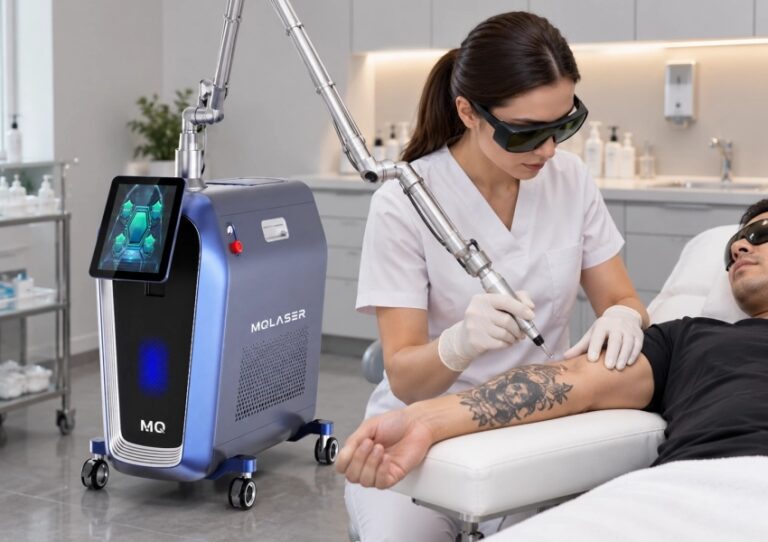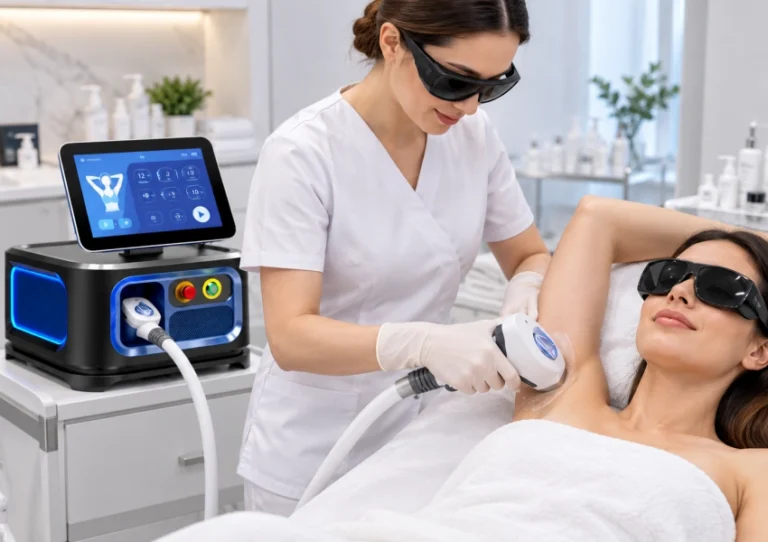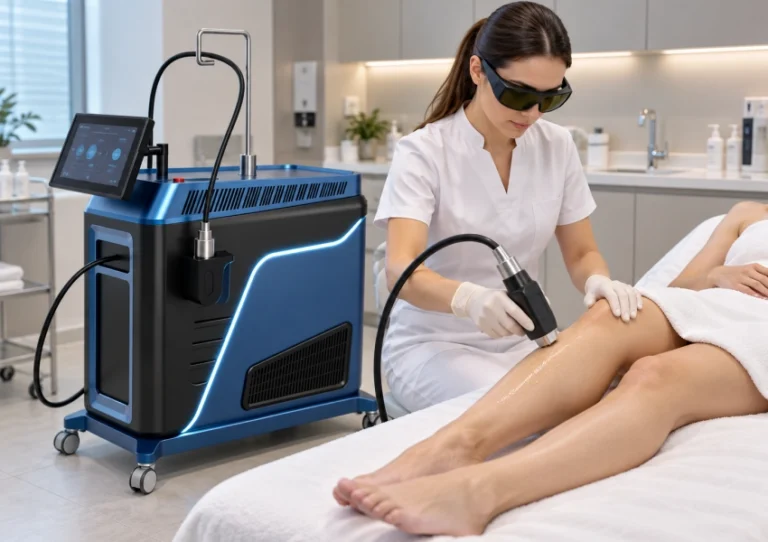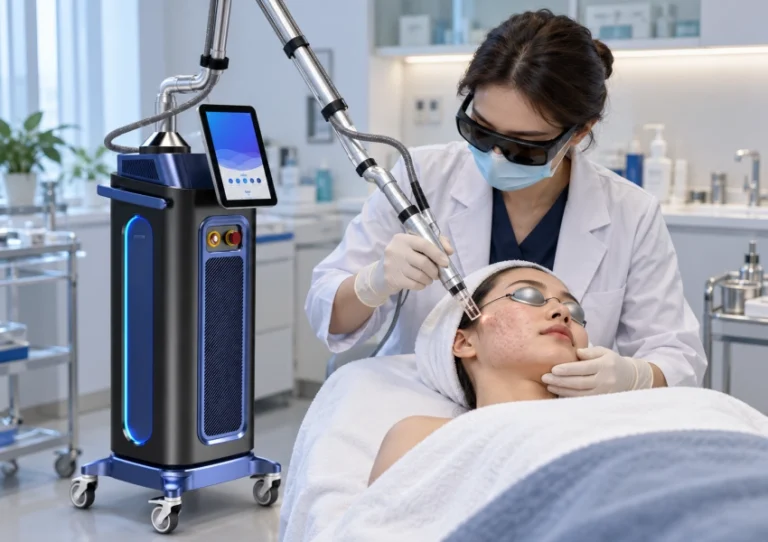
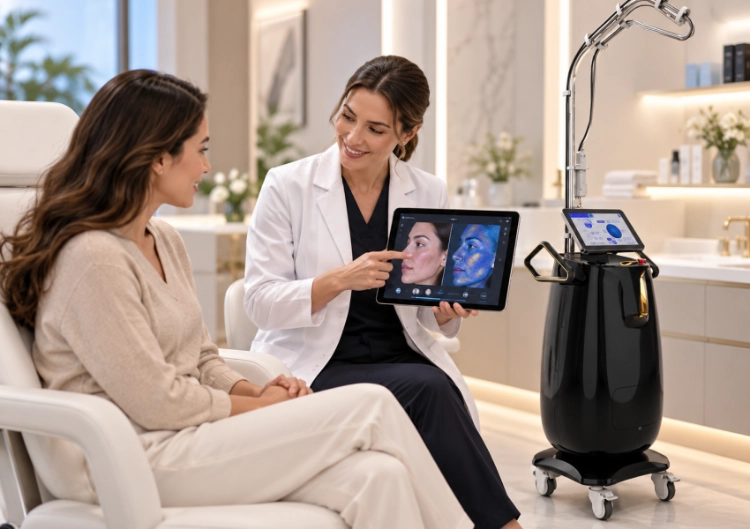
Menus stop being hard to sell when each cabinet on the floor owns one job. A 1927 nm thulium laser and a fractional CO₂ laser get filed under skin rejuvenation on the same price list, and honestly, that filing is where the confusion is born. Neither wavelength sounds stronger to a client. What decides the sale is the concern raised at consult, the recovery that client can swallow, the skill your operator actually has, the room you can prep, and whether anyone is left on staff to do the follow-up.
Thulium carries a skin-quality program around uneven tone, shallow discoloration, and texture refinement. The CO₂ side, in an 80 W build, is the fast wrinkle machine. Controlled ablation comes with it, plus a recovery window the patient signs for. Both cabinets can share a clinic. Sell them as interchangeable sessions and someone ends up in an awkward conversation.
Start With the Client Concern
Where Thulium Fits
For example, a 1927 nm thulium platform is typically found in the superficial to mid-depth skin-quality category of any clinical menu. It could be comprised of a wash, photo-taking, eye cover-up (if shielding is offered), and even the selection of parameters, along with fractional passages if carried out appropriately to make sure that comfort support is maintained in those places cared for on modes where provided as well as composed after care too. Instead of a promise to be realized after one visit, it can present itself as a staged program for tone and texture. Loudness, power of witnesses, number of passes made by the treatment field, jaw-closing quick response movement, and composition are to be reviewed.
It’s a commercial advantage: the menu flexibility. While it probably would be easier to book a thulium session in between work and social obligations compared with an aggressive CO₂ session (with varying recovery based on settings/coverage/skin type/patient response), the service is not without risk, nor is it the right solution for every pigment concern. The plan may alter, however, in the case of recent tanning, active inflammation, or a high history (scars), as well as poor aftercare capability.
Where CO₂ Fits
Wrinkles pay better than texture does. That crease books fractional CO₂. Texture refinement wanders in from a skincare routine gone wrong. Different patient, different machine, different consent form. The 80 W tube earns its place through something almost smooth. More energy lands inside each microthermal zone on every pulse, which means the operator stopped chasing an endpoint with third and fourth passes ages ago.
A rhytide roots itself deep, down around 800 to 1500 micrometers in the mid dermis depending on the site, and lighter devices simply cannot heat that layer to a useful temperature in any sensible session length. The CO₂ column arrives there on a single pulse. The wall vaporizes, a rim of coagulated dermis sits under the wound, and that rim does the collagen work she actually paid for.
Moderate full-face settings give three to seven days of salmon-pink flush and concealer becomes acceptable around day five if the patient is honest about her own mirror. Fourteen days on deeper passes. Healing favors the fractional design since untreated keratinocytes survive between columns and walk inward, and low density taken to real depth often behaves better than dense shallow passes.
Cooling runs pulse to pulse at this power or the epidermis absorbs what the dermis was meant to receive. Fitzpatrick IV and up get a test patch, always. Smoke evacuator runs the whole session, eyewear stays on every face in the room including the assistant, and the binder names exactly which staffer owns each follow-up call.
Two Lasers, Two Separate Journeys
Hand each platform its own route through the clinic and the menu sorts itself. Thulium handles skin quality as review, repeat surface session, then a top-up fitted around whatever the client already has going on. CO₂ arrives with heavier machinery in tow, a longer consult, a preparation block holding real calendar space instead of a fifteen-minute squeeze, review windows wide enough to catch a healing problem while it is still boring.
| Clinical factor | 1927 nm thulium pathway | Fractional CO₂ pathway |
| Primary menu role | Tone evening, texture refinement, programs planned around less downtime | Faster wrinkle reduction on an 80 W build, plus selected texture and scar pathways |
| Tissue interaction | Fractional superficial or sub-ablative positioning depends on configuration | Controlled ablation with surrounding thermal effect |
| Room needs | Parameter documentation, eye protection, aftercare setup | Smoke evacuation, eye protection on everyone, wound-care setup, tighter follow-up |
| Scheduling logic | May fit repeat programs with a shorter social interruption | Needs a larger recovery and review window |
Assessment and Parameter Records
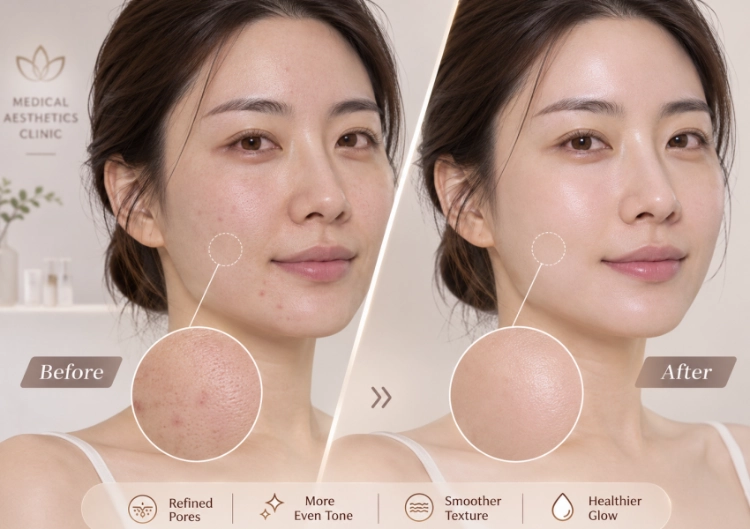
For thulium, observe if the intention is tone or volume (or a much larger skin-quality program). For CO₂, explain why the selected coverage and period are appropriate for both the indication and anticipated recovery window. These records assist the clinic in looking at a delayed response instead of an assessment from the early minute in session.
Every client gets sorted by the complaint she walked in with, which beats trusting whatever preset the machine last remembered. The woman chasing shallow uneven tone may need half the coverage of the one fixated on texture, and a facial plan does not hop onto a neck or a décolleté on its own. Confirm the site before anything touches her skin, ask what else she has had done and what she layers on at night, then photograph the starting point and tell her plainly how the face will look over the next several days. Matching photographs at review, a note about whether the change pulled its weight, and only then another round on the calendar.
Aftercare, and the Review Window
Thulium aftercare means gentle cleansing, sunscreen, barrier cream, and staying out of saunas away from scrubs until the operator releases her. After CO₂ someone leans in and actually examines the face, checking crusting, drainage, swelling still creeping upward, pigment in the wrong neighborhood.
Local Thulium Service Example
Maria Aires uses its Thulium platform as part of an in-house skin-quality service menu. The clinic can position the treatment for clients seeking support with uneven-looking tone, visible texture, dullness, and selected superficial pigmentation concerns, subject to consultation and local treatment protocols. A practical local campaign can begin with short educational content explaining the difference between lower-downtime Thulium resurfacing and more intensive CO₂ procedures. Consultation-led messaging, consented progress photography, and separate service pages for tone, texture, and seasonal skin-refresh programs can help set realistic expectations. Booking staff should explain that treatment settings, recovery, and the number of visits vary by skin condition, recent sun exposure, treatment area, and individual response.
Let the Specs Back the Clinical Call
The ThuliWave provides suppliers with the ability for clinics to select between non-ablative or sub-ablative fractional positioning, given how it will be configured. The 1927nm thulium category also enables a wider association of formats and adjuncts. Your quote should detail energy range, scan pattern, handpiece options, cooling or comfort features, and training spare parts, as well as the nut shell of market documents provided.
For CO₂, demand measured joules at the handpiece of the actual demo unit, since a tube rating printed on paper proves nothing. Run the machine against the case list you really treat. Then the scan field against full-face work, the pulse range, spare handpiece pricing, and tube replacement terms in the same email as the quote. Smoke evacuation, aiming beam and eyewear share one checklist line. An 80 W configuration does not receive a deposit until it has passed a delivery test under your own protocol, and the OEM or ODM conversation can happen in the same meeting.
A Menu Your Team Runs Without Heroics
No single cabinet has to solve everything. Thulium takes the repeatable skin-quality protocol and CO₂ takes the wrinkle work that pays for the room. Then somebody times everything for a fortnight, booking length, staff minutes, aftercare calls, turnover, the follow-up backlog, real numbers instead of guesses. A spec sheet can run broader than your needs and still earn its keep, assuming the machine actually fits the schedule the clinic runs on.
Market by concern and recovery window, locally. Say who should book a consult, what the appointment contains, how the first few days feel, when she gets reviewed. Consent-first photography, transparent staging. R&D credentials, OEM/ODM support for new markets and MQLASER‘s certification portfolio belong further down the page in a supplier section, leaving suitability and service level at the front. Clinics can check the MQLASER site for configuration detail, and our article picks up wherever this one stops.
| Purchase and service factor | Thulium platform | CO₂ platform |
| Training priority | Coverage, energy selection, skin assessment, aftercare | Depth, density, plume handling, wound care, escalation |
| Cost drivers | Handpiece, consumables, training, service terms | Tube, scan system, plume control, accessories, service parts |
| Marketing message | Skin-quality program with clear recovery expectations | Faster wrinkle reduction per session, sold with a written aftercare plan |
| Buyer check | Exact wavelength, mode, scan, cooling, output, documents | Tube type, output stability, scan field, pulse, safety package |
FAQ
Q1: Can thulium and CO₂ be offered in one clinic?
A1: Yes, when each platform has a separate indication, workflow, recovery explanation, and trained operator pathway.
Q: Which laser has shorter recovery?
A2: Settings, coverage, skin type and the patient’s own healing all move the answer. Thulium programs usually carry less downtime, yet no fixed count of days holds for everybody.
Q3: Should every client receive the stronger platform?
A3: No. Select the platform that fits the concern, recovery tolerance, skin assessment, and authorized protocol.