When deciding between a picosecond laser and a Q-switched laser for tattoo removal in 2026, the most important thing to consider when evaluating a tattoo for removal is the type of tattoo ink used for the tattoo. There are many critical factors that must be considered when evaluating a tattoo for removal. Factors include the type of tattoo ink, the colors of the tattoo ink, the depth of the tattoo ink in the skin, the density of the tattoo ink in the skin, and the age of the tattoo. Additional critical factors for evaluation of a tattoo for removal are the history of previous treatments, the patient’s skin type, and where the tattoo is located on the patient’s body.
Also, the risk profile of the patient must be evaluated. For removal of all colors of tattoo inks, no general statement can be made on whether a Q-switched nanosecond laser system or the latest generation of picosecond laser systems is better. Both types of laser systems use selective photothermolysis and photoacoustic effects for removal of tattoo pigments and leave the surrounding skin unaffected.
| Comparison factor | Picosecond platform | Q-switched platform |
| Pulse duration | 350 ps | Nanosecond pulse delivery; exact value depends on the model. |
| Common wavelength route | 1064 nm and 532 nm are standard on DEPELITE. Other wavelengths are optional and must be confirmed. | 1064 nm and 532 nm are typical wavelengths. Model configurations can differ greatly. |
| Clinical decision | May support photoacoustic fragmentation for selected pigments | An established method when wavelength, ink, skin type and protocol are all suitably matched. |
| Evidence needed | Delivered pulse, fluence, spot, beam profile and clinical data. | Like-for-like output and clinical data – not just a Q-switched label. |
Map Ink Color, Skin Type, and Treatment History
Recording information regarding the Fitzpatrick phototype of the patient and their recent tanning is crucial. In addition to the age of the tattoo, the clinician must determine whether the tattoo was professionally applied or otherwise, the colors used, and the approximate depth of the ink in the skin. The location, depth, and density of the tattoo, as well as prior laser treatment using what wavelength and with what results, must also be recorded. Scarring, patient medications, history of herpes, and history of poor wound healing must also be recorded. It is advisable to take pre-treatment photographs of the area to be treated. Prior to treatment the patient must be informed of the risk of incomplete removal and color change and of the fact that some cosmetic inks containing iron or titanium compounds may darken with laser exposure. A test spot deserves consideration when pigment composition or response remains uncertain.
1064nm is typically used for black/dark blue ink and is more suitable for darker phototypes. Parameters should be kept conservative for this wavelength. 532nm is typically used for red/orange/yellow inks with greater epidermal melanin absorption. Users must exercise greater caution when using this wavelength on darker skin types. Green and blue inks may not respond to these wavelengths or may respond erratically – it is not safe to assume the appearance of an ink and its chemistry.
What Pulse Duration Changes and What it Does Not
The label “picosecond” does not guarantee sufficient removal of tattoos with good comfort and fewer treatments. Q-switched nanosecond systems are very effective for the removal of black and multicolored tattoos when corresponding inks are used on appropriate skin types. They might even be more cost-effective in many cases, because sufficient service and corresponding local protocols for the treatment are already available.
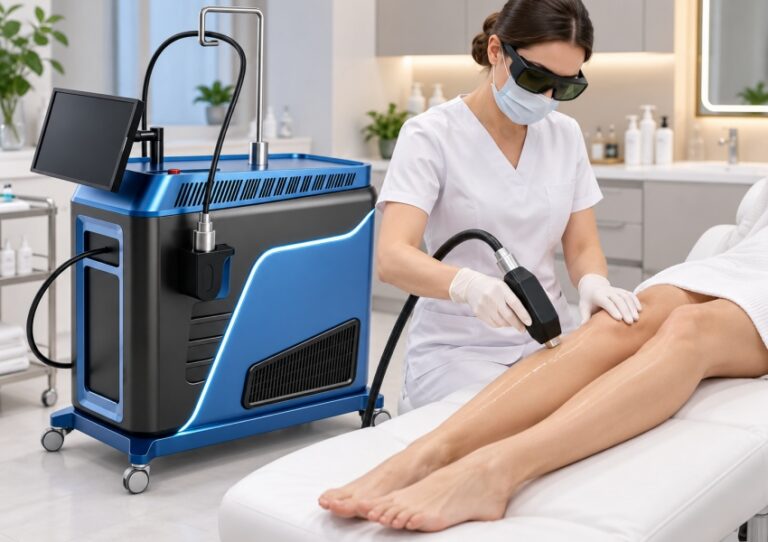
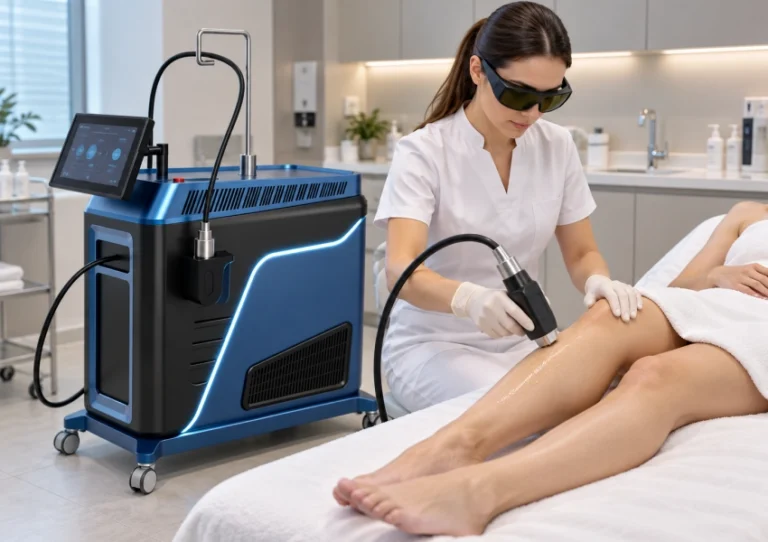
DEPELITE has 350 ps, standard 1064 nm and 532 nm wavelengths, SP/PTP/MP modes, 2–10 mm spots, and over 30 self-check points. Listed energy ranges differ by mode, including up to 1200 mJ SP at 1064 nm and up to 600 mJ SP at 532 nm. These are equipment capabilities, not tattoo treatment settings. Verify maximum energy at each spot size and the delivered output at the handpiece before comparing models.
Plan Sessions Around Tissue Response
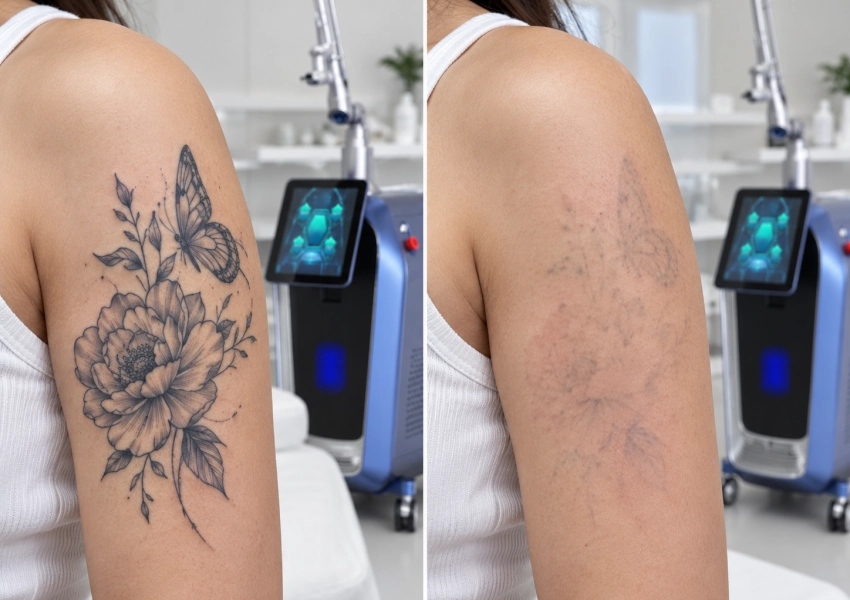
Immediate whitening or a “frosting” effect can occur, but do not repeat the same area with overlapping pulses to chase this endpoint. The onset of edema, pinpoint bleeding, or erythema of the surrounding skin can all occur depending on wavelength and treatment protocol. Some inks may change color with treatment, and patients should be told that complete removal of all colors is not always possible. A test area should be performed on darker phototypes, and a follow-up should be delayed to note for possible development of PIH that may not be immediately apparent.
Applying DEPELITE to Local Service and Distribution Strategies
For an in-house provider such as Maria Aires from DEPELITE a focused service menu for tattoo ink and pigmentation could be created. On an initial consultation the ink color, tattoo density, location, clients skin tone and previous sessions as well as their intentions can be assessed and a corresponding treatment plan created. For local marketing of tattoo removal it has to be clearly stated that this usually is a treatment which is carried out in single sessions over a longer period of time. Results can differ greatly depending on the used ink, its depth in the skin as well as the individual’s reaction to the treatment. Videos, consultation-led booking, progress images of the client taken with their consent as well as aftercare information will help to create realistic expectations of the treatment and prevent false promises of a fixed number of sessions and perfect results.
Soupelli is a distributor of Brazilian beauty equipment for commercial customers. For clinics, tattoo removal shops and other businesses offering pigment removal services using already installed equipment, DEPELITE can be offered as a picosecond and Q-switched alternative. The sales offer should link the offered wavelengths, handpieces, operation modes as well as the training, maintenance, warranty and spare parts offer of the DEPELITE machine to the needs of local customers. Rather than an unsupported national market figure, demand in Brazil should be analyzed by region and by customer groups. This can be achieved by looking at distributor interest, installed machines, repeat business, required training and service capacity of already sold machines for picosecond and Q-switched alternatives.
Compare Devices on Measured Output and Service Support
Confirm whether software presets are editable, whether settings are logged, and what happens when a handpiece or energy monitor fails. The DEPELITE picosecond laser can be compared within the category of picosecond equipment but competitors should be compared on like-for-like wavelength, pulse width, spot size and fluence delivered as well as service and support offered. A premium platform may have strong local referral base, but a configurable system will leave budget for training and patient acquisition. Neither advantage confers clinical superiority.
For the existing handpiece options, compliance documents and additional treatment support information regarding a current Q-switched versus a picosecond handpiece the clinic can request configuration details.
We would advise a clinic to select a platform that their operators use on a daily basis. It should support the local ink mix and adverse-event management. In tattoo removal, careful staging is generally more important than the highest energy setting.
Does the tattoo look professional, cosmetic, amateur or like a cover-up? Some cosmetic inks are unknown in their full composition and can react in entirely unpredictable ways. Dense cover-ups can have multiple layers of ink hidden beneath the surface. Find out if the tattoo has had any previous treatment and wait for the delayed response before changing wavelength or increasing energy. This is all part of the treating process, protecting the skin whilst providing good evidence of the difference between the picosecond and Q-switched lasers.
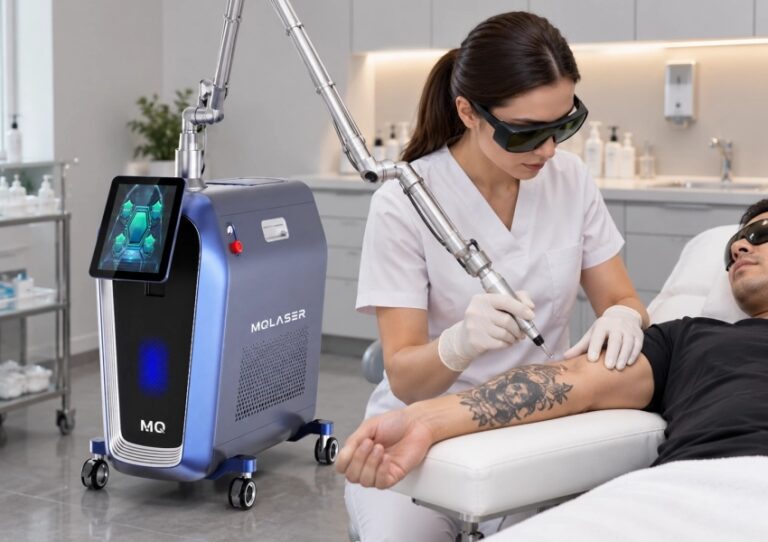
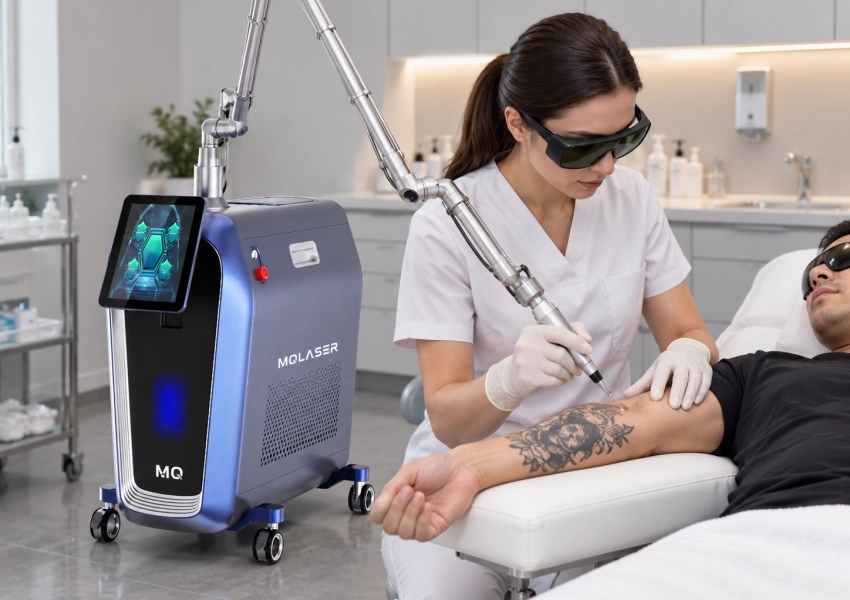
Incorporate details on who reviews before and after photos and for what period of time of any delayed reactions for a new service. A trained operator can deliver the service yet persistent color change, signs of infection and any suspected scarring must be referred to the clinics’ medical review process for these types of cases. The information regarding the MQLASER Picosecond laser can be used when discussing equipment with potential suppliers. Find out if the area has ever been treated before and allow time for a delayed reaction before changing wavelength or energy. This method allows for safe treatment and provides good evidence of the differences between picosecond and Q-switched treatments.
Pricing should include the cost of eyewear, consumables, calibration, training, for the initial review only and for any delayed follow-up visits. Although a low purchase price may initially seem attractive, it can cost a lot more in the long run if staff cannot quickly and easily identify the ink response and are forced to re-stage a pass too soon. Continue reading our other guide.
FAQ
Q1: Is picosecond always better than Q-switched for tattoos?
A1: No. It depends on various factors including the type of ink, wavelength, skin type, equipment settings, location of the tattoo and operator’s skills and experience.
Q2: How many tattoo-removal sessions are required?
A2: That varies greatly by ink, density, depth, location on the garment and the resulting color change. We cannot promise any fixed number prior to consultation.
Q3: Is DEPELITE’s 350 ps energy range a treatment protocol?
A3: No, those are numbers for the device. Settings for individual patients would require training and use of the validated protocol.