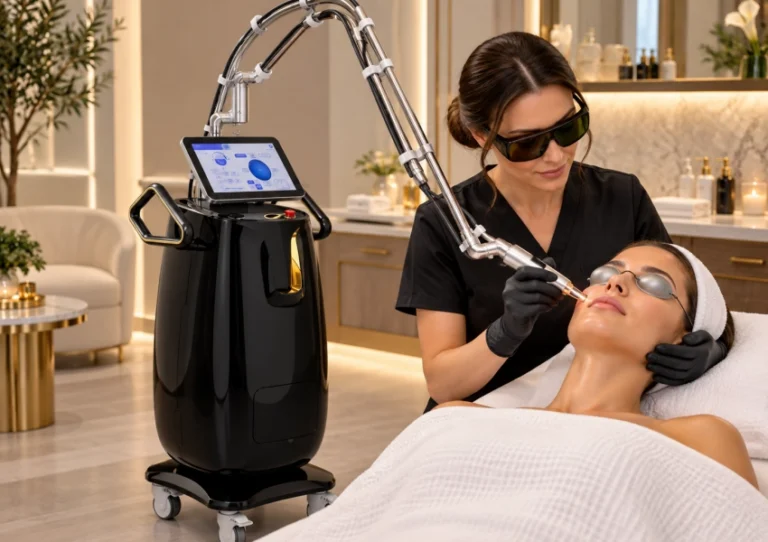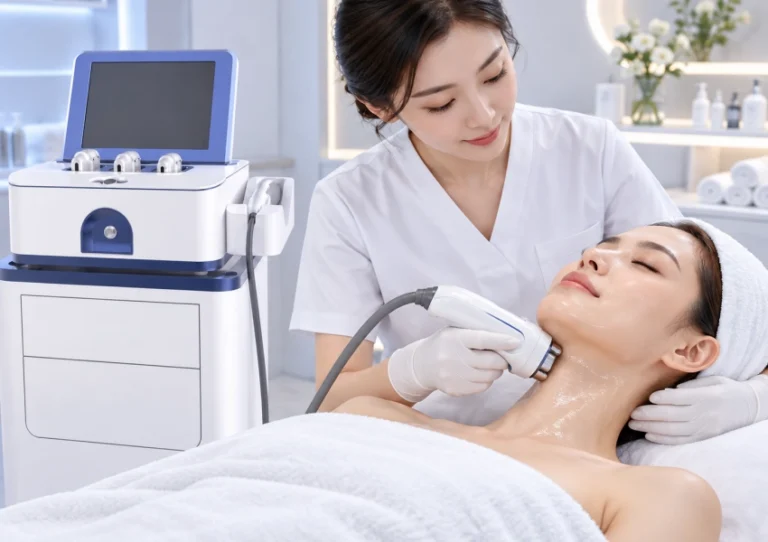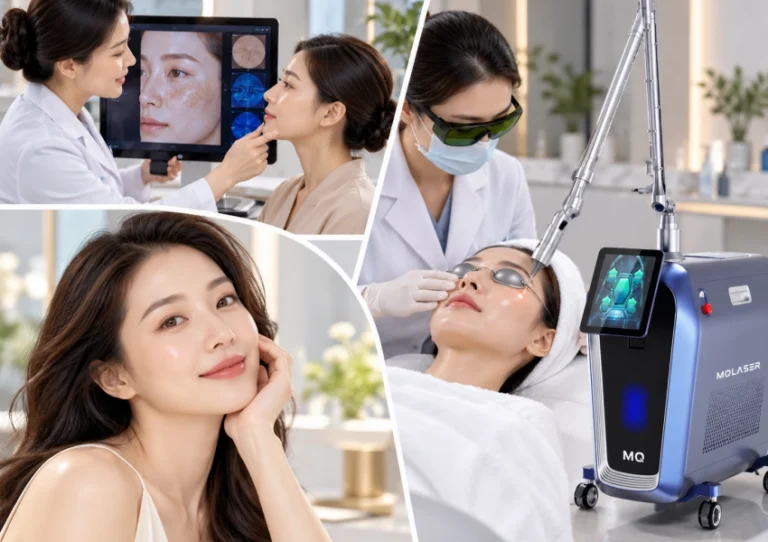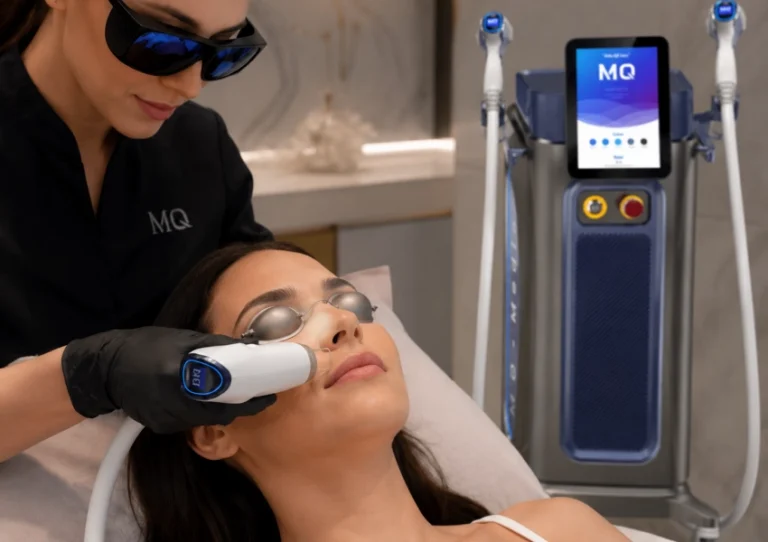
A low-downtime skin program needs more than a gentle-sounding wavelength. The clinic has to match the target problem, depth, density, session interval, and patient tolerance. A 1927nm thulium laser and a 1550nm Er:Glass system are both fractional options, but they do not create the same tissue response or serve identical case mixes.
This is a broad clinical distinction between 1927nm and 1550nm Er:Glass. The 1927nm laser is more absorbed by water, and is best suited for more superficial epidermal and dermal-epidermal treatment. The 1550nm Er:Glass laser is non-ablative and creates deeper dermal fractional thermal zones. Depth and recovery are largely determined by the device and its settings, however, so wavelength alone is not a good indicator of what to expect from a treatment.
Match Wavelength to the Problem Being Treated
A 1927nm program is often considered for dyschromia, photodamage, uneven tone, superficial texture, and selected early signs of aging. It can suit a clinic that wants a visible brightening or refinement pathway with staged intensity. A 1550nm laser is often selected for dermal remodeling, acne-scar texture, enlarged pores, and fine lines where deeper non-ablative heating is useful. Neither should be framed as a universal resurfacing answer.
Clinical assessment should separate pigment-dominant concerns from scar-dominant concerns. Record Fitzpatrick phototype, history of post-inflammatory hyperpigmentation, current tanning, melasma history, active acne or dermatitis, recent procedures, topical retinoids, photosensitizing medicines, and expectations around erythema and flaking. Patients prone to PIH may need a more conservative pathway, test areas, and longer observation before a full-face session.
| Planning factor | 1927nm thulium | 1550nm Er:Glass |
| Typical target zone | More superficial epidermal / dermal-epidermal treatment | Deeper non-ablative dermal fractional heating |
| Common program focus | Uneven tone, superficial photodamage, selected pigment and texture concerns | Acne-scar texture, pores, fine lines, dermal remodeling |
| Device example | ThuliWave: 1927 nm, up to 20 W; stated maximum ablative depth about 200–300 μm | 1550 nm is a wavelength comparison; competitor model-specific parameters must be verified |
| Recovery variables | Density, pulse duration, passes, phototype, barrier condition | Energy, density, passes, scar depth, phototype, cooling and aftercare |
| Key caution | Melasma and PIH can worsen after inflammation | Deeper thermal response may increase downtime and PIH risk |
What the ThuliWave Figures Mean in Practice
ThuliWave has a maximum ablative depth of about 200–300 micrometers, maximum output of 20 W, a top-hat beam profile, and 10, 15, 20, and 30 mm tips. It also describes separate pulse-duration and power settings, plus an optional roller. These values help define the platform’s configuration; they are not a standardized protocol or a promise of a specific clinical endpoint.
Tip size changes coverage and access. Smaller tips can support localized work; larger tips and rollers may make broad facial passes more practical. But faster coverage does not mean higher safe density. The operator still needs to control overlap, pulse stacking, total treated area, and heat accumulation. Ask for beam-uniformity data across each tip and clarify how the device displays or records delivered settings.
Recovery is a Result of Dose and Patient Factors
Redness, warmth, pinpoint edema, bronzing, dryness, and flaking can occur with either wavelength. A 1927nm session is not automatically a no-downtime treatment, and a 1550nm treatment is not automatically a long-recovery procedure. Density, energy, number of passes, overlap, anatomic site, baseline barrier, phototype, and aftercare all shape recovery. Give patients a realistic window and a contact route for blistering, persistent pain, infection signs, or marked pigment change.
Customer in the Field: Maria Aires and the Thulium 1927 nm
The 1927 nm fiber absorbs right where water does. That’s why it ablates cleanly and leaves a very thin thermal damage zone behind. Against ablative CO₂, the difference is the point, not a footnote.
It reaches for it on the in-between stuff. Rough texture, a few fine lines, open pores, a patch of sun pigment, the shallow rolling scars you only notice up close. It’s not her full-resurface tool. It’s the tool for the patient who needs a pass between the deeper sessions and doesn’t want a two-week recovery.
Coverage is adjustable, and that’s what keeps it usable across skin types. Tanned or sensitive skin gets one light pass, and it stops there. More texture, more time to heal, and it stages it over a couple of sessions instead. Same machine, different depth.
There’s a second use worth naming and then holding. Thulium is an established route for some gynecology applications, vaginal atrophy being one. It only does it where it’s authorized, where her training covers it, and where the consent is on paper. Drop one of those three and it doesn’t happen.
For a med-spa that’s the real value. It’s the quick-recovery step in the chain. Downtime runs shorter than ablative CO₂. The ablation is cleaner than a light surface pass. And the patients are the same ones already in the chair for her other resurfacing work. One more service on a menu that already earns its keep.
Design the Program Before Buying the Platform
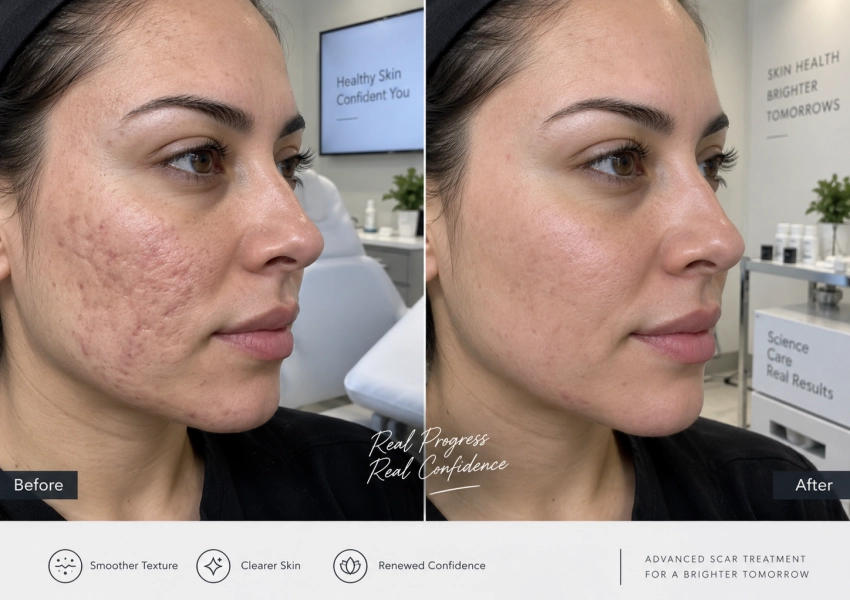
A useful clinic pathway can separate a low-intensity maintenance visit, a more active texture session, and a targeted scar or photodamage plan. Each needs distinct inclusion criteria, consent language, photography, endpoint notes, and follow-up timing. Do not combine treatments simply to fill a package. Allow the barrier to recover and reassess pigment before moving to another energy-based procedure.
For a first purchase, compare the actual 1550nm model rather than an entire wavelength category. Request pulse duration, microbeam spacing, density range, energy per microbeam, scan size, cooling, handpiece life, calibration method, training, and service conditions. For the ThuliWave configuration inquiry, ask for the exact handpiece and validated protocols intended for the target market. The 1927nm device provides wider platform context, but competitor data must come from the named model’s current technical documentation.
| Purchase check | Why it matters | Evidence to request |
| Output consistency | Fractional treatment relies on repeatable energy distribution | Factory test report and service calibration procedure |
| Spot and beam profile | Different tips can change coverage and fluence distribution | Beam profile by tip and scan-field dimensions |
| Training and protocol | Settings need to reflect indication and phototype | Training scope, contraindication guide, escalation process |
| Ownership | Downtime affects patient scheduling and course completion | Warranty, fiber life, spare tips, service response |
Choose 1927 nm when the planned service line is weighted toward superficial tone and photodamage work and the clinic can manage pigment risk. Choose 1550 nm when deeper dermal remodeling is central and the team has a clear scar and texture pathway. If both are commercially attractive, compare utilization and consumables against the patient mix rather than assuming one machine can replace the other.
Building Local Demand for ThuliWave
For an in-house provider such as Maria Aires, ThuliWave can support skin-quality services centered on visible uneven tone, sun-related discoloration, and overall skin texture. These concerns are not identical, so consultations should set out the intended focus of each service, review suitability, and explain realistic expectations and aftercare. Local marketing can make the offer easier to understand: publish concise educational posts about who may benefit from a consultation, show consent-based progress images, and connect the service to seasonal skincare campaigns and existing facial programs. Clear descriptions and a consultation-led booking path help attract clients while avoiding guaranteed-result claims.
For product configuration or service documentation, the clinic can review MQLASER and request the exact ThuliWave handpiece, tip, output, and training package before purchase. Clinical claims should remain within local authorization and the evidence for the actual device configuration.
Recovery claims should be based on documented cases using the same handpiece, settings, skin types, and aftercare, not a vendor’s fastest treatment time. Track erythema duration, flaking, time to resume usual products, pigment change, and patient-reported comfort. This gives staff a concrete basis for selecting 1927 nm or 1550 nm for the next patient.
The purchasing team should also ask how the clinic will handle patients who do not fit the advertised low-downtime profile. A protocol should identify when to postpone treatment, when to reduce coverage, and when to refer for medical review. Record the actual number of passes, treated area, interval between sessions, and time until the patient resumes normal skincare. Those records turn a broad wavelength comparison into a service decision grounded in the clinic’s own recovery pattern.
For procurement, ask the supplier to separate maximum capability from validated routine protocols. A 20 W rating or a stated depth does not tell the operator what to use on every phototype. Request sample treatment records, maintenance intervals, tip replacement terms, and training materials for the intended indications. That evidence lets the clinic compare 1927 nm and 1550 nm on reproducibility, recovery, and service support rather than on wavelength labels alone.
A useful comparison also includes the patient’s daily routine. A person who cannot tolerate visible flaking may be better suited to a lower-density plan, even when a stronger session could produce a more dramatic endpoint. The clinic should record recovery time, product restrictions, work interruption, and the reason for any postponed session. This makes the low-downtime promise measurable rather than promotional. If you are also wondering more, our article answers that.
FAQ
Q1: Which wavelength has less downtime?
A1: Neither guarantees less downtime. Treatment density, energy, passes, patient factors, and aftercare matter as much as wavelength.
Q2: Is 1927 nm better for melasma?
A2: It may be considered selectively, but melasma is relapse-prone and any inflammatory procedure can worsen pigmentation. Diagnosis and conservative planning are essential.
Q3: Are ThuliWave’s 200–300 μm depth and 20 W treatment settings?
A3: No. They are supplied device specifications, not patient-specific parameters or a clinical protocol.