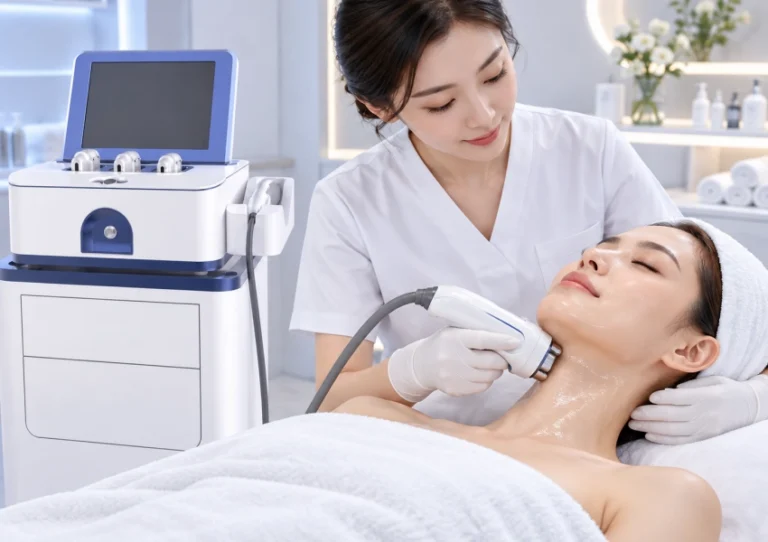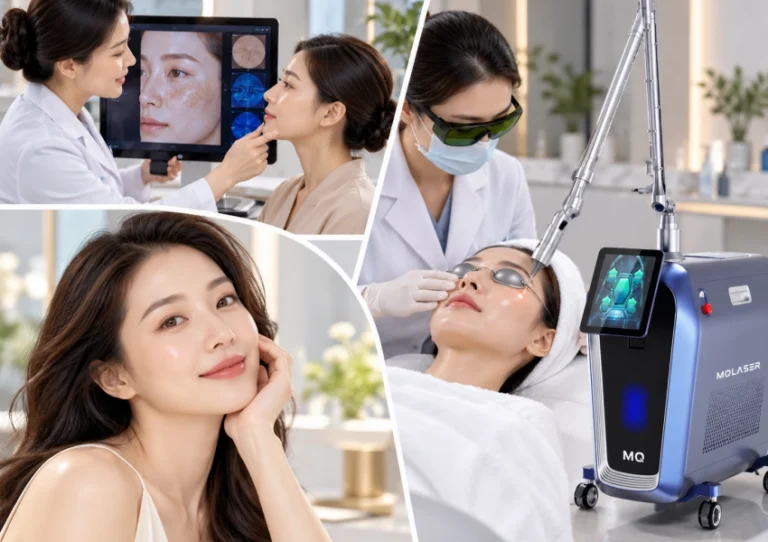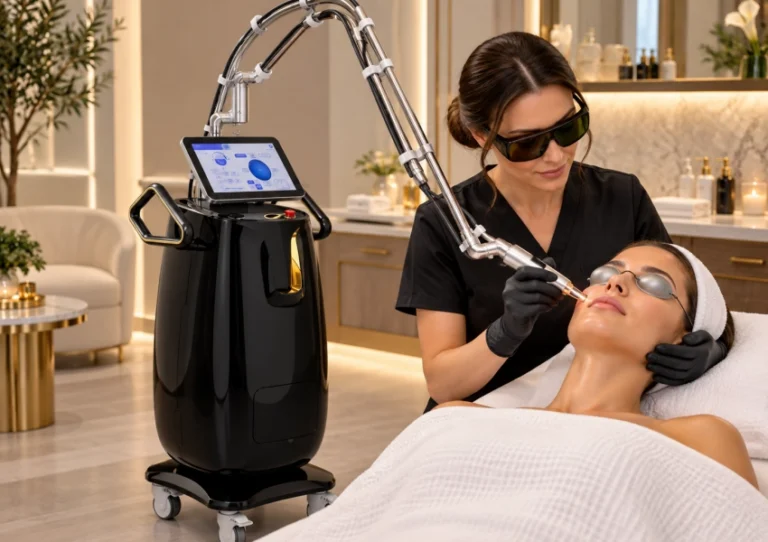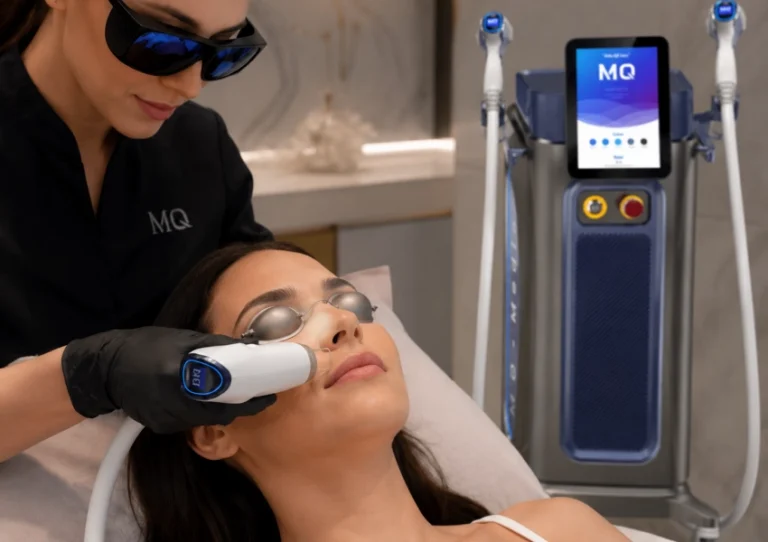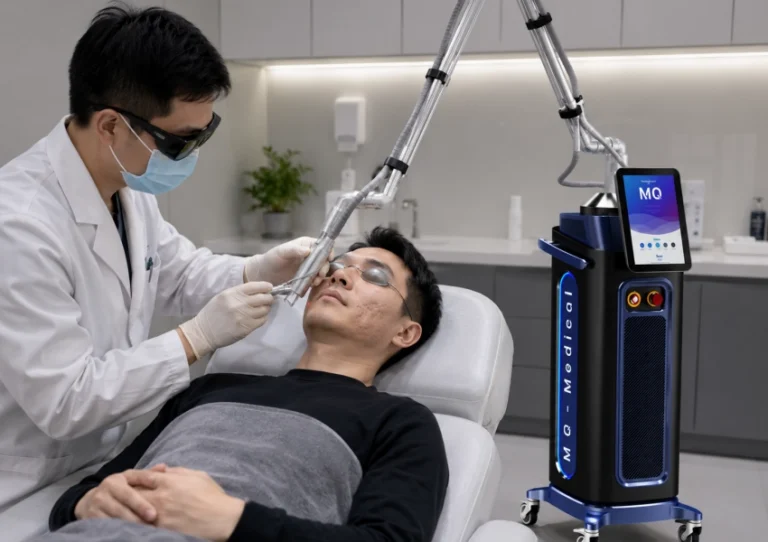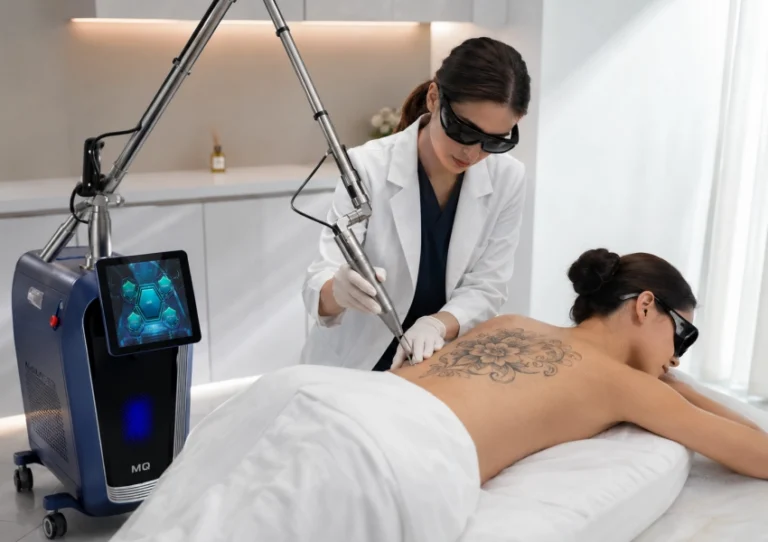
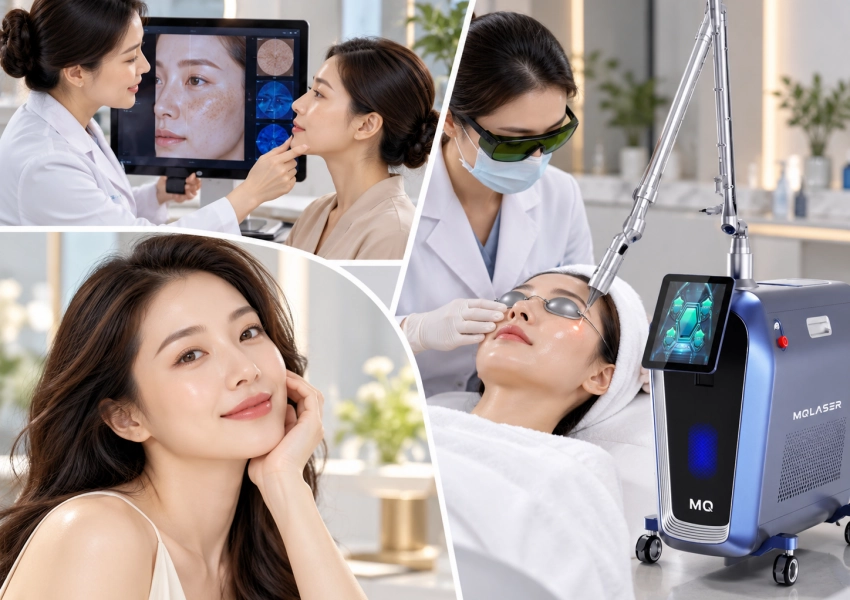
Melasma is not a simple brown spot. It is a chronic relapsing pigment disorder influenced by UV/visible light, hormones, heat, skin type, and sometimes inflammation. A clinic considering adding a picosecond laser for melasma to their menu of treatments must realize that the selection of a device is only one part of a bigger package of diagnosis, trigger control, topical treatment, careful use of laser, and good follow-up. Melasma is not tattoo removal. Although some cases of melasma can be treated with laser, there is a risk of post-inflammatory hyperpigmentation and of recurrence. Many cases need prolonged treatment, and some need maintenance treatment.
First Decide Whether the Pigment is Actually Melasma
Using a Wood’s lamp can help to estimate the depth of epidermal pigmentation in lighter skin types but is less useful in darker skin types. However, dermoscopy, history, distribution, symmetry, medications, pregnancy, family history, other causes of pigmentation, previous treatments, and response to previous treatment all help to establish a diagnosis of facial pigmentation and to plan treatment. A device must not be used to try to establish a diagnosis of pigment-related facial dermatosis.
Patients with melasma often work outdoors and have recently tanned. They may use irritant facial products and have previously had chemical peels or laser treatments for pigmentation. A pigment assessment should always include a facial examination and a pigment score with standardized photographs to establish a baseline and for follow-up.
| Clinical checkpoint | Why it changes the plan | Record before treatment |
| Pattern and depth | Melasma can be mixed; other lesions may need a different diagnosis | Distribution, dermoscopy, Wood-lamp findings when useful |
| Phototype and PIH history | Higher epidermal melanin and prior PIH call for extra caution | Fitzpatrick type, prior reactions, recent tanning |
| Triggers and maintenance | Hormonal, UV, visible light, and heat exposure can drive relapse | Medication and pregnancy history, sun habits, current topical regimen |
| Outcome baseline | Pigment may fluctuate and recur over time | Standardized photos and MASI/mMASI if available |
What Picosecond Energy Can and Cannot Do
Picosecond pulses deliver energy over a shorter interval than nanosecond Q-switched pulses. Depending on wavelength, spot size, fluence, and tissue target, the interaction can favor photoacoustic pigment disruption while limiting some heat spread. That is a mechanism, not a guarantee of safer or more durable melasma clearance. Melasma includes melanocyte activity and dermal changes, not just a removable deposit of pigment.
The supplied DEPELITE configuration lists a 350 ps pulse width, standard 1064 nm and 532 nm wavelengths, SP/PTP/MP modes, a 2–10 mm adjustable spot, and energy ranges that vary by mode. For example, listed SP ranges are 50–1200 mJ at 1064 nm and 20–600 mJ at 532 nm; these are machine capability figures, not melasma settings. The DEPELITE picosecond platform should be evaluated against its delivered spot profile, calibration, handpiece condition, pulse stability, cooling, and local regulatory status.
Wavelength Choice is a Clinical Decision
1064 nm is generally the more conservative pigment wavelength in darker phototypes because epidermal melanin absorption is lower than at 532 nm. That does not make it risk-free. Lower fluence, larger spot selection, test spots, longer intervals, and careful review for delayed darkening may be appropriate under a trained clinician’s protocol. A 532 nm option may target superficial brown pigment more strongly, but epidermal melanin competes for energy and PIH risk can rise. It should not be treated as a default choice for every melasma patient.
DEPELITE has gained recognition among both aesthetic practitioners and equipment distributors in international markets. In New York, Maria Aires Med Spa purchased DEPELITE for professional use, bringing picosecond laser technology into a practice focused on personalized aesthetic treatments. With 1064nm and 532nm wavelengths, DEPELITE supports tattoo removal and pigmentation-related applications. Clinics can build local awareness through patient education, treatment consultations, and targeted social media campaigns. In Brazil, Soupelli purchased DEPELITE from a different business perspective, focusing on equipment distribution to aesthetic professionals. Brazil’s aesthetic devices market is estimated at USD 213.5 million in 2026 and projected to reach USD 345 million by 2031, reflecting growing opportunities for laser-based aesthetic equipment. For distributors such as Soupelli, picosecond laser systems offer potential applications in tattoo removal and pigmentation treatments, alongside opportunities to provide professional training, technical support, and after-sales services to local clinics.
Build theTreatment Pathway Around Relapse Prevention
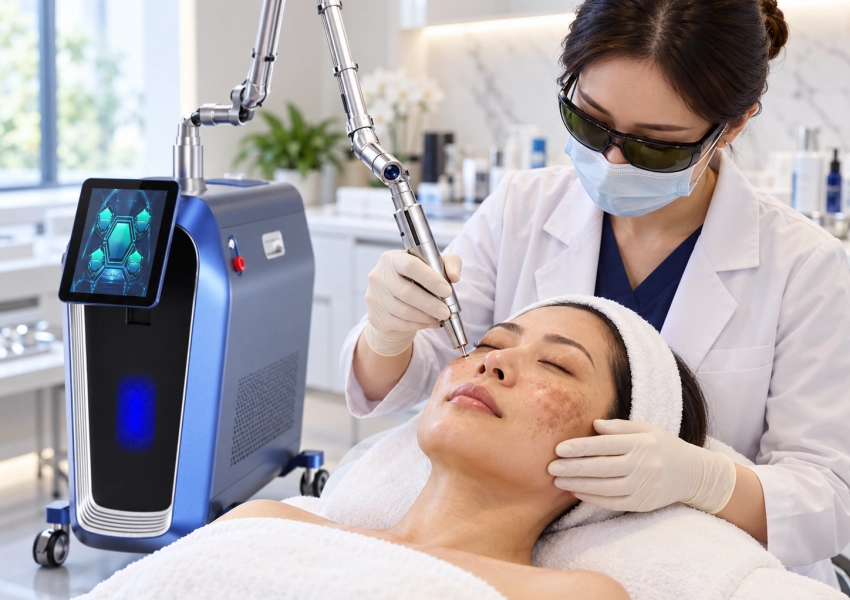
Dermatologists can add in additional treatments such as combinations of hydroquinone-based medications, azelaic acid, retinoids, and other depigmenting agents. Whether a particular treatment is appropriate can depend on a number of factors, including whether the patient is pregnant and whether she has experienced any adverse effects from previous treatments. Oral tranexamic acid can be prescribed for patients with melasma, but this is a prescription medication that requires thromboembolic screening. If a laser is used to treat persistent melasma, it is helpful to first control the patient’s skin and the triggers that cause her melasma. Test the laser in a small, conservative area and wait an appropriate amount of time before treating the rest of the area. Don’t repeat passes just because the initial endpoint appears mild. The clinician should establish clear stopping criteria for excessive erythema, edema, crusting, mottled hyperpigmentation, or prolonged sensitivity.
Consultation, test spots, treatment, recovery contact, and maintenance review all consume staff time. Avoid packages that pressure operators to retreat before the skin settles. Review melasma-specific evidence by phototype, wavelength, fluence, recurrence, and ongoing topical maintenance; short-term lightening is not durable control.
Building a Picosecond Service for Local Demand
For an in-house provider such as Maria Aires, adding DEPELITE can support a pigment-focused service menu, including consultations for clients concerned about uneven tone and melasma. These concerns call for careful assessment rather than a one-setting approach: providers should review the client’s skin history, prior treatments, sun exposure, and expectations, then decide whether the service is appropriate and explain that pigment conditions may require ongoing management. Local marketing should reflect that reality. Educational posts, consultation-led booking, clear aftercare information, and consent-based progress documentation can help clients make informed decisions without promising a fixed result or treatment schedule.
Soupelli’s role is different. As a Brazilian distributor, it can position DEPELITE for clinics evaluating a picosecond platform by showing how pigment services may fit their existing customer base, staff capability, and equipment mix. The sales case should cover the supplied configuration, available handpieces and wavelengths, training, warranty, service response, and parts availability, with specifications confirmed for the exact unit offered. Brazil’s addressable market should be assessed by region and buyer segment rather than described with an unsupported national figure: local clinic counts, distributor enquiries, completed installations, and service capacity provide a more useful measure of demand. That approach helps a reseller present the platform as a supported business line, not just a machine purchase.
Choose a Machine by Evidence and Operating Discipline
A pigment laser clinic should ask the supplier for wavelength-specific output verification, pulse-width measurement, spot-size options, beam uniformity, energy stability records, service intervals, and written operator training. Ask how the device handles test-spot documentation, parameter history, emergency stop, and maintenance. DEPELITE also lists more than 30 self-check points, but self-diagnostics do not replace an external power meter or scheduled service.
Compare quotation scope, not only the cabinet: handpieces, eyewear for each wavelength, plume or room safety requirements where relevant, calibration support, warranty, spare parts, and local compliance documents. The picosecond laser equipment category helps frame available platform options, while clinical claims should be matched to the indications actually authorized in the target market. The DEPELITE treatment guide can support configuration discussions; the clinic remains responsible for diagnosis, consent, and treatment governance.
The practical answer is restrained: a picosecond laser may have a role in a carefully selected melasma pathway, but it should not be sold as a universal cure or a substitute for maintenance. A clinic should add the service only when it has a qualified clinician, a documented pigment assessment, conservative protocols, follow-up capacity, and a plan for relapse and adverse events. For configuration and training questions, the clinic can contact MQLASER before adding the service.
Consultation, test spots, treatment, recovery contact, and maintenance review all consume staff time. Avoid packages that pressure operators to retreat before the skin settles. Review melasma-specific evidence by phototype, wavelength, fluence, recurrence, and ongoing topical maintenance; short-term lightening is not durable control.
FAQ
Q1: Is picosecond laser a first-line treatment for melasma?
A1: Usually not. Photoprotection and clinician-directed topical therapy are foundational; laser may be considered selectively for persistent cases.
Q2: Is 1064 nm safe for every skin tone?
A2: No wavelength is risk-free. Skin phototype, settings, recent tanning, test response, and operator experience all affect risk.
Q3: Does DEPELITE’s energy range provide treatment settings?
A3: No. The listed ranges describe device capability. Melasma parameters must come from validated training and individualized clinical assessment.