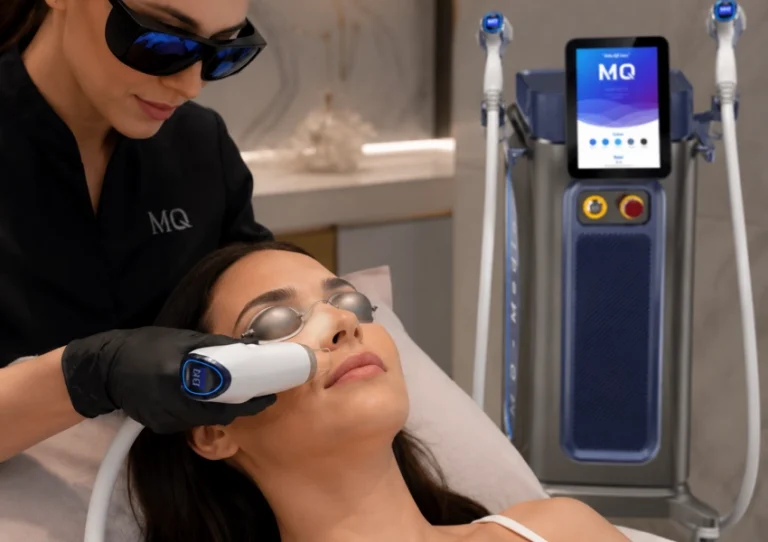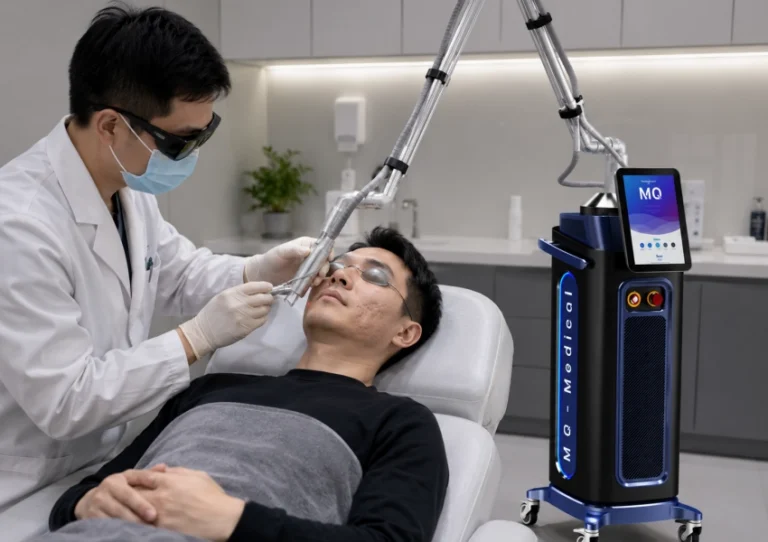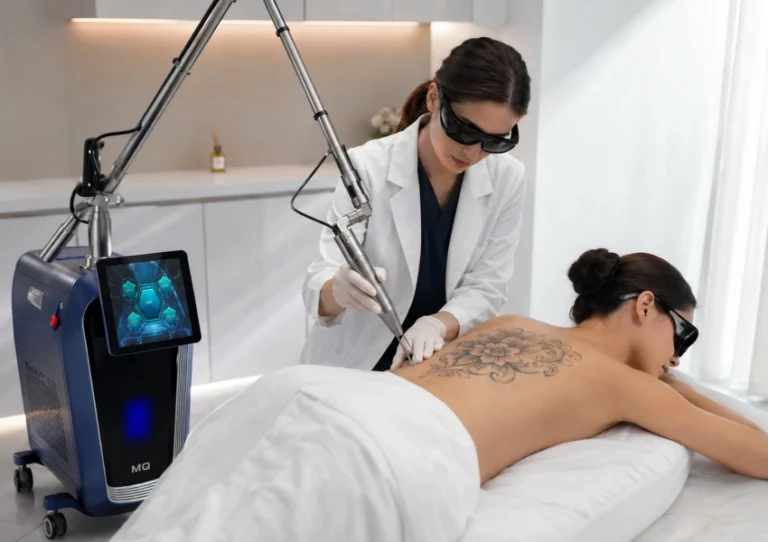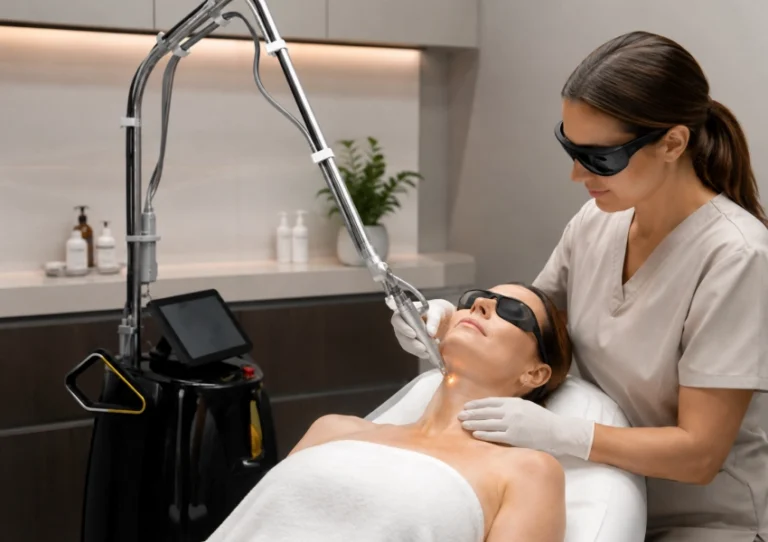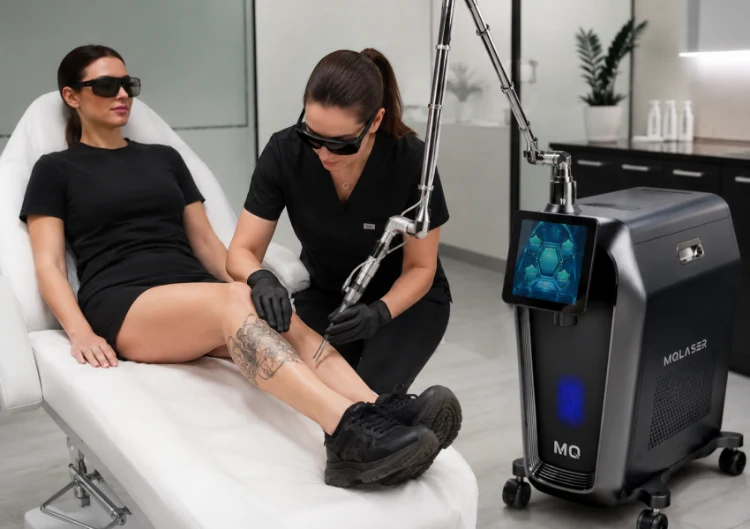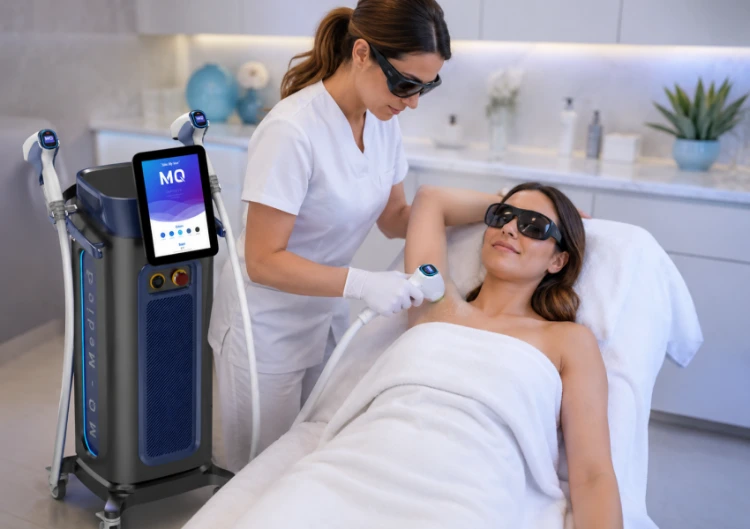
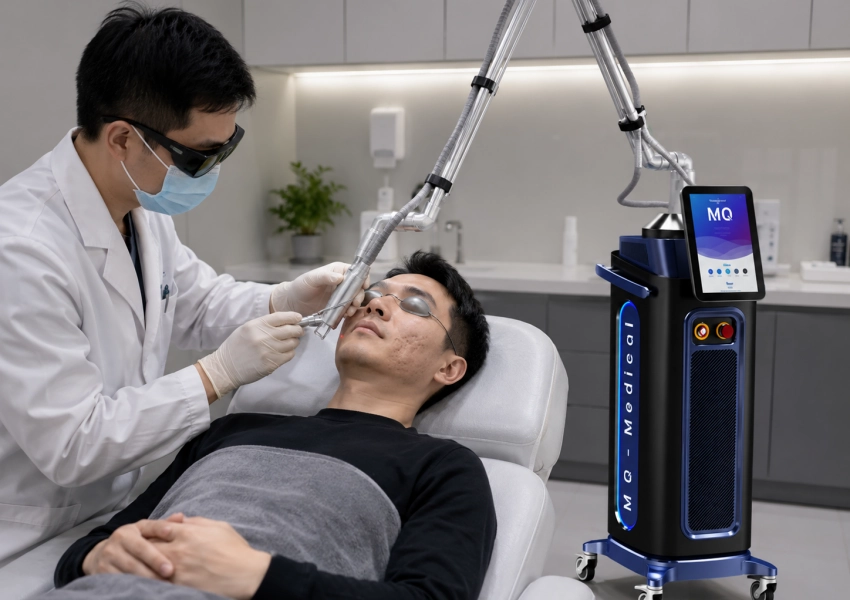
A CO₂ platform is rarely chosen on wavelength alone. The harder purchasing question is how the laser shapes energy, how quickly an operator can move between service modes, and what the room can support on a busy schedule. SuperPulse systems are often assessed for controlled pulse delivery and a defined resurfacing workflow. DEPPLUS takes a broader route, combining UP, SP, and CW modes with adjustable depth and several scan patterns. The better fit depends on the menu, the operator group, and how much configuration freedom the business can turn into paid services.
What SuperPulse Technology Actually Changes
SuperPulse is a pulse-delivery approach rather than a complete purchasing decision. In the comparison material supplied for this project, the AcuPulse route is described with 30 W and 40 W configurations, a stated penetration reference of about 1.0 mm, and 11 scan patterns. The same material positions SuperPulse around controlled pulse timing and reduced heat accumulation between passes. These details can matter when a business wants a repeatable, moderate-depth resurfacing workflow, but the exact handpiece and regional configuration still belong in the quotation.
Pulse Architecture and Surface Control
A low-power, longer-pulse continuous wave mode behaves differently from a pulsed mode. The supplied DEPPLUS product information describes CW as a low-power, long-pulse option, while UP and SP provide alternative operating routes. That distinction gives a buyer something concrete to test: not a promise of a better result, but the way the machine handles energy selection, scan movement, pause time, and handpiece control. Ask operators to run the same test pattern in each available mode and record room time, settings, and cleaning steps.
When A Narrower Route Is the Right Route
A defined SuperPulse workflow may suit a focused menu and a small trained team. The trade-off is expansion risk: different intensities, patterns, or service areas may require extra handpieces or a second platform. Price that possibility before purchase.
Where DEPPLUS Multi-Mode Flexibility Earns Its Place
DEPPLUS is a product material with a 10,600 nm CO₂ source, output up to 240 mJ, adjustable depth from 1 to 4 mm, and UP, SP, and CW modes. Its listed scan options include Sequence, Random, Continuous, and Ultra Pulse, together with spiral patterns and smart spot technology. These are meaningful operating choices. They allow a buyer to build several service pathways around one platform, provided the handpieces, training, and local operating boundaries are confirmed for the delivered model.
Adjustable Depth Is A Commercial Feature
A 1-4 mm range is not a reason to sell every setting. It is a reason to ask better RFQ questions. Which depth increments are available? Which handpiece or spot format supports each increment? Can operators lock or label approved programs? What is the replacement cost for the scanner and delivery parts? A configurable system becomes useful when those answers are written into training and service documents. Otherwise, a wide range can add complexity without adding usable capacity.
Scan Modes Shape the Room Workflow
Sequence, Random, Continuous, and Ultra Pulse modes do more than decorate a specification sheet. They affect how an operator plans coverage, checks a pass, and hands the room to the next team member. Spiral Pattern and Smart Spot can also influence how the operator approaches a defined area. At the demonstration stage, compare changeover time, screen clarity, spot visibility, foot-pedal response, and the record kept for each program. These small workflow details often matter more than the maximum number printed on the front page.
From Treatment Room to Local Market
For an in-house clinic such as Maria Aires or Clínica Medellín, a fractional CO₂ platform can support a broader skin-resurfacing menu, including texture-focused services and programs for the appearance of acne scarring, uneven tone, and visible signs of photoaging. The commercial value depends on how well each service fits the clinic’s client base, consultation process, staff training, and appointment schedule. Local marketing should make those choices clear: explain what each service is designed to address, set realistic expectations about recovery and aftercare, and use consented case photography and educational posts to help prospective clients decide whether to book a consultation. Treatment settings and client suitability should be determined by appropriately trained professionals under local regulations; promotional materials should not promise uniform results.
A distributor such as Soupelli has a different task. In Brazil, the opportunity is not limited to selling a CO₂ platform; it also depends on matching configurations and support to buyers ranging from established aesthetic clinics to newer businesses building a skin-resurfacing service. A useful sales conversation can compare fractional and other available operating modes, explain the space, training, maintenance, and service requirements, and show how the equipment may fit a buyer’s existing menu. Regional demand and market size vary, so claims about sales volume should be grounded in local distributor data rather than broad estimates. For DEPPLUS, configuration guidance, operator training, spare-parts access, and responsive technical support can help a reseller build a practical offer around the machine instead of competing on equipment price alone.
Performance and Workflow Comparison
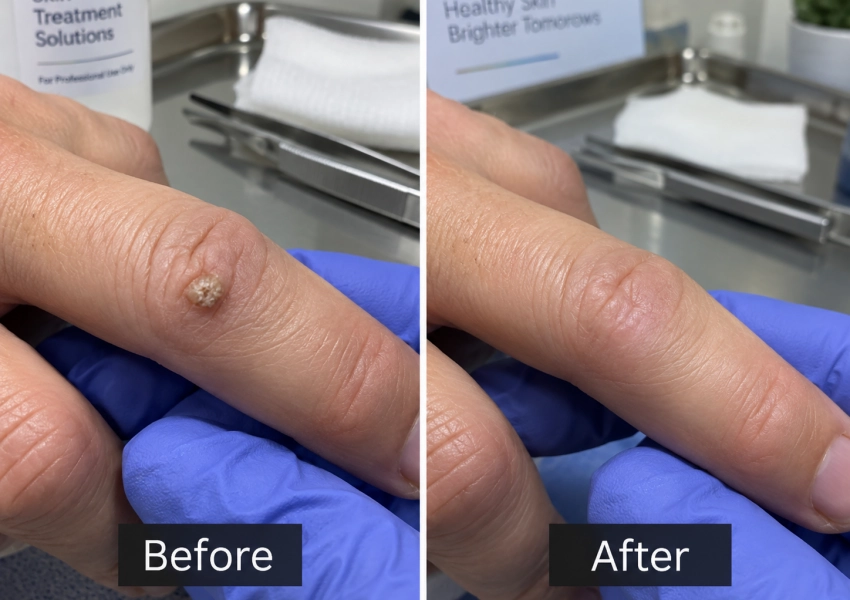
| Comparison point | Lumenis SuperPulse route | DEPPLUS multi-mode route |
| Energy and power expression | AcuPulse reference: 30 W or 40 W configurations; exact regional package to confirm. | Up to 240 mJ listed; delivered power and pulse settings require quotation confirmation. |
| Depth reference | About 1.0 mm; UltraPulse SCAAR FX is separately cited up to 4.0 mm. | Adjustable 1-4 mm range listed; permitted settings depend on handpiece and program. |
| Modes and scans | SuperPulse with a focused scan workflow; 11 scan patterns. | UP, SP, CW; Sequence, Random, Continuous, Ultra Pulse, Spiral Pattern, and Smart Spot listed. |
| Beam or spot reference | DeepFX: 0.12 mm; confirm the quoted handpiece. | Smart Spot and actual spot formats require model-level confirmation. |
| Best workflow question | Can a small team repeat the selected SuperPulse pathway with a consistent setup time? | Can several approved programs be stored, identified, and changed without slowing room turnover? |
Compare the Same Job, Not Two Brochures
A fair test uses one service brief, one trained operator, and the same room assumptions. Record setup, handpiece changes, scan selection, active delivery, cleaning, and next-booking preparation. Do not compare a high-end UltraPulse package against an entry DEPPLUS package as a technology verdict. Identify the exact tube, scanner, handpieces, software, and accessories.
Separate Confirmed Data From Demonstration Data
Some figures are useful before the demo; others are only useful after it. Maximum mJ, wattage, depth, and beam diameter can be copied into a comparison sheet. Thermal behavior, handpiece balance, interface speed, scan visibility, and operator fatigue need a live test. A supplier that marks “confirm with supplier” beside a regional or optional parameter is giving a safer purchasing answer than one that fills every blank with an unverified number.
Ownership, Configuration, and Clinic Fit
Ownership cost includes downtime, scanner or handpiece replacement, staff turnover, refresh training, room utilization, and the number of service pathways the team can run consistently. SuperPulse may keep a focused menu simple; DEPPLUS may support a wider menu from one chassis. Neither route creates ROI without repeatable bookings.
| B2B buying factor | Lumenis SuperPulse route | DEPPLUS route |
| Customization | Configuration and accessories vary by model and market; confirm the delivered package. | UP/SP/CW, scan options, depth, and accessory list can be specified for the project; confirm availability. |
| Value and cost control | A focused setup may reduce training scope, but premium platform and accessory cost need quotation review. | One flexible platform may cover more menu needs; price the extra handpieces, training, and service burden. |
| R&D cooperation | Usually tied to the selected manufacturer configuration and channel structure. | MQLASER supports OEM/ODM discussions and project-level configuration for eligible orders. |
| Market flexibility | Strong fit when the local offer centers on a defined SuperPulse service concept. | Useful for distributors needing different packages, documentation, or menu positioning by market. |
| Support and training | Confirm local response time, handpiece route, software support, and operator refreshers. | Request training, warranty scope, parts route, and the exact CE, ISO, and RoHS documents for the model. |
Five-Year Cost Is More Thanthe Purchase Quote
Build a five-year worksheet with the unit, scanners, handpieces, tube or source service, maintenance, shipping, training, downtime, and backup parts. Divide by realistic paid bookings. A focused platform may carry less training burden, while a multi-mode system may spread equipment cost across more services. Put the assumptions in the quotation record.
Use Supplier Capability At the Right Point
The DEPPLUS fractional CO₂ laser machine should be quoted with the exact tube, energy expression, depth controls, scan modes, handpieces, warranty, and training. The fractional CO₂ laser can help frame adjacent configurations, while MQLASER is a portfolio reference rather than a substitute for a model-level RFQ.
For distributors and multi-site buyers, MQLASER brings an experienced R&D team to eligible OEM/ODM and project configuration discussions, with 15% of annual revenue directed to new product development. The MQLASER project support team can help organize a request, but destination-market documents, training scope, spare parts, and service response must still be confirmed for the actual order.
A Practical Decision Rule
Choose the SuperPulse route when the business wants a concentrated service concept, a defined operating rhythm, and a configuration whose limits are clear. Choose DEPPLUS when a broader menu, adjustable depth, multiple pulse modes, and scan flexibility will be actively used and supported. During the final demonstration, test the same job, the same staffing model, and the same handover routine. That is where platform flexibility becomes either a commercial advantage or an avoidable training burden.
Conclusion
SuperPulse and multi-mode CO₂ systems answer different purchasing questions. SuperPulse emphasizes a controlled, focused pulse route. DEPPLUS offers more configuration choices through 10,600 nm delivery, UP/SP/CW modes, adjustable 1-4 mm depth, and listed scan technologies. The better purchase is the one that matches the service menu, team capability, maintenance route, and five-year utilization plan. Confirm every optional specification before signing the order. For more detail, see our guide on this article.
FAQ
Q1: Is SuperPulse always better for skin resurfacing?
A1: No. SuperPulse may suit a focused workflow, while a multi-mode platform may fit a broader menu. Compare the delivered configuration, training, maintenance, and room workflow.
Q2: What DEPPLUS specifications should be confirmed before ordering?
A2: Confirm the 10,600 nm source, up to 240 mJ listing, 1-4 mm depth range, modes, scan patterns, handpieces, tube type, warranty, and regional documentation.
Q3: How should a clinic compare CO₂ laser ROI?
A3: Use realistic paid bookings and include equipment, handpieces, training, maintenance, parts, room time, downtime, and service-specific operating costs.