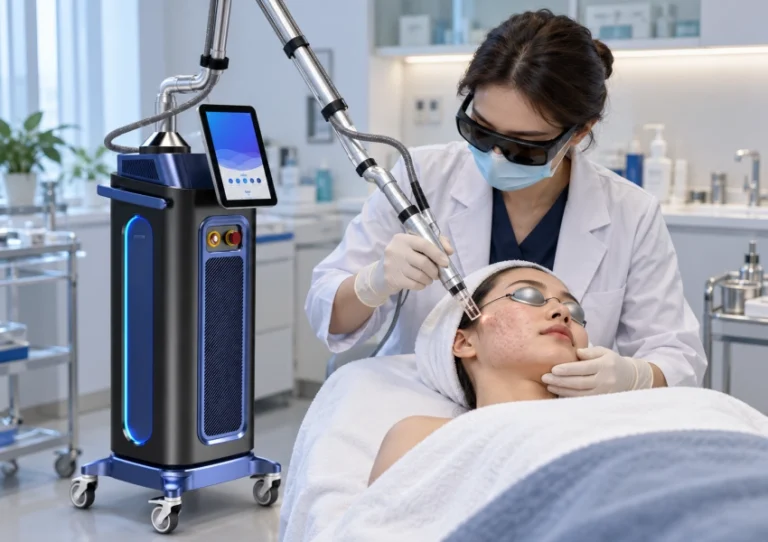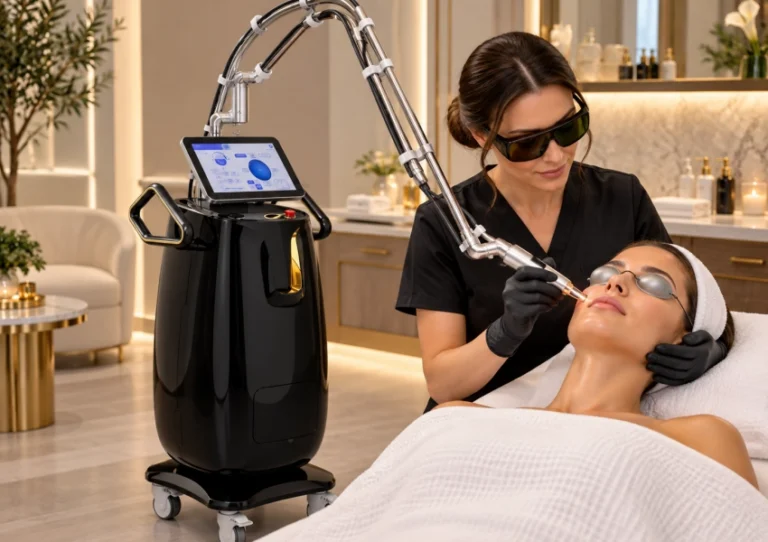
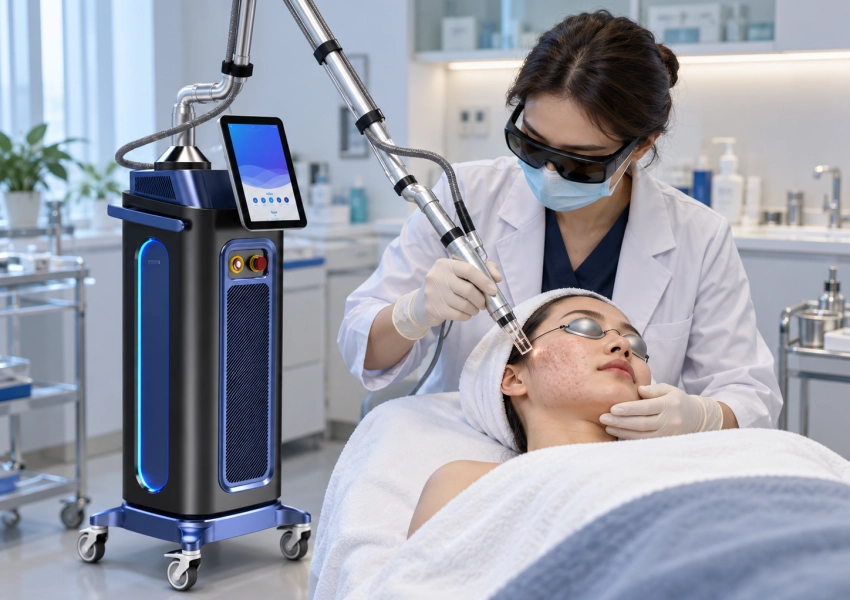
The effects of CO₂ laser resurfacing and Er:YAG laser resurfacing are both based on water absorption in the skin, yet they have quite different thermal profiles. Therefore, in a clinical setting, the decision between both methods for ablation of skin is not just between strong and gentle. More important are the parameters of ablation, the amount of residual coagulation, the depth of the target tissue, the case mix of scars and photodamage, and the amount of downtime that can be allowed for a patient’s recovery from treatment, as well as the ability of the operator to manage a wound after treatment with a laser. A fractional CO₂ laser requires a smoke evacuation system as well as a safe operating environment.
In terms of the tissue effects created by both lasers, the CO₂ laser produces an ablation zone with a surrounding zone of coagulation, while the Er:YAG laser creates ablation in the tissue with less coagulation than CO₂, depending on the specific design of the pulse as well as the particular laser platform. There is more coagulation with each pass of the Er:YAG than with each pass of the CO₂ laser. In general, the more superficial the tissue to be ablated, the less coagulation there is with each pass of the laser. The Er:YAG laser is typically used for more controlled ablation of superficial tissue, while the CO₂ laser is often used for deeper ablation of tissue for removal of skin texture and wrinkles as well as selected acne scars with more aggressive resurfacing. The risk of prolonged erythema, infection, and post-inflammatory hyperpigmentation or scar, however, increases with deeper and more aggressive treatment. The risk of these complications can be reduced with the use of fractional technology that creates many small, clustered areas of ablation while leaving large amounts of surrounding, untreated tissue between each ablated zone to allow for prompt healing by re-epithelialization. Even with fractional technology, however, there is some amount of down time from treatment as well as the possibility of complications, including scarring. Therefore, each laser must be used with caution and within the parameters for which it was specifically designed.
Compare Tissue Effect, Not Just Wavelength
Microscopic treatment zones of skin left untreated between them can support the skin’s natural re-epithelialization process better than treating the entire skin field. However, even the most conservative fractional treatment will have some downtime and potential complications. CO₂ lasers are generally used for very fine lines & wrinkles, for selected acne scars, as well as for more aggressive skin resurfacing treatments. However, the deeper or denser the treatment, the greater the risk of prolonged erythema, of infection, of post-inflammatory hyperpigmentation, and of scarring. Fractional treatments with an Er:YAG laser can be very effective for controlled ablation of superficial skin and for treatment of very fine superficial lines and skin texture irregularities. However, multiple passes at the same setting as well as very aggressive settings in general lead to considerable down time.
| Comparison point | Fractional CO2 | Er:YAG |
| Wavelength | 10,600 nm | 2,940 nm |
| Water interaction | Strong absorption; ablation with a wider coagulation component depending on pulse | Very high water absorption; typically more precise ablation with less residual thermal damage per pass |
| Clinical use pattern | Texture, selected scars, wrinkles and more substantial resurfacing | Superficial-to-moderate resurfacing and precise ablation; device-dependent |
| Recovery drivers | Depth, coverage, pulse, passes, phototype, wound care | Ablation depth, pass count, pulse mode, treated area and wound care |
| Main safety needs | Eye protection, plume evacuation, wound care and pigment-risk management | Eye protection, controlled ablation, wound care and pigment-risk management |
Patient Selection and Recovery Planning
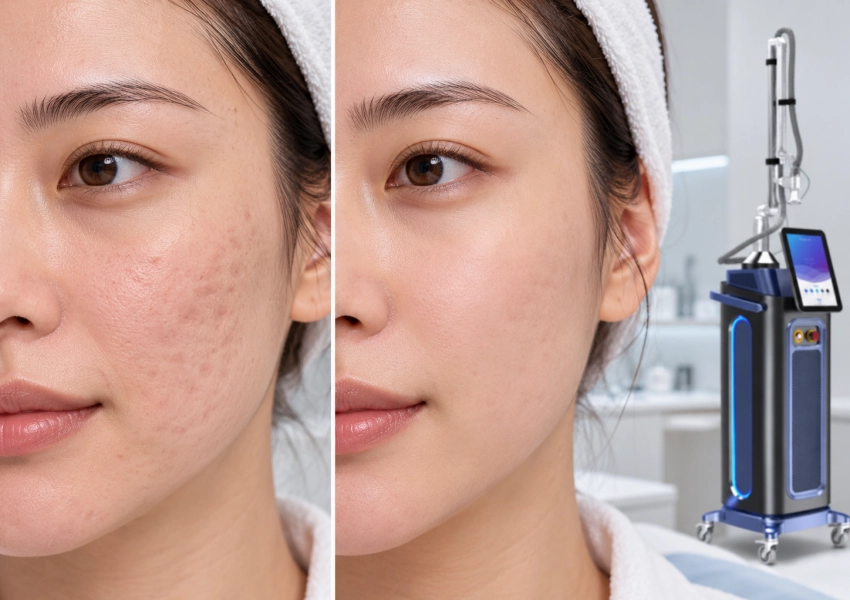
It’s essential to get a few details straight before carrying out a skin resurfacing treatment. These include your client’s medical history, phototype, how much they normally tan, previous cases of PIH, whether they have a lot of keloids, cold sore history, current skin infections, inflammatory skin conditions, whether they are immunosuppressed, and any treatments they are currently taking. Also inform your client of the likely redness, swelling, and pinpoint bleeding or crusting that will occur as part of the healing process.
Peeling will also occur and inform your client of the likely time that they will need to take off from work and from social situations. For perioral resurfacing, treat for cold sores as for other cases of cold sores, with clinician-directed antiviral prophylaxis. The clinical material supplied for fractional CO₂ resurfacing describes the ablated vaporization zone, the underlying coagulation zone, and the deeper heated zone. It explains that heat will tend to accumulate with depth of treatment, and coverage will need to be reduced for deeper treatments. Importantly, it describes how high coverage will result in adjacent thermal zones merging into a single zone. These are planning points and must not be confused with a ‘standard’ setting for a fractional device—each clinic must use the exact settings for the device that they are using for that particular treatment and must not try to translate percentages and spacings from one machine to another.
Aftercare for skin-resurfacing is a major part of the overall treatment, and clients must be fully informed of the aftercare for their skin, including written instructions on how to clean and apply a barrier product, what signs of infection are, and how to protect their skin from the light. Deeply invasive treatments must have the skin’s healing process closely monitored and no further energy-based treatments applied until the skin has fully recovered from the initial treatment. Informed consent must be given by the client, and they must be made aware of possible prolonged redness, increased pain, signs of drainage, high temperature, and new pigmentation.
What DEPPLUS Contributes to a CO2 Service Line
DEPPLUS is listed at 10,600 nm with 15, 30, 40, or 60 W options, a maximum 20 × 20 mm scan field, adjustable pulse duration from 0.1–9.9 ms, point spacing from 0.1–2.0 mm, interval from 0.1–2 seconds, and repeat from 1–10. The platform also offers air or water cooling and fractional, normal, and optional gynecology modes in the supplied materials. These ranges describe configuration capacity, not patient treatment prescriptions.
When selecting a clinic for a DEPPLUS CO2 laser, check the type of delivery tube they are using, the measured output power of the laser, the type of scan pattern used, what handpieces they have, how they clear smoke from the treatment area, what kind of skin cooling they are using, what aiming beam they are using, if they have a footswitch for the laser, what kind of protective eyewear they supply for staff and clients, and what sort of training and after-sales service and parts they supply. The MQLASER supplied materials describe an RF-excited metal delivery tube, as opposed to a sealed glass tube. The RF tube technical comparison describes the main differences between these two types of tubes and how this affects the expected duty cycle and the need for replacement tubes. Do not confuse tube longevity with a service-life warranty.
DEPPLUS in Clinical Practice and Local Market Positioning
The purchase decisions of Maria Aires and Clínica Medellín show how DEPPLUS can be used as a clinical resurfacing platform rather than a single-purpose laser. For acne-scar remodeling, uneven skin texture, fine lines, enlarged pores, photoaging and selected surface-resurfacing protocols, the fractional CO₂ system allows practitioners to adjust treatment intensity, density and downtime according to the indication, treatment area, skin type and patient tolerance. Local marketing should focus on recognizable patient concerns instead of promoting only “fractional laser treatment.” Acne-scar consultations, texture-renewal programs and staged skin-resurfacing plans are easier for patients to understand and compare. Clear pre-treatment screening, documented parameters, realistic downtime guidance and consistent before-and-after photography can also help clinics build trust in their local market. Soupelli represents a different commercial role. As a Brazilian distributor that purchased DEPPLUS for resale, Soupelli can position the system for dermatology clinics, plastic surgery practices, med spas and advanced beauty centers. Brazil’s professional aesthetics market is broad and fragmented, so buyers may evaluate not only laser specifications but also clinical training, protocol support, technical service, financing and application range. For a reseller, the value of DEPPLUS lies in presenting one fractional CO₂ platform that can support multiple skin-resurfacing services and be adapted to the operating model of different clinics.
Make the Platform Choice Match the Clinic’s Case Mix
Request side-by-side demonstrations using comparable indications, while respecting each manufacturer’s protocol. Review actual treated area, energy delivery, endpoint, staff setup time, cleaning, plume handling, and next-day patient support. Product details and configuration can be checked through MQLASER‘s CO2 range and its company homepage. The most useful comparison is the one that includes clinical governance and service capacity, not just a power rating.
A clinic should also compare repeat-treatment planning. Patients with darker phototypes or a history of PIH may need lower coverage and a longer observation period. Patients with deep scars may need staged sessions rather than one dense pass. The service plan should show who performs wound checks, how complications are recorded, and what clinical evidence supports the selected depth. These details often matter more than nominal wattage.
For a clinic adding its first ablative platform, training should include patient selection, smoke evacuation, eye protection, test areas, wound care, and escalation for infection or prolonged erythema. The supplier’s DEPPLUS product information can be checked against the exact tube, scan field, handpiece, and cooling configuration. These details should be documented before staff begin independent treatment. Continue reading our other guide.
FAQ
Q1: Does Er:YAG always have shorter downtime than CO2?
A1: Not always. Ablation depth, passes, pulse mode, treated area, and patient factors can make recovery overlap.
Q2: Is fractional CO2 suitable for every acne scar?
A2: No. Scar type, depth, skin type, active acne, and prior healing history affect candidacy and treatment planning.
Q3: Are DEPPLUS’s pulse ranges clinical settings?
A3: They are device ranges. A trained operator must use validated protocols for the specific indication and market.