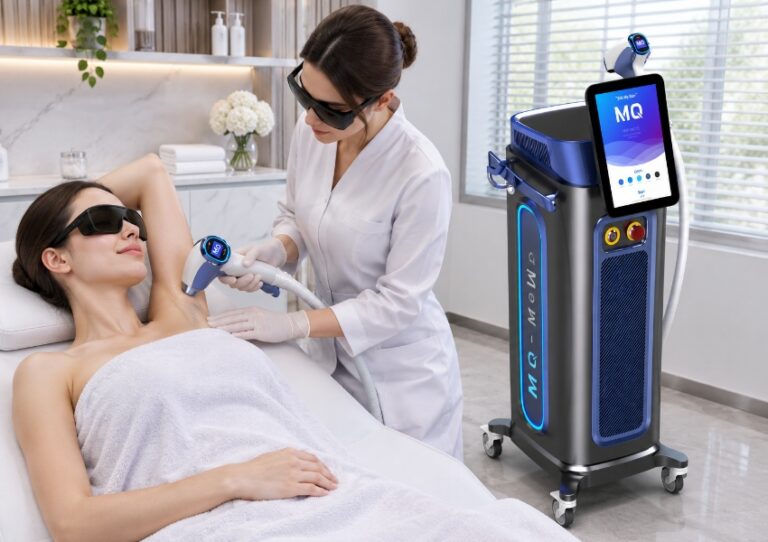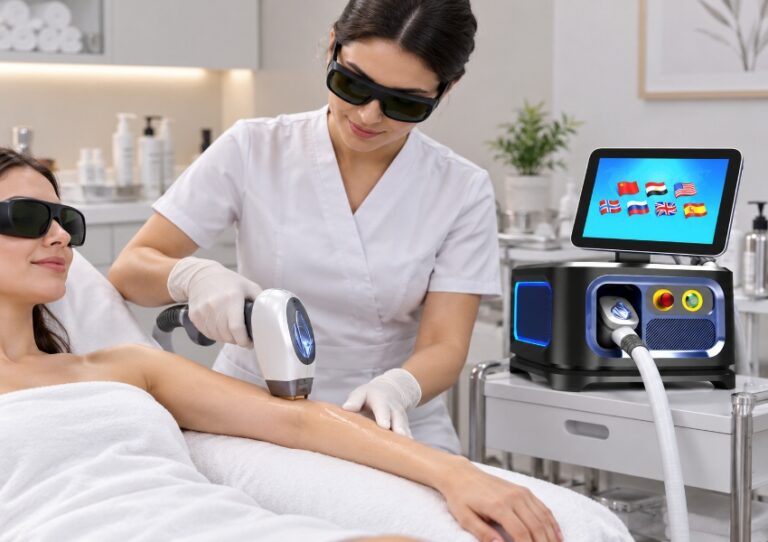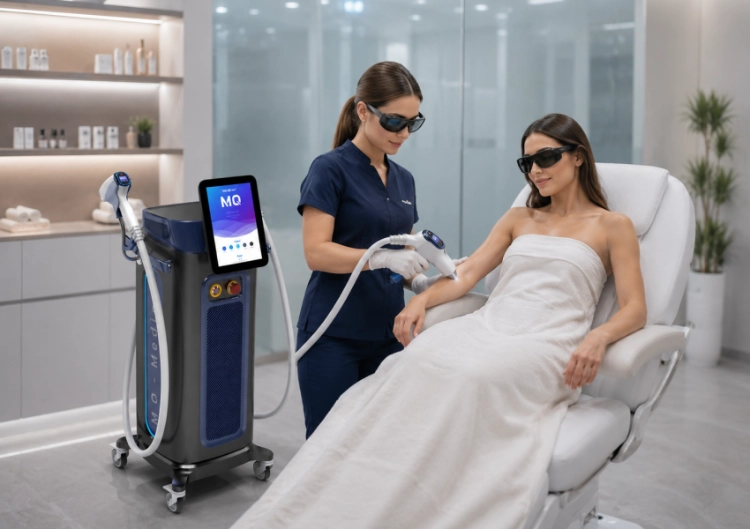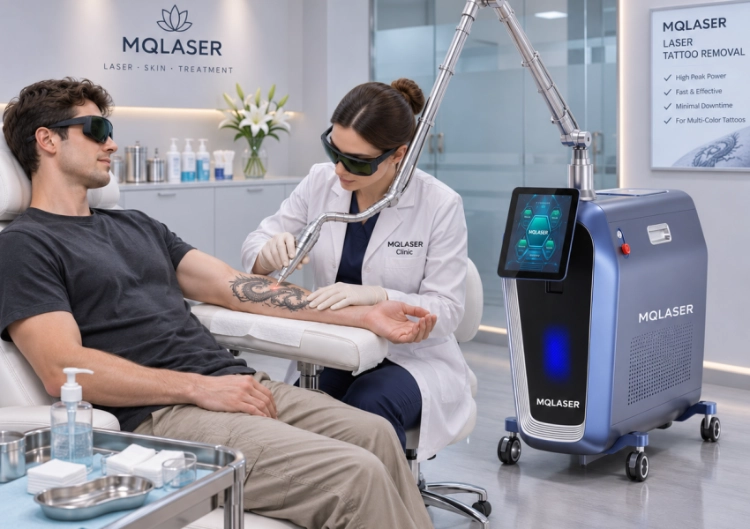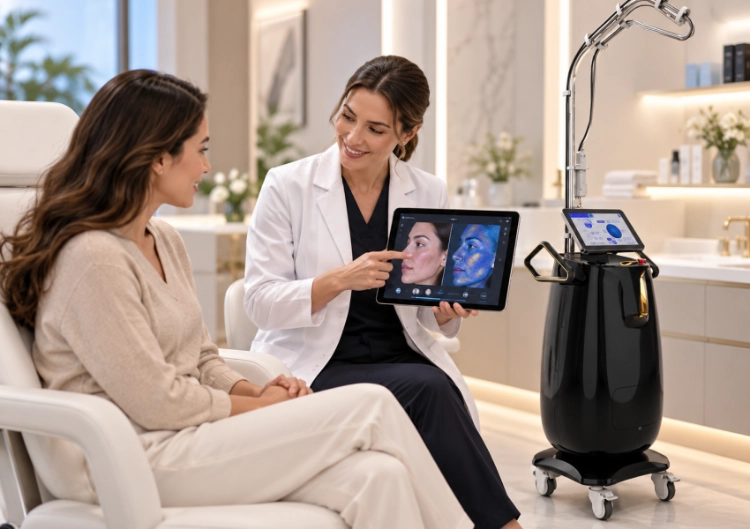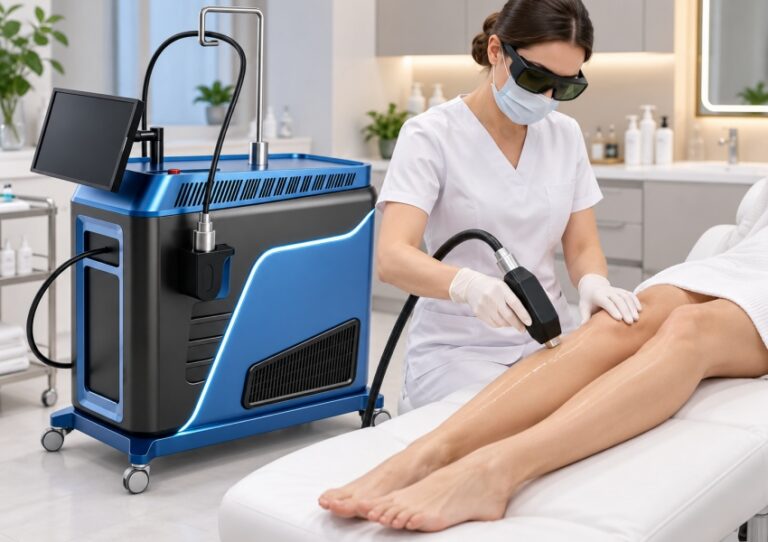
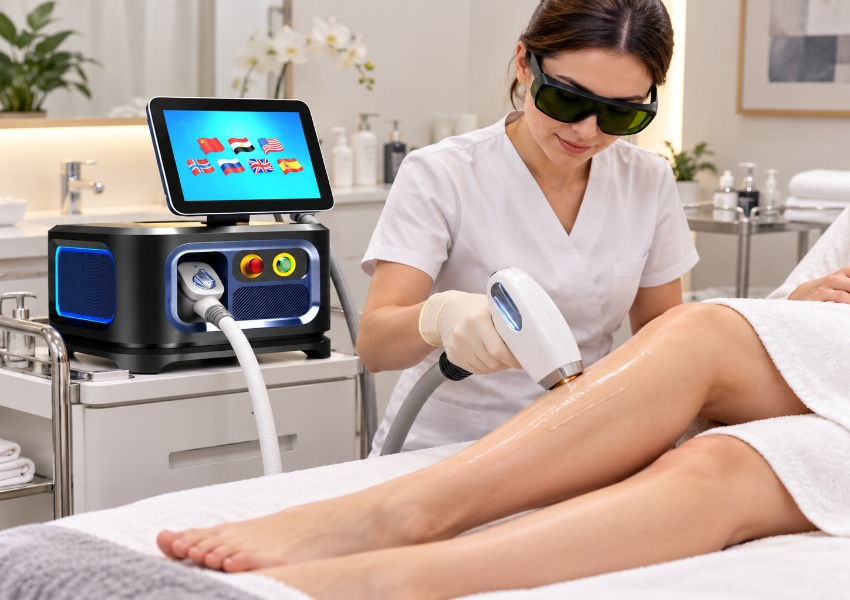
A full-body laser hair removal appointment can slow down even when the laser is firing normally. The delay may come from poor zone planning, repeated overlap, unstable contact, handpiece heat, cooling recovery, long cable routing, cleaning, client repositioning, or an overbooked diary. A clinic that looks only at repetition rate may buy the wrong solution. The better question is where minutes are lost between the first consultation photo and the final aftercare instruction.
SUPLASER is involved in this because its provided parameters of the configuration have four wavelengths with air cooling, water cooling, TEC cooling, and compressor at all. A 30-second armpit demonstration does not capture the mechanics and functioning of a handpiece and cooling system, as well as the operator when legs, arms, a bikini, and a face are booked in succession.
Map the Appointment Before Blaming the Machine
Dismantling a body but into its parts: check-in, consultations in progress, update, and photography stage. Are you cleansing or just doing shaving checks too before marking the zones where you’re putting the client for servic, zone marking, fire, cool stop, touch-up handpiece cleaning, repositioning, post-care guides, payment, and breakdown room reset? For multiple appointments, time each stage. The lack of a razor, hazy zone order, or inspected protective eyewear can take significantly longer than a small increase in laser repetition speed.
Use a Fixed Zone Sequence.
Make an order that can repeat itself in large areas. Divide legs into front/side/back zones and note which areas were done before the client turns. The point is not to make every client do the same exact clinical protocol. It aims to eliminate missed strips, redundant passes, and confusing handoffs. Treatment record: skin and hair types, chosen channel/spot or tip: pulse/fluence—cooling—passes—acute response—area deliberately deferred.
Do Not Chase Speed With Extra Overlap
Utilize an overlap (as taught for the exact device), keep the handpiece level where necessary, and cease if the skin response departs from the anticipated track. An organized zone map beats just throwing more passes. They can cause pain, and horse and lead recovery times to take longer and add unpredictability to the appointment.
Handpiece Heat and Cooling Can Change the Day
SUPLASER Air, Water, TEC, and compressor cooling ways would be examined at the same time: inspect tip temperature stability, water flow in place, hose/cable state, proper hygiene, etc.; award the right loudspeaker sooner or later in the working period, and fingerprint the clearer up phase after a long-lasting engagement pause. Go to the supplier and ask which daily checks are done and what fault messages indicate that there is certain flow temperature power. Keep the record of condition before the first complaints too.
It can slow a whole shift down when you have a handpiece that starts becoming uncomfortable or unstable after you use it the fifth time over. Staff may freeze, shorten coverage, or take a time-out to cool off outside the room. Take a repeat firing test into the procurement process. During this test, you use a representative large area with a realistic appointment sequence and cool the PC under the same specific settings as you would in normal work. Register the service roadmap for handpiece, cooling system software filters, and spare parts before launching. From theory to practice: scheduling with high traffic handoff rules. The first operator should record completed zones, selected channel/spot/cooling state, and client comments on the next area before a staff change or room transfer. There should never be a guess whether the inner thigh, lower back, or facial border has been treated by a second operator. Handoffs that are clear will minimize overlap and allow the clinic to figure out if an apparent speed problem is a communication breakdown.
The Client Mix Also Sets the Pace
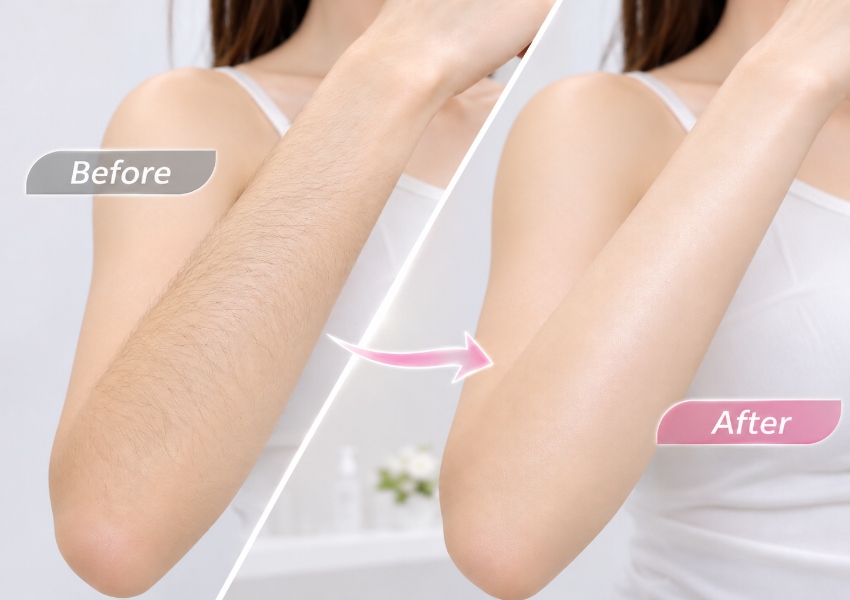
Full body laser hair removal is not a one-size-fits-all service. Coarse back hair, fine facial hair, and newly tanned legs require different assessments and often varying pacing. For example, a client who comes after sun exposure or using a new medication may have to reschedule his/her appointment. Don’t force the following client into a truncated treatment when it’s much better to add small buffers. Large-area services should thus recognize this variability in pricing and booking.
Follow-up and photographs also take time, but it minimizes confusion later down the line. For these comparisons, the client will come back and you will compare regrowth in similar conditions as before he/she left; inquire about shedding, irritation (e.g., pruritus), grooming changes, or skin or medication variations since his/her departure. This can show you that the so-called “slow machine” is really a mismatch between your target hair and plan. Then the next session can be thoughtfully reshaped—rather than just faster.
Turn Operational Data Into a Better Menu
Review each week’s large-area appointments by room time, firing time, interruptions, handpiece temperature notes, client comfort, rebook rate, and operator. The data can show whether a second handpiece, different booking intervals, staff retraining, preventive maintenance, or a different service package is the real need. The SUPLASER portable platform should be configured for the client mix, not purchased merely because four wavelengths sound more comprehensive.
The diode laser equipment category supports a format comparison. For any final order, list the supplied wavelength arrangement, tips, output range, cooling components, warranty, operator training, maintenance schedule, and technical response route. MQLASER can discuss configuration through its website and support contact. A clinic grows faster when it removes recurring operational delays, not when it simply books more clients into the same hour.
Conclusion
Large-area sessions slow down for many reasons, and not all are technical. Better zone mapping, realistic booking, stable cooling, handpiece checks, accurate records, and trained operators improve both speed and service quality. Measure the whole appointment, then change the true bottleneck.
FAQ
Q1: Why does a full-body laser appointment take longer than expected?
A1: Preparation, zone mapping, repositioning, cooling pauses, handpiece checks, cleaning, aftercare, and individual skin or hair factors all add time.
Q2: Can cooling cause treatment delays?
A2: Yes. Cooling performance, recovery time, flow checks, temperature alerts, and handpiece heat can interrupt a large-area schedule.
Q3: What should be tested before buying a diode laser machine?
A3: Test a realistic large-area workflow, repeated firing, handpiece temperature, cooling stability, cleaning, resets, operator fatigue, and technical-service response.