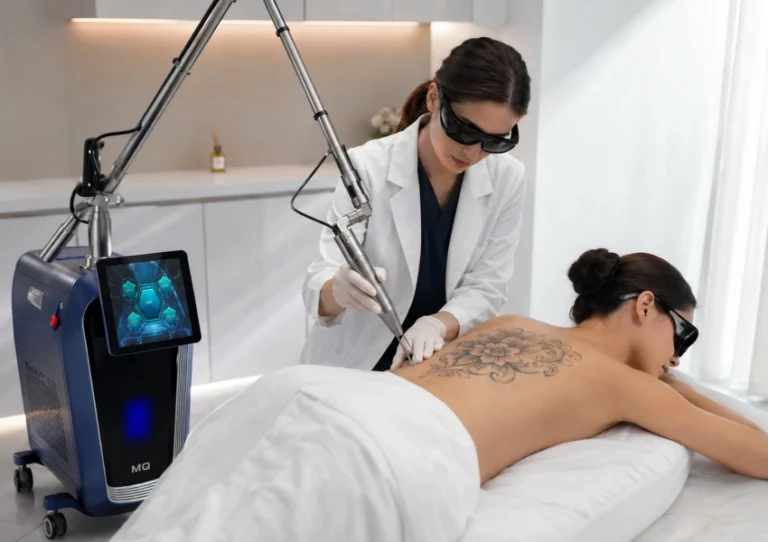
Tattoo removal has gotten much better with new laser tools. These advanced lasers work quickly and hit ink colors more exactly than older ones. They are now the best pick for experts removing tattoos with lots of colors. This guide looks at the main differences between the 1064nm and 532nm wavelengths in these laser systems. It also shows how to use them well to get great results.
The Science Behind Picosecond Lasers
Picosecond lasers use super-fast bursts of energy, measured in tiny fractions of a second. This speed makes them very good and accurate.
What Makes Picosecond Lasers Special
These lasers stand out because they send out really quick pulses. These pulses smash ink bits into super small pieces. So, the body’s natural cleanup system can clear them away easily. This means tattoos fade faster with fewer trips to the clinic.

How Super-Fast Pulses Work with Colors
Old lasers warmed up the ink to break it apart, which could hurt the skin. But picosecond lasers use a different way. Their fast bursts make strong pressure waves. These waves break ink bits without heating the nearby skin too much. This lowers the chance of burns or marks.
Exploring the 1064nm Wavelength
The 1064nm wavelength is a big help for tattoo removal. It goes deep into the skin and works great on darker colors.
Target Colors for 1064nm
This wavelength is specifically used to remove black pigmentation. Black ink absorbs the 1064nm light really well, making it super effective.
How Well It Works and Safety
The 1064nm wavelength reaches deep into the skin’s layers. It hits ink stuck far below the surface. Best of all, it doesn’t mix much with the skin’s natural color. This makes it safe for all skin types, even darker ones (Fitzpatrick skin types IV-VI). It cuts down the risk of skin darkening after treatment.
Common Uses in Treatment
Experts usually start tattoo removal with the 1064nm wavelength. They use it to clear all black lines and shading. This step takes care of the darker parts first.
Exploring the 532nm Wavelength
While the 1064nm wavelength deals with black ink, the 532nm wavelength is perfect for other specific shades.
Target Colors for 532nm
This wavelength is great for removing red, coffee, and brown inks. These colors don’t respond to the 1064nm wavelength but work well with 532nm light.
How Well It Works and Safety Tips
The 532nm wavelength gets soaked up strongly by red, coffee, and brown inks. This makes it great at breaking down these shades. But it also gets absorbed a lot by the skin’s natural color. So, experts must be super careful when using it on darker skin. To avoid problems like skin darkening, they might use less power. Sometimes, they skip this wavelength completely.
Understanding the Treatment Sign
When using either wavelength, the skin often turns white for a bit during treatment. This “frosting” shows the laser hit the ink bits right. It means the session worked well. But it doesn’t mean you should treat the area again right away.
Comparing 1064nm vs. 532nm in Practice
Both wavelengths have different jobs but work together well. They make a full plan for tattoo removal.
Depth vs. Color Pickup
The 1064nm wavelength goes deeper into the skin. This makes it great for thick, deep black inks. The 532nm wavelength stays closer to the surface. It’s key for breaking down the red, coffee, and brown colors that the 1064nm can’t touch.
Using Both Together
For tattoos with many colors, experts switch between wavelengths in one visit. They often start with the 1064nm setting to treat dark lines and shading. Then, they switch to the 532nm setting for any red, coffee, or brown parts. This way, all colors get treated well.
Factors That Affect Tattoo Removal Success
A few things change how well tattoo removal works, besides picking the right wavelength.
Ink, Age, and Spot on Body
Tattoos done by pros often have thick ink. These need more visits to fade. Older tattoos might clear faster since the ink weakens over time. Tattoos near big lymph nodes, like on the chest or upper arms, often fade quicker. This is because the body clears ink faster in those spots due to better blood flow and immune activity.
Skin Type and Healing
A person’s skin type sets the safest settings for treatment. Also, how fast someone’s body heals changes the time needed between visits. Everyone heals differently, so plans often need tweaks to fit each person.
Making Treatment Plans Better
To get the best results safely, experts must follow some rules.

Best Time Between Visits
Treatments need to be spaced out right. A gap of 6 to 8 weeks (or 45-90 days) works best. This gives the body time to clear broken ink bits. It also lets the skin heal fully, which lowers the chance of problems. Closer visits aren’t a good idea, as they might harm the skin.
Safety Note on Skin Marks
These lasers are great for tattoos and harmless skin spots. But you have to be careful. Never treat a mole you’re not sure about with a laser. A skin doctor must check it first to make sure it’s not dangerous, like skin cancer, before any laser work.
Care After Treatment
After a session, people must keep the area safe from sunlight. They should use strong sunscreen for at least one month. Keeping the spot clean and avoiding bumps or scratches is also super important for healing. This helps the skin recover smoothly and avoids issues like redness or swelling.
Introducing MQLASER: Your Partner in Aesthetic Technology
For clinics wanting trusty tools, MQLASER offers top-notch gear with worldwide approvals.
Focus on Quality and New Ideas
With over ten years of know-how, MQLASER makes high-quality beauty tools. Their products meet tough global rules, including CE, ISO13485, and FDA registration. This ensures clinics get reliable and safe equipment.
Features of MQLASER’s Picosecond Laser

MQLASER’s devices are made for pros, with a focus on working well and keeping clients happy.
- Dual-Wavelength Capability (1064nm & 532nm):Switch easily between the two main wavelengths for treating black and other specific inks like red, coffee, and brown.
- Optional Handpieces for Expanded Treatments:The device can be equipped with specialized handpieces to address a full spectrum of needs. This includes a 585nm handpiece for blue and purple tattoo removal, a 650nm handpiece for green tattoo removal, and a fractional handpiece for wrinkle removal and skin rejuvenation.
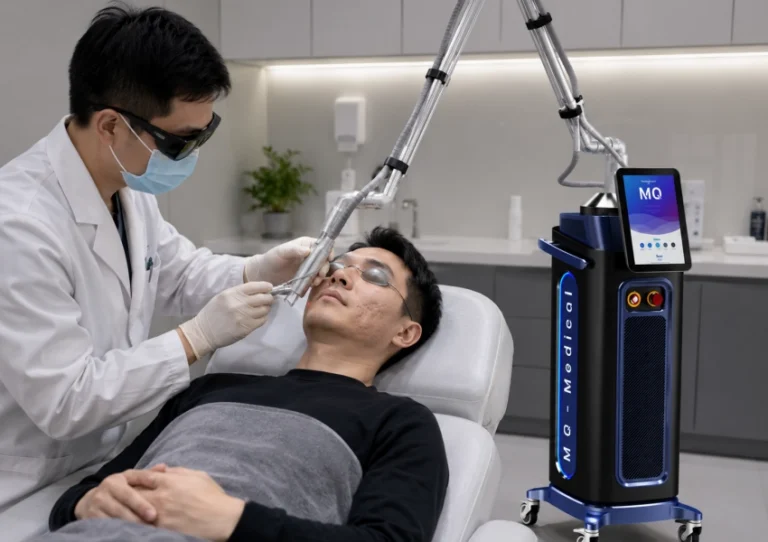
- Easy-to-Use Screen:A clear touchscreen makes it simple to change settings. This helps experts make treatments fit each person’s needs.
- Custom Looks:MQLASER lets clinics change the device’s style to match their brand, making it feel like part of their team.
FAQs
Q1: What colors does the 1064nm wavelength remove best?
A: The 1064nm wavelength is best for removing black pigmentation. It goes deep into the skin and is safe for all skin types since it doesn’t mix much with natural skin color.
Q2: Is it safe to use both 1064nm and 532nm wavelengths in one session?
A: Yes, it’s safe and normal. Skilled experts use the 1064nm wavelength for black ink first. Then, they switch to the 532nm wavelength for colors like red, coffee, and brown. They adjust power levels carefully to keep things safe.
Q3: Why choose MQLASER’s picosecond laser machine?
A: MQLASER’s device offers a comprehensive solution with its standard dual-wavelength (1064nm & 532nm) system and versatile optional handpieces. With add-ons like the 585nm for blue and purple inks, the 650nm for green ink, and a fractional handpiece for skin rejuvenation, it provides exceptional treatment flexibility. Combined with its user-friendly touchscreen and trusted international approvals like CE, FDA, and ISO13485, it is a top choice for professionals.