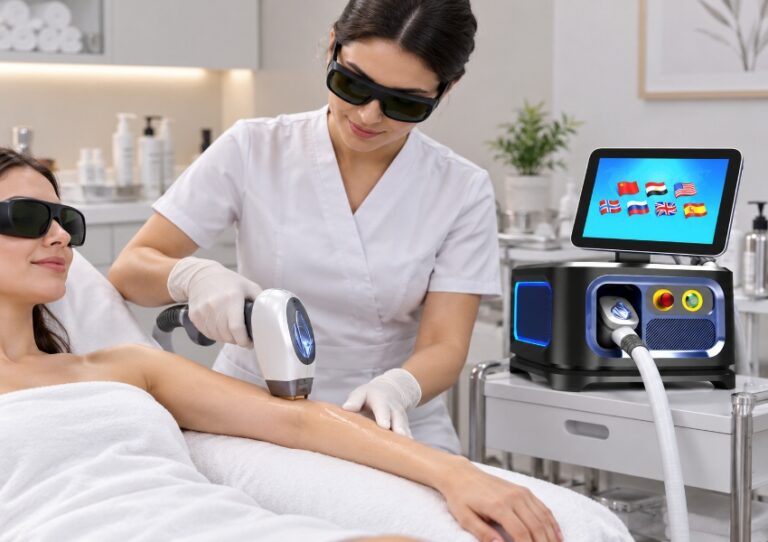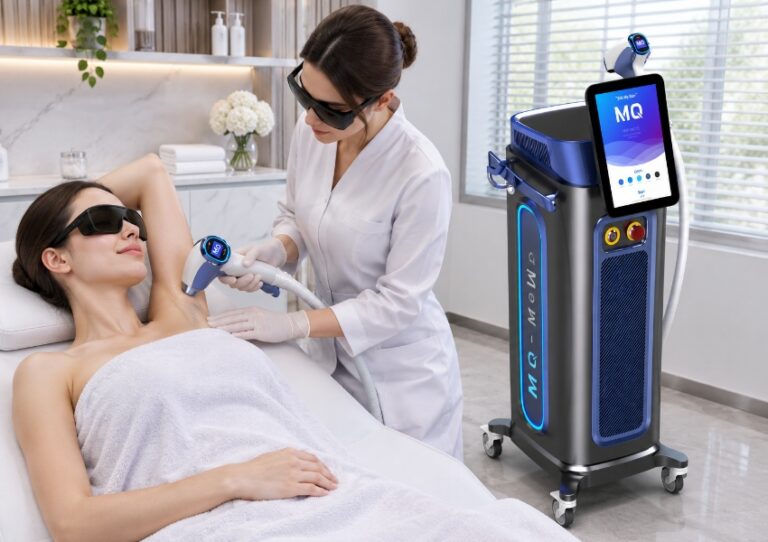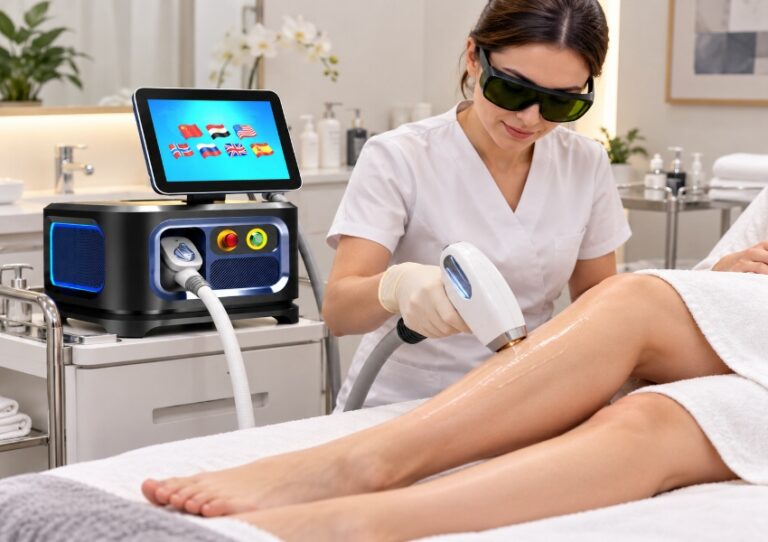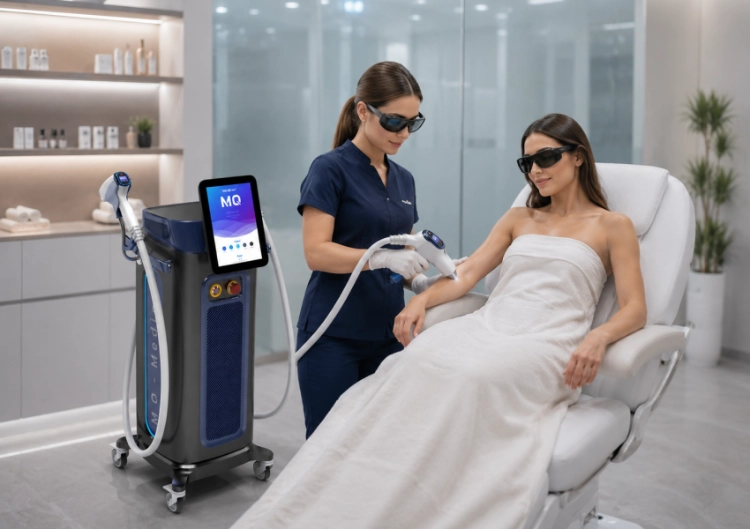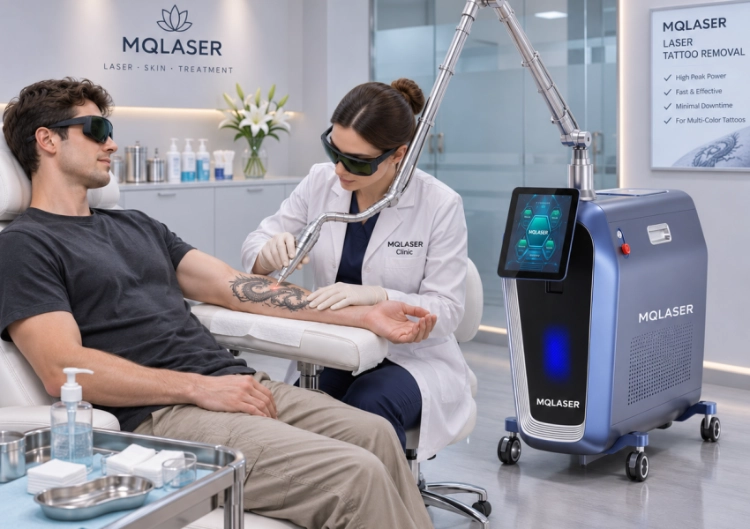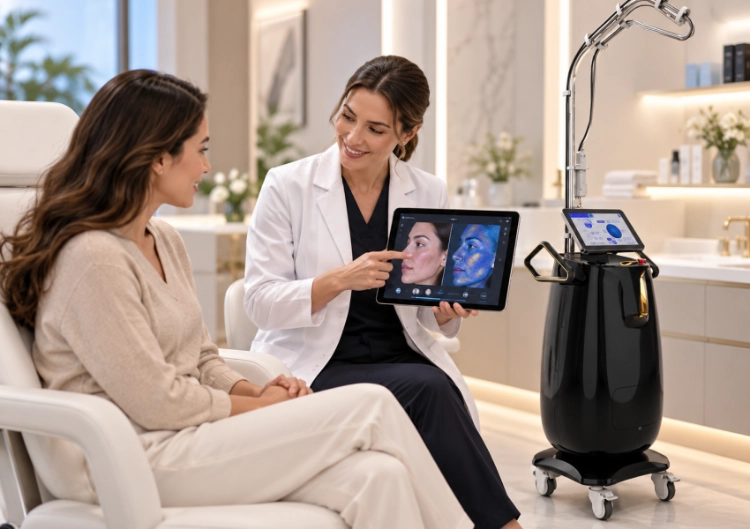
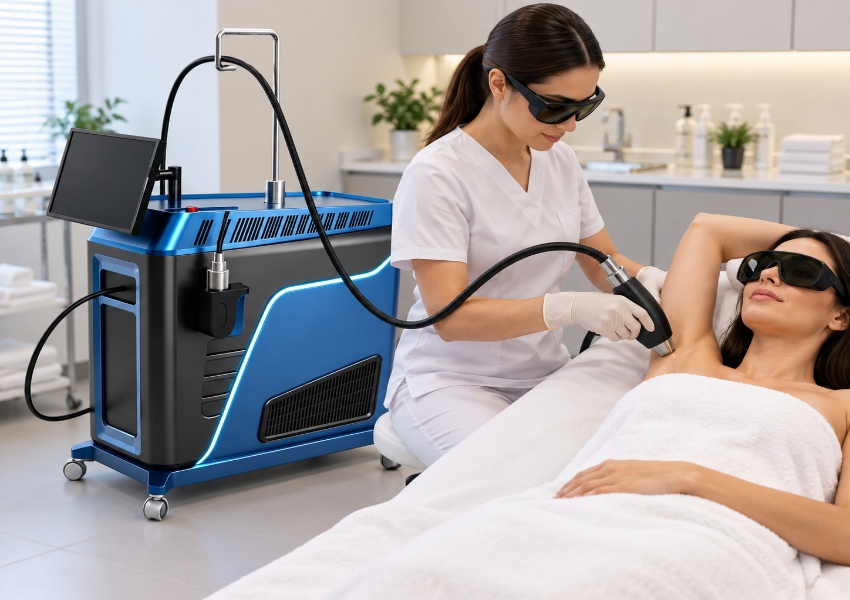
A variety client does not require a tagline “for every skin type.” A pathway that breaks down by skin tone, tanning status, hair color and caliber, along with body area, previous response to lasers or devices, and an individual’s recovery capacity should be needed in hair removal. So a comparison of Alma Lasers Soprano Titanium versus AlexPlus is really about how two wavelength architectures underpin real consultations. One is the concept of a triple-wavelength diode.
The other features are the 755 nm Alexandrite and ultra-long-pulse Nd:YAG (1064 nm) channels. Factors making both appropriate platforms for clinics treating Fitzpatrick skin types I–VI with treatment decisions occurring on a case-by-case basis. Assessment, test areas where possible, cooling, parameter discipline, and follow-up do not replace the value of a brand name or wavelength label. This review should be associated with a history of pigment response, recent tanning activity, and also hypopigmentation involvement, as well as dark skin color, hair type, and facial beard.
Map Skin Type and Hair Features Before Choosing a Channel
For a delivered dual-wavelength configuration, review AlexPlus alongside the client mix rather than treating skin type as the only selector.
The clinical relevance of 755 nm is its fairly high absorption by melanin, which makes it applicable for lighter skin and fine pigmented hair according to the operating procedure provided. A 1064 nm Nd:YAG route targets deeper and has the least epidermal melanin absorption, so it may be considered for acne clearance in darker skin as well as coarser/deeper hair. A diode approach can offer an alternative delivery format across a mixed client population. The actual choice depends on the platform, handpiece, cooling, and trained operator, not on a simple skin-type chart.
Skin Types I–III and Fine Hair
For lighter skin types, the consultation should still distinguish dark coarse hair from fine or lightly pigmented hair. A client with visible upper-lip hair may require more precise mapping and a different approach from a client booking lower legs. AlexPlus is a 755 nm Alexandrite channel with both 2 ms pulse options. When comparing clinical decisions based on a supplied model and parameters. Gentle edge control, consistent reduction of cooling temperature, and discomfort coupled with managing expectations for vellus- or facial-type hairs are essential to small facial areas.
Skin Types IV–VI and Coarse Hair
The clinic must never treat a category label like it is protocol, especially if someone has darker skin. As epidermal melanin has a relatively low absorption at longer wavelengths compared to shorter ones, it may sometimes be chosen as the 1064 nm route. The document should include tanning, treatment history, how the client felt during and after, cooling if required, and skin reaction 24 h later. A clinic that confidently treats skin types IV–VI requires an escalation rule, not just higher energy settings.
Compare Delivery and Cooling in the Treatment Room
The Alexandrite laser category can help buyers compare format options before they request a delivered-unit demonstration. Alma Lasers Soprano Titanium’s characteristics include 755, 810, and 1064 nm delivery continuous cooling in-motion treatment stationary stacked-treatment applicators/handpieces. AlexPlus is a dual-wavelength ESA (Electronic Stability Algorithm) solid-state platform with DCD dynamic cooling.
The clinic has to never treat a category label as if it were like protocol, in particular with darker skin. Due to lower absorption of epidermal melanin at longer wavelengths compared to shorter ones, it may in some cases be elected complementary (the 1064 nm way). Tanning, treatment history, blow-by sensation, and experience of the client during/after cooling, if needed, as well as 24 h skin reaction, should be documented within this file. Truly a clinic that can treat IV–VI with confidence did not simply require adjusting the energy up. The buyer should identify exactly which regional model, applicators, software, and localized documentation are being offered instead of presuming each touted feature has been included with each quote.
The clinical experience includes cooling. Splitting the difference, continuous contact cooling and dynamic cryogen cooling each have some ability to help comfort and protect the epidermis, but neither makes an inappropriate environment appropriate. Then see how you are prepping skin, keeping in touch, and moving curves and discomforts while doing this demonstration of cleaning the applicator and resetting between patients. Track client sensation & operator fatigue. So typically the system that works best for a busy clinic is often one everyone on the team can consistently execute.
Do Not Treat Hair Removal as AlexPlus’s Only Decision Point
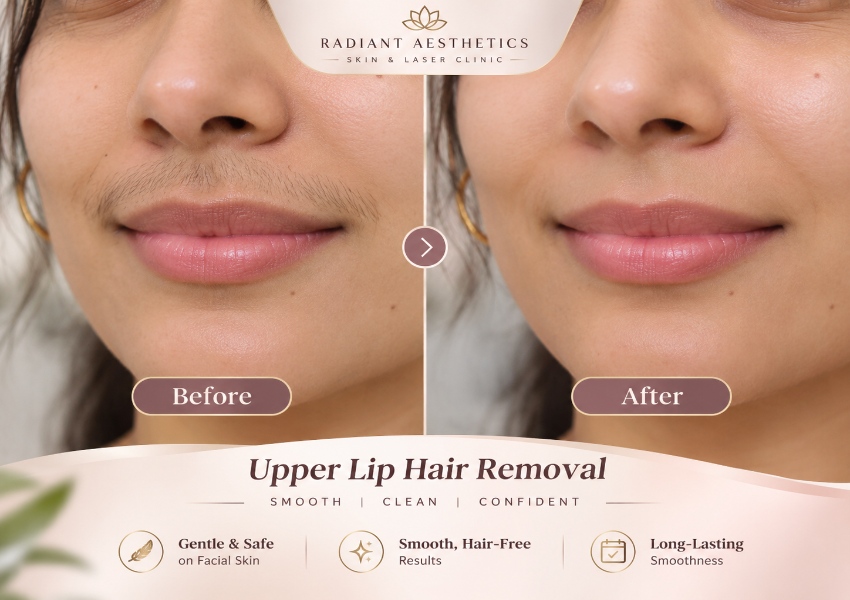
Buyers can review the MQLASER when preparing a procurement list for separate authorized applications. Clinics considering the AlexPlus should scrutinize its broader authorized service scope with that same rigor. Nd:YAG can be used in hair removal, diffuse redness/photodamage, selected vascular-lesion appearance (for example, spider veins), facial treatment, and some nail-related aesthetic applications at the project information level.
A busy hair-removal diary clinic may need a moratorium on the dedicated macOS application. One clinic may value a platform that can support more appropriate services after some training and authorization. The operator should not jump from a hair-removal protocol to redness or vascular work because the machine has an Nd:YAG channel. When sourcing: Treat the application, handpiece, energy expression, and local regulations as separate procurements.
| Clinical comparison | Soprano Titanium public positioning | AlexPlus project reference |
| Wavelength architecture | 755, 810, and 1064 nm triple-wavelength diode | 755 nm Alexandrite plus 1064 nm Nd:YAG |
| Hair-removal workflow | In-motion, stacked, and stationary options described publicly | Spot, pulse, channel, and DCD workflow to be confirmed on the delivered unit |
| Cooling | Continuous contact cooling and ICE Plus description | DCD dynamic cooling description |
| Large-area reference | 4 cm² applicator and Trio MAX descriptions | Up to 26 mm spot (customization required) on the latest Plus configuration; confirm model |
Build a Diverse-Client Service System
Instead of a set treatment plan, use the health questionnaire to prompt you about hair and skin. Record the area, channel, and spot in addition to pulse and fluence as well as a 5-second interval along with cooling a sumater min pashe that follows the immediate response plan. The use of standardized photographs along with repeatable lighting aids the team in assessing reduction rather than providing a subjective evaluation from an immediate endpoint. This level of record keeping is as important for a light-skinned client with fine hair or a darker-skinned client with coarse hair.
The local marketing plan should tell clients all about why consultation matters. Create individual pages for facial hair, body (large area) hair, dark skin design, and very light/fine hair. Do not pledge that every hair type will respond in a prescribed number of sessions. Maria Aires, for example, has Alexandrite equipment in-house and represents a great clinic-level story that focused on services fully independent of the sale or methodology of one machine. It can localize to skin-and-hair assessment, review at scheduled intervals, and also service pathways.
Conclusion: Choose the Architecture Your Team Can Explain
Use MQLASER support to verify delivered configuration, training, warranty, and local documentation before contracting. Alma Lasers Soprano Titanium may attract a clinic with its triple-wavelength diode workflow with applicators and cooling. A clinic that wants a 755/1064 nm split and possibly an expanded authorized Nd:YAG service scope might look to AlexPlus. Real configuration, training, cooling, client mix service support, and local compliance. At the end of the day, it is whatever platform that a clinic can responsibly evaluate, deliver, document, and explain. If you would like to learn more, please read this article.
| Buyer and client-base factor | Soprano Titanium route | AlexPlus route |
| Diverse skin planning | Verify local protocols, training, and supplied applicators. | Verify the 755/1064 protocol, DCD, spots, and training. |
| Fine hair | The ALEX 755 applicator is publicly positioned for light and fine hair. | 755 nm / short-pulse information requires delivered-unit confirmation. |
| Darker skin | using across skin types with multi-wavelength delivery. | The 1064 nm route may be considered after assessment and test response. |
| Service expansion | Hair-removal-led platform positioning | Hair removal plus separate authorized Nd:YAG application checks |
FAQ
Q1: Can one platform treat skin types I–VI without a consultation?
A1: No. Skin type is only one input. Hair features, tanning, treatment area, device protocol, cooling, and test response also matter.
Q2: Why is 1064 nm considered for darker skin?
A2: It has lower epidermal melanin absorption than shorter wavelengths and may be relevant for deeper coarse hair when the protocol supports it.
Q: Can AlexPlus be marketed for vascular or nail services immediately?
A3: No. Confirm the supplied configuration, intended use, local requirements, operator training, and service protocol before adding any application.