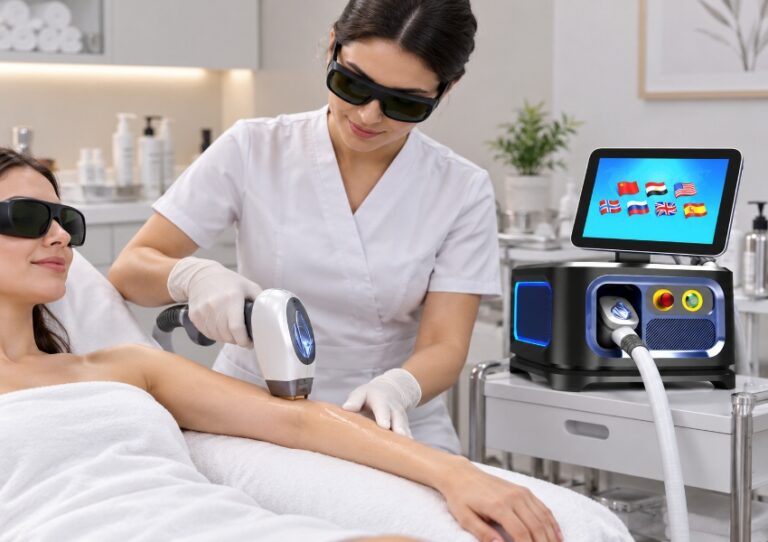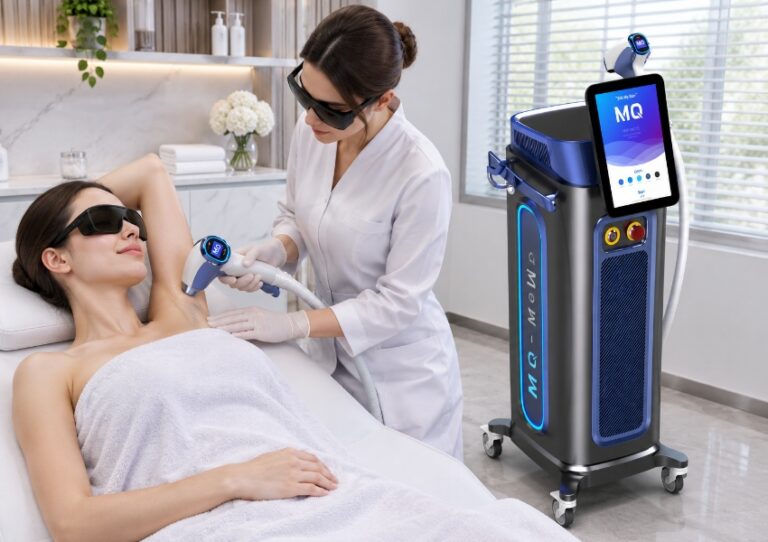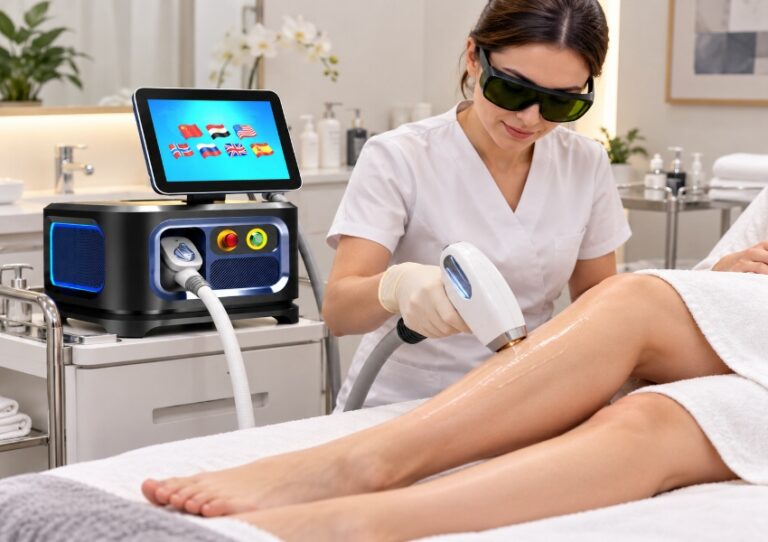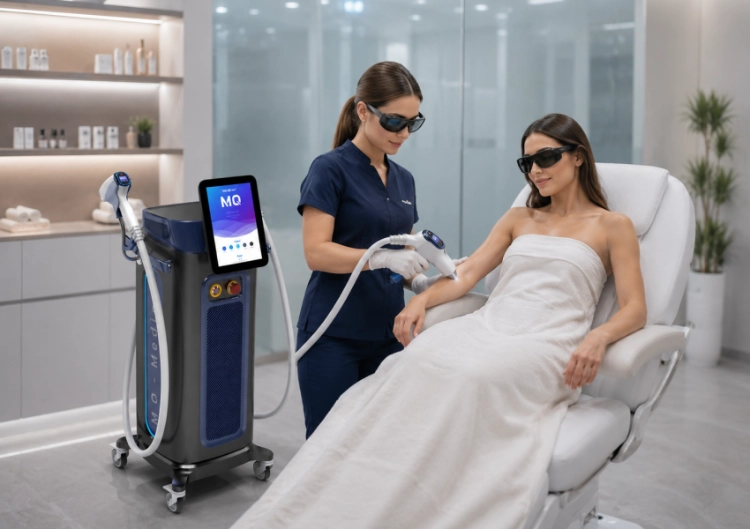
It takes more than a straightforward “non-surgical lift” message to provide an HIFU brow lift menu. The upper face typically is comprised of a small treatment area with thin tissues, obvious asymmetries, and sensitive anatomy combined with high expectations among clients. What is this service actually meant to do, and who should not be treated, along with what cartridge depths are provided for each treatment performed? How do you photograph the results of the treatment so it stands up in court if needed, and then when does that client return to your medical spa therefor, starting an entry into a data trail?
The HIFU route is marketed for focused ultrasound delivery at adjustable depths. Buyers should not assume that every cartridge, depth, or facial application is included in every configuration. Confirm the supplied probes, shot capacity, warranty, energy range, training, and compliance documents before selling appointments.
Define the Upper-Face Consultation
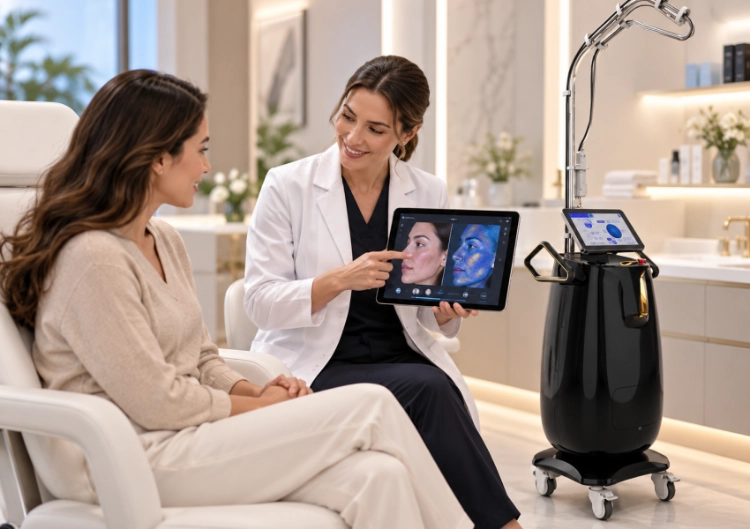
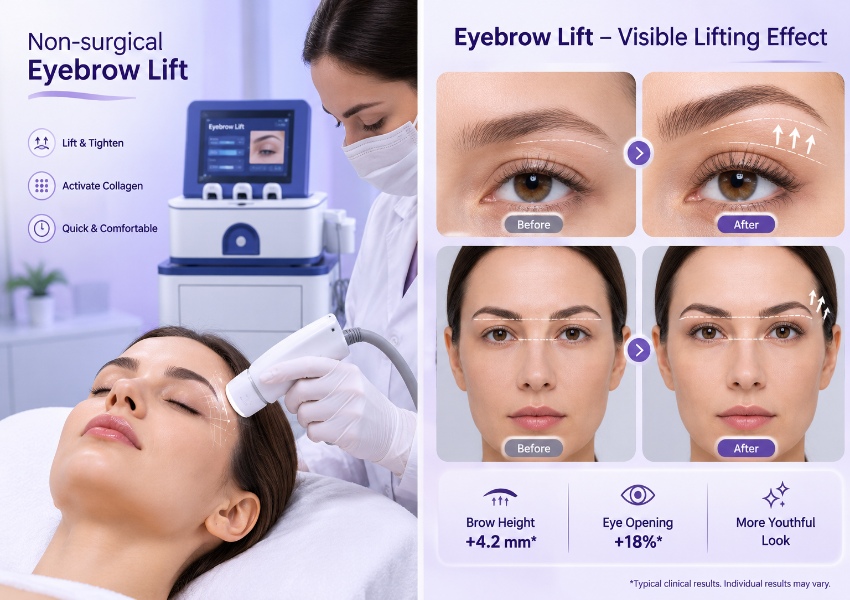
A brow-lift consultation needs to be divorced from concerns regarding the position of the brows versus fine lines, movement in forehead dynamic creases, change in volume, or eyelid laxity, and expectations that may idealize a better path forward. Previous energy modalities, fillers, and threads used internally or externally for augmentation of inflatable body parts prescribe medications, pregnancy status, and sensitivity-ability. The team uses standardized front and side photography to record asymmetry for discussion, reviewing a progressive result without the necessity of relying on memory.
Set a Realistic Service Position
HIFU, where the device and local regulations allow trained provider use for skin-tightening and energy-based contour support. It should be understood by the client that response and timing depend on a number of factors, including tissue state, energy plan compliance, chronological age, and biological age. This language helps a medical spa before purchase rather than just in the consent form after payment.
Screening and Treatment Boundaries
The area around the eyes needs sharp borders. Operators should stick to the manufacturer-approved treatment map, steer clear of prohibited zones (such as under-eye filler), maintain even transducer coupling, and never improvise around the orbit. Any client with unresolved skin changes, recent procedures that might affect the plan, implanted material in the site of the intended zone, or concerns outside the service scope should be reviewed according to local clinical governance protocols. Have a written stop rule for unexpected pain, altered sensation, or abnormal skin response.
Choose Cartridges by Depth and Area
For a face-up depth, the most common cartridges are 1.5 mm, 3.0 mm, and 4.5 mm. In a general technical framework, superficial skin-quality targets are correlated with 1.5 mm; deeper dermis at 3.0 mm; and deeper facial support layers at 4.5 mm depth, respectively. That framework empowers the buyer to ask better questions, but it isn’t a one-size-fits-all protocol for every treatment. The device manual, cartridge design, local authorization, and certified training decide the use in options around the brow.
It is also an inventory question, and so for a medical spa, it has to do with planning cartridges. This includes the number of shots per service, expected treatment sites, spillage or discarded vials, storage/expiry instructions, and supplier lead time along with replacement terms as well as the cost per appointment completion. The service is very popular, but it can only be used effectively if the right cartridge is used for a low device price. The HIFU equipment category helps to compare the formats of platforms. However, a quote should specify every cartridge provided.
Build a Safe, Repeatable Appointment
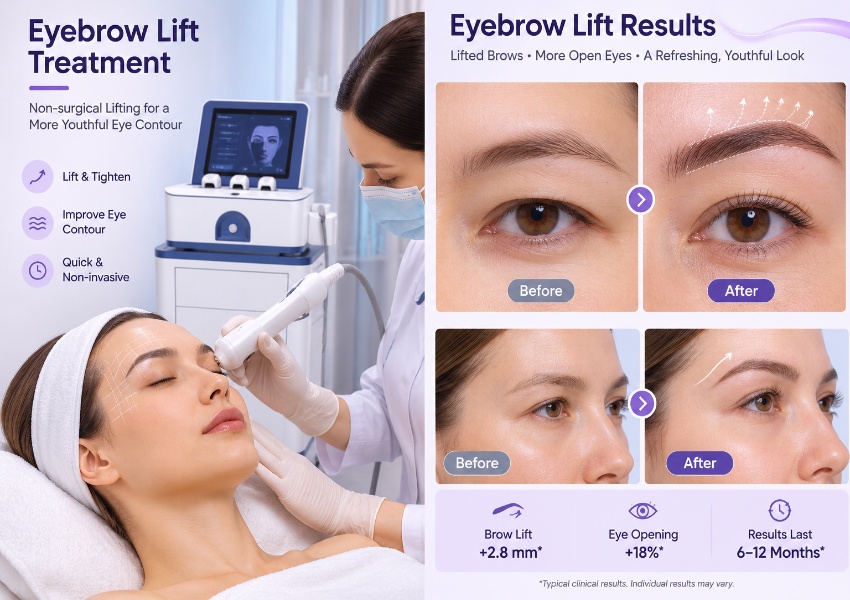
The order of the appointment has to remain posted as follows: confirmation of enrollment and consent, photographic background, area cleansing with antiseptic solution followed by applying ultrasound gel for skin tracking, ensuring that jelly remains well on an intact zone only where treatment is intended; injection given as per appropriate settings selected within chosen cartridge during indication after confirming comfort throughout the entire procedure course until afterward when removing excess remaining gels, explaining post-procedural care guidelines accordingly. Log the depth of cartridges, the expression of energy shots or lines where relevant with areas treated, and also sensations from treatments interrupted. The first visit should make sense if the client comes back to yet another provider.
You need time for assessment, mapping, counselling treatment, cleaning, and answering questions. Aftercare may include temporary tenderness or swelling, exposure to heat and light protection, and when he/she should get in touch with the practice. Periodic book reviews, with respect to the allowed protocol of clinics and how progressive this form is going. Do not sell repeat treatment just because you have a cartridge sitting at the clinic.
It is the review visit that is part of the service and not an administrative extra. Images taken at the same angle in the original photographs Recreate tenderness, altered sensation, and changes to skin. Changes are observed by the client when the brow position is changed. The team then can determine whether there is no further action necessary, closely observing the process of time to see if it resolves on its own or another approved pathway needs implementation. It prevents the consultation from reducing itself to an improbable before-and-after contract, with a promise that ignores natural asymmetry and gradual change.
Create Demand Without Overpromising
The most effective device you can use is educational: What happens during a typical HIFU brow assessment? At the beginning, we might ask ourselves: Why does the eye area need to be planned differently? Why is the depth of the cartridge important? And then on When Would You Prefer A Different Approach? Our medical spa employs short video explainers, a trained-provider consultation phone service, a brow-and-upper-face photography guide for potential patients, and consented progress documentation to ensure that they are attracting better-fit enquiries. Do not promise a fixed lift by showing one angle of the face.
MQLASER, on the other hand, is equipped to handle product configuration and even OEM or ODM discussions as well as discussing training scope after service designing for the spa has been completed. The R&D background and certification portfolio should indeed be verified for the particular medical device and target market but not stated as a generic statement. Refer to the MQLASER and supplier contacts for terms of service and cartridge specifications, as well as the training outline. Put that info in the launch checklist for buyers.
Conclusion: Build the Service Around the Eye Area
Credible HIFU brow services begin with careful screening, a treatment map approved by the doctor, an appropriate cartridge package used correctly, thorough documentation, and realistic communication. It’s all about machine cost; that’s only part of the decision. The program becomes a staple of the medical spa menu in part based on cartridge availability, training, consultation time with clients, and follow-up. Continue reading our other guide.
FAQ
Q1: Which cartridge depth is used for an HIFU brow lift?
A1: Depth selection depends on the supplied device, approved treatment map, tissue assessment, local rules, and trained operator protocol. Do not use a generic depth chart as a treatment instruction.
Q2: How should a medical spa price an HIFU brow service?
A2: Include consultation time, cartridge shots or usage, staff time, room time, aftercare, follow-up, training, and the allocated equipment cost.
Q3: Can HIFU replace an eyelid procedure?
A3: No. HIFU is an energy-based aesthetic service. Suitability and expected change should be assessed individually, with clear referral boundaries when needed.