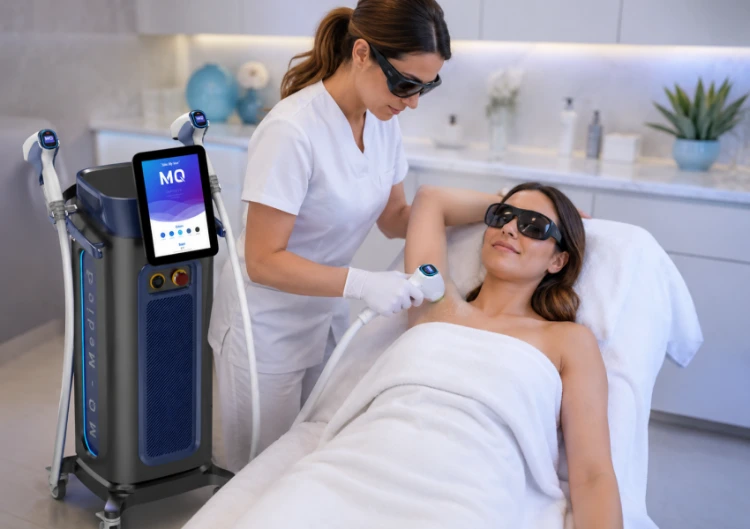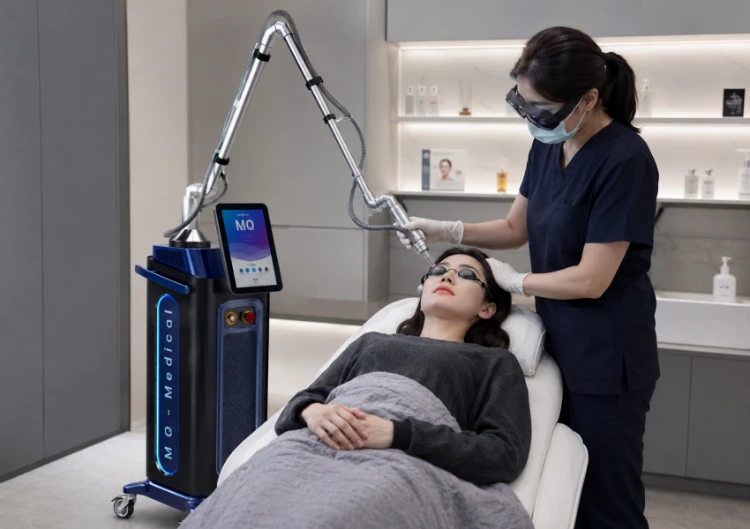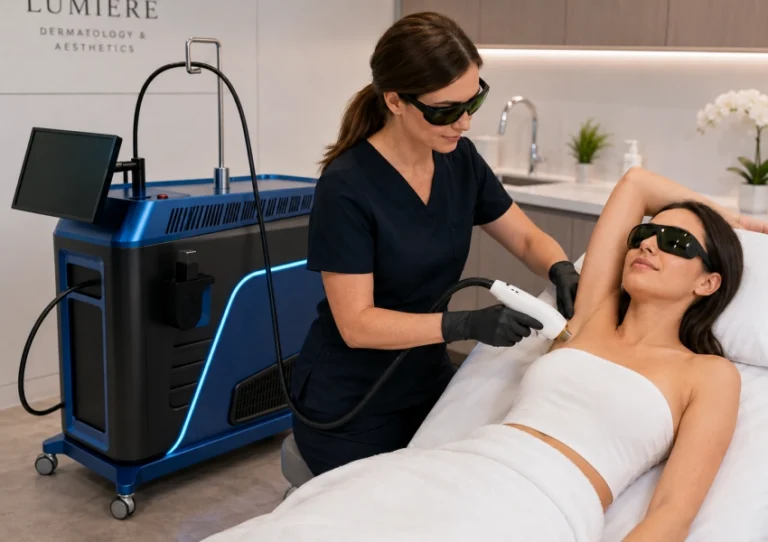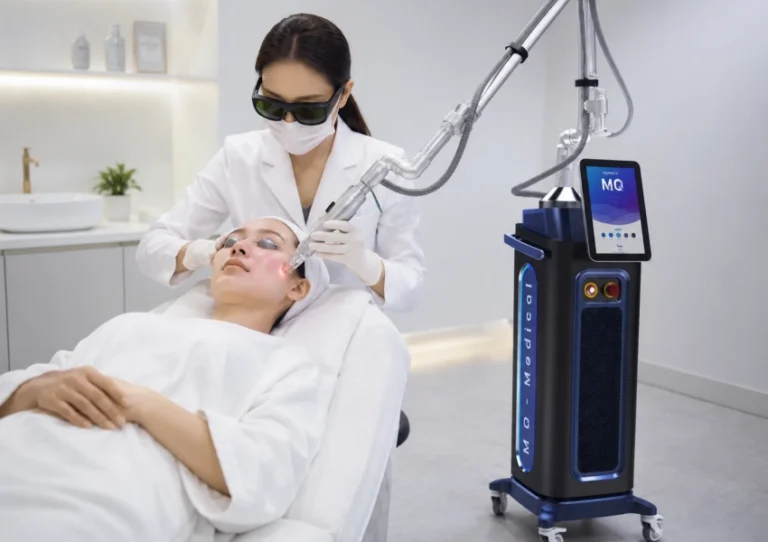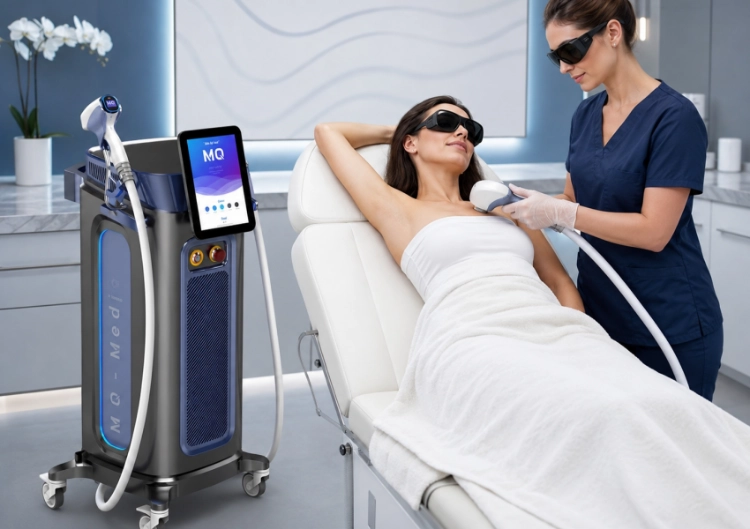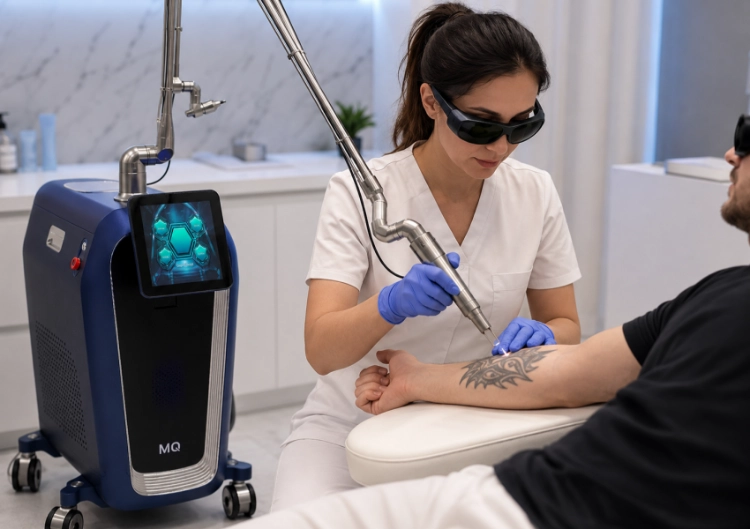
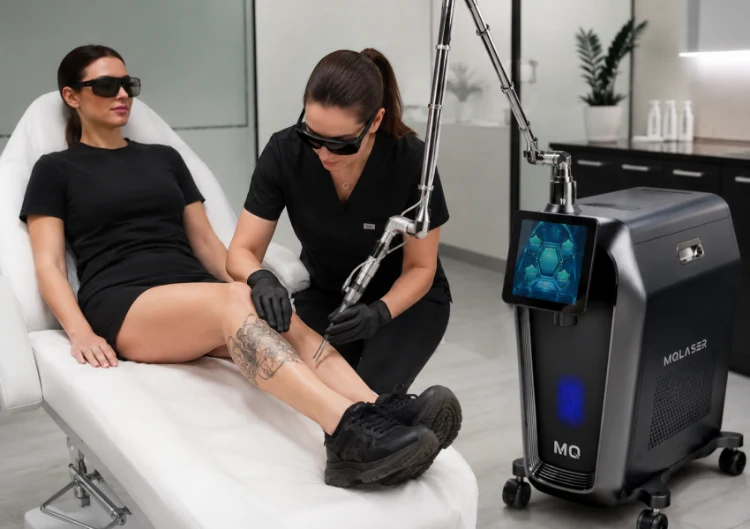
A picosecond platform can look similar on a purchase list while producing a very different operating routine. Tattoo and pigmentation businesses need more than fast pulses. They need a wavelength map, a controlled spot, clear mode selection, a handpiece that works through a full schedule, and a supplier who can support training and service. PicoWay and DEPELITE both sit in the picosecond category, but their purchasing case should be compared through the jobs the team needs to deliver rather than a brand label.
Start With Wavelength and Pulse Information You Can Verify
A tattoo removal laser needs to match pigment colour, density, and placement with the appropriate wavelength and mode. Dark black and blue-black inks are normally assessed on a 1064 nm route, while red and many warm-colour inks call for a 532 nm route. The final service settings depend on the client, operator protocol, and local rules. A buyer should not accept a generic statement that a machine handles all colors without asking which wavelengths, handpieces, and spot sizes are actually included.
DEPELITE Publishes a Clear Base Specification
DEPELITE picosecond platform has 1064 nm and 532 nm output, 350 ps pulse width, 1-10 Hz frequency, a 20-3000 mJ energy range, and a 2 – 10 mm adjustable spot size. Its optional wavelength list includes 755 nm, 1320 nm, 585 nm, and 650 nm, but those options must be stated in the order. This is useful for a distributor because the base system and any custom wavelength extension can be priced separately.
From Client Intake to a Documented Pigment Service
A picosecond appointment should begin with a pigment and tattoo map. The intake record should identify ink colours, tattoo density, body location, approximate treatment area, previous sessions, recent changes in the area, and the client’s service history. Pigmentation services require a separate record because the colour, area size, spot choice, and communication process may differ from a tattoo appointment.
A working wavelength is then assigned to the recorded service need. A 1064 nm route is commonly used when the service plan involves black or blue-black ink, while 532 nm is commonly considered for red and other warm-colour ink. The operator should still follow the approved local protocol and begin with a documented test area when required. The setting record should include wavelength, mode, spot size, energy, frequency, pulse information, and the operator responsible for the service.
DEPELITE provides a 350 ps pulse width, 1-10 Hz frequency, 20-3000 mJ energy range, and 2-10 mm adjustable spot size. Its base output includes 1064 nm and 532 nm, while 755 nm, 1320 nm, 585 nm, and 650 nm are listed as optional configurations. Those options should be matched to the service menu and written into the order rather than assumed to be included.
Two Service Routes for Tattoo and Pigment Work
For a tattoo appointment, divide the design into documented zones instead of treating the whole area as one undifferentiated surface. The operator can record the colour and density of each zone, apply the selected protocol, and note the settings used. Dense black sections, coloured sections, and small outlines may require different spot-size decisions and different appointment planning.
A pigmentation appointment should use a controlled area map and consistent hand movement. Smaller areas may require close attention to spot placement, while broader areas require an even pattern and clear stopping points. The objective is to keep the operator’s movements, settings, and records consistent from one appointment to the next.
DEPELITE’s SP, PTP, and MP modes should each be connected to a written operating protocol. SP supports direct energy and spot adjustment. PTP uses a dual-pulse route. MP lists a 25 microsecond pulse interval and a maximum of 4 J. These modes should not be selected only because they appear on the screen. The team should define which mode belongs to each service type, which wavelength is permitted, which spot range is used, and when the operator must pause for inspection.
Post-Service Review and Operator Handover
After the service, the operator should inspect the treated area under the clinic’s approved procedure, clean the handpiece or optical surface as required, and save the treatment record. The next appointment should not rely on memory. The handover file should include the wavelength, mode, spot size, energy, frequency, treated zones, optical check, and any unusual equipment response.
A distributor demonstration should follow the same route. Test a small pigment area, a dense black tattoo section, and a multicolour design. Record setup time, handpiece movement, spot adjustment, mode changes, cooling or equipment checks, cleaning, and the time needed to prepare the next booking. This gives the clinic a service workflow that can be trained and repeated, instead of a specification list without an operating context.
Compare Beam Delivery and Service Workflow, Not Just Peak Numbers
Energy is only useful when the delivery is consistent. In a full appointment day, the operator also needs to select a safe working mode, document the setting, inspect the optics, and move around small contours without losing control of the beam. These details affect repeat bookings, staff confidence, and how often a senior operator is called into a routine service.
| Public performance and operating point | PicoWay | MQLASER DEPELITE |
| Wavelength route | 532 nm and 1064 nm. Additional wavelength and attachment availability must be confirmed by regional configuration. | 1064 nm and 532 nm base output; 755 nm, 1320 nm, 585 nm, and 650 nm are optional custom wavelengths. |
| Pulse and energy expression | Picosecond-family positioning; exact pulse duration, per-wavelength energy, and repetition limits require a current quote and selected handpiece. | 350 ps; 20-3000 mJ total published range; 1-10 Hz. SP 1064 nm: 50-1200 mJ; SP 532 nm: 20-600 mJ; PTP 1064 nm: 300-2400 mJ. |
| Spot size | Verify spot range and the relationship to the selected Zoom or fractional attachment in the quotation. | 2-10 mm adjustable spot size with adaptive optical lattice. |
| Beam and handpiece control | Confirm beam profile, arm or handpiece package, service interval, and accessory scope by market. | 7-joint arm, 360-degree movement, uniform spot design, and flat-top energy distribution. |
| Modes and guided workflow | Confirm the installed mode set and software version before deposit. | SP, PTP, and MP modes; 11 guided treatment-item parameter suggestions; more than 30 self-check points. |
| Heat and maintenance | Ask for cooling architecture, expected duty cycle, handpiece service plan, and consumable list. | Modular structure and low-loss accessories are described; inspect arm movement, lens condition, ventilation, and self-check status in the maintenance routine. |
DEPELITE gives a detailed published range and three operating modes. PicoWay can be assessed against its exact handpiece package, but a distributor should keep configuration-dependent claims out of sales material until the local supplier confirms them.
Build the Menu Around Ink, Pigment, and Throughput
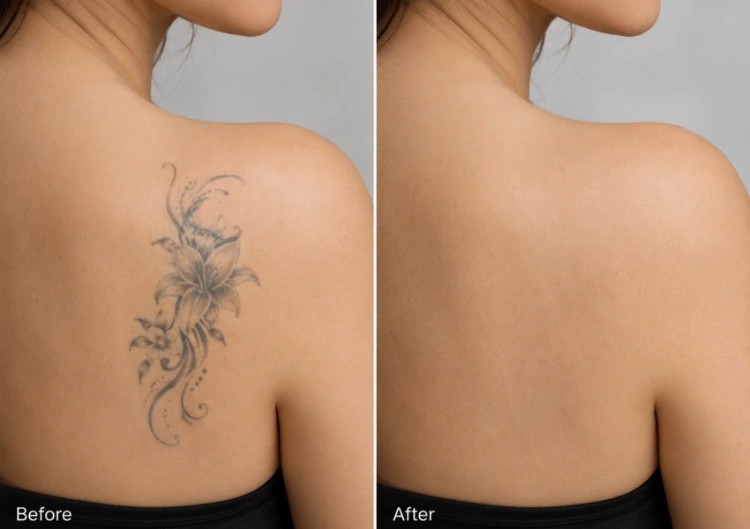
A pigment service and a tattoo service do not create the same room rhythm. Large, dense black work may demand a different hand position, spot choice, and appointment spacing from smaller multicolour designs. A pigmentation laser programme also needs a separate documentation and client-communication workflow. Putting all jobs into one preset is not a capacity strategy.
Use a Two-Lane Operating Protocol
For tattoo work, organise the booking sheet by ink colour, density, body area, and prior session history. For pigmentation services, organise it by the included wavelength, spot range, mode, and planned room time. DEPELITE’s SP mode supports direct energy and spot adjustment; PTP uses a dual-pulse path; MP has a 25 microsecond pulse interval and a stated maximum of 4J. Those modes should be used only under a trained business protocol, not treated as automatic substitutes for operator judgment.
Protect the Handover Between Operators
The most expensive delay is often not the service itself. It is the next operator trying to reconstruct the previous setting. Require a record of wavelength, mode, spot size, frequency, energy, client area, and handpiece check. A compact service log also helps the supplier distinguish a workflow question from an optical or cooling fault when technical support is needed.
Ownership Cost and Channel Flexibility Matter After Installation
Compare a three-year ownership model instead of comparing only the machine price. Include installation, delivery, operator training, handpiece or arm service, optics, preventive checks, room downtime, marketing support, and the number of paid appointments the business can realistically complete. Do not claim a payback period before these inputs are known. A platform that is lower priced but weakly supported can cost more after a long service interruption.
| Procurement dimension | PicoWay route | MQLASER DEPELITE route |
| Customization | Usually tied to regional product, handpiece, and distributor availability; confirm the exact orderable configuration. | MQLASER supports OEM/ODM work, allowing discussion of branding, language, packaging, and optional wavelength configuration. |
| Value comparison | Premium-platform value depends on regional price, installed handpieces, local service contract, and brand position. | Quote-based value can be structured around the published base system, optional waves, training, and distributor package. |
| Joint product development | Confirm local channel scope and whether special configuration is available. | MQLASER reports an experienced R&D team and annual R&D investment equal to 15% of turnover for new product development. |
| Market flexibility | Suitable where the chosen regional package matches a defined premium pigment and tattoo menu. | Useful for distributors seeking configurable modes, optional wavelengths, guided software, and private-label planning. |
| After-sales and training | Confirm regional trainer access, handpiece support, warranty, and spare-part timing in writing. | Confirm destination-market documents, CE/ISO/RoHS scope, arm service, training, warranty, spare parts, and support-response terms before order. |
For a distributor that needs a configurable line, MQLASER OEM/ODM support can be part of the commercial discussion after the technical specification is fixed. The picosecond laser is useful for comparing related configurations, but the final purchase order should list every included wavelength, handpiece, mode, training item, and service commitment. Please feel free to contact us.
Conclusion
PicoWay buyers need a handpiece-specific regional quote. DEPELITE gives a traceable base specification of 350 ps, 1064 nm and 532 nm output, 2-10 mm spot control, SP/PTP/MP modes, and self-check functions. The stronger purchase is the one that matches the real tattoo and pigment menu, documents every setting and accessory, and includes a reliable training and service path. If you would like to learn more, please read this article.
FAQ
Q1: Are PicoWay parameters the same in every market?
A1: No. Handpieces, accessories, service coverage, and documentation can vary. Confirm the current regional configuration and quote before publishing exact claims.
Q2: What DEPELITE settings are published?
A2: DEPELITE lists 350 ps, 1064 nm and 532 nm, 1-10 Hz, 20-3000 mJ, 2-10 mm spot size, and SP/PTP/MP modes. Optional wavelengths must be specified in the order.
Q3: What matters most for tattoo throughput?
A3: Use a documented workflow for ink colour, body area, mode, spot size, operator handover, optics checks, and service support. Higher headline energy alone does not create predictable capacity.