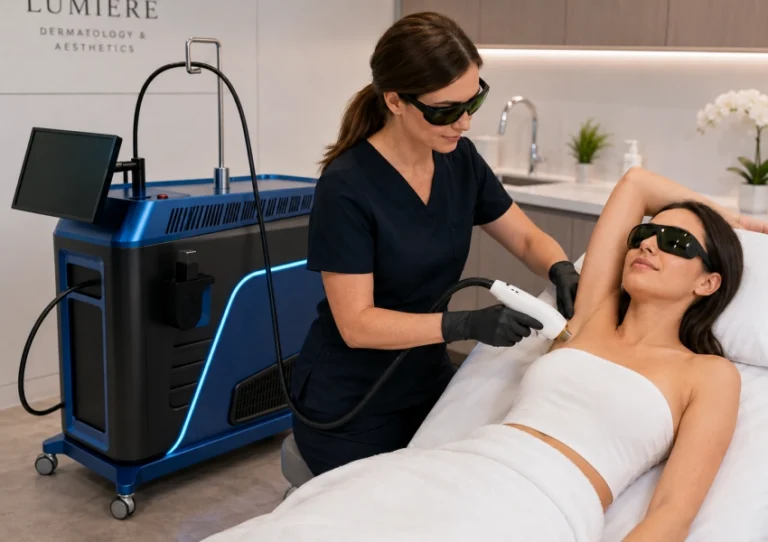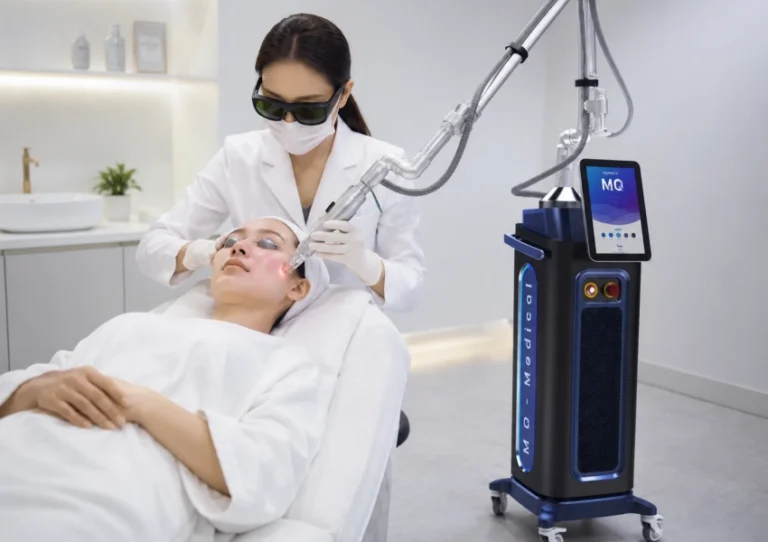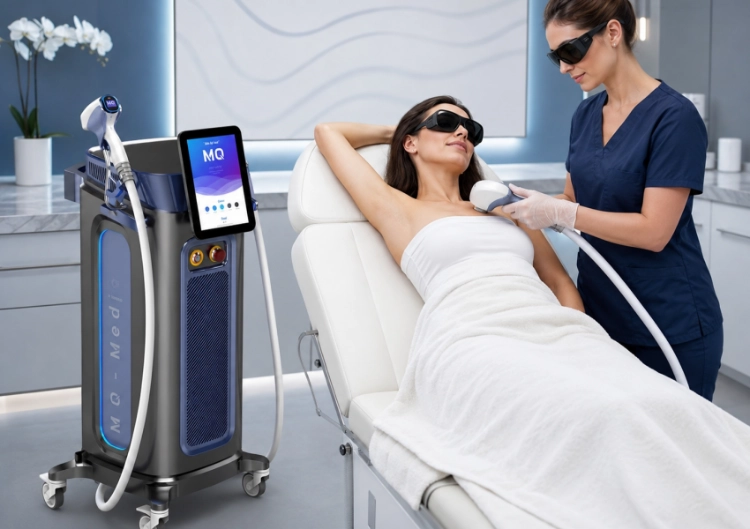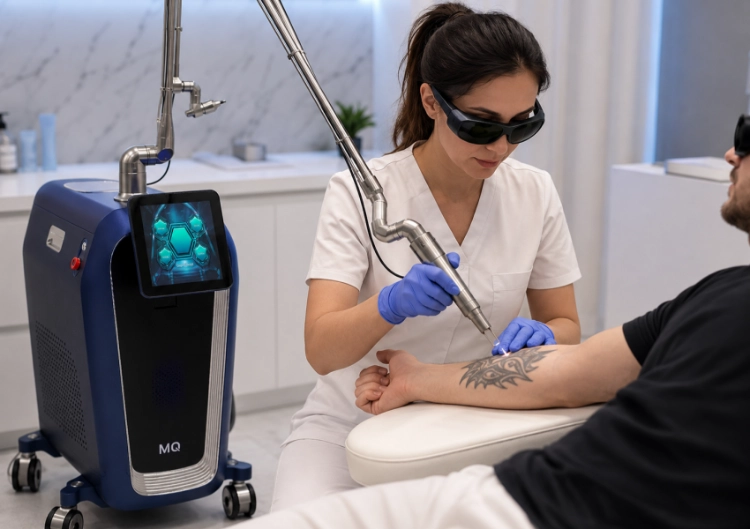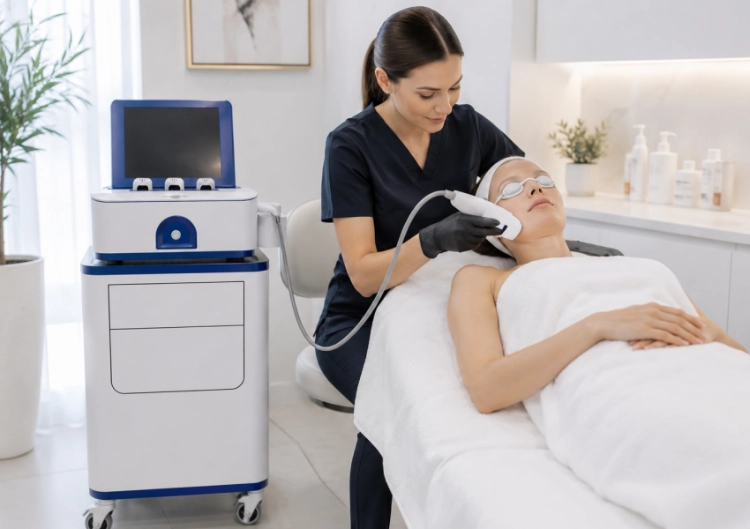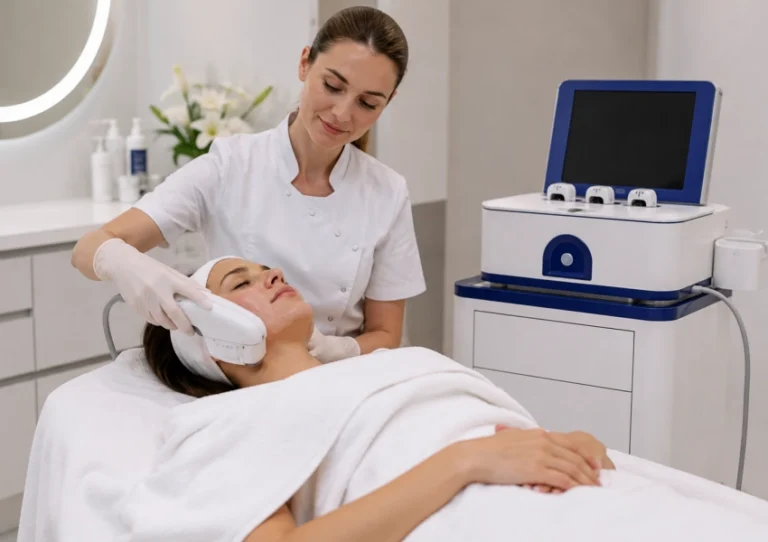
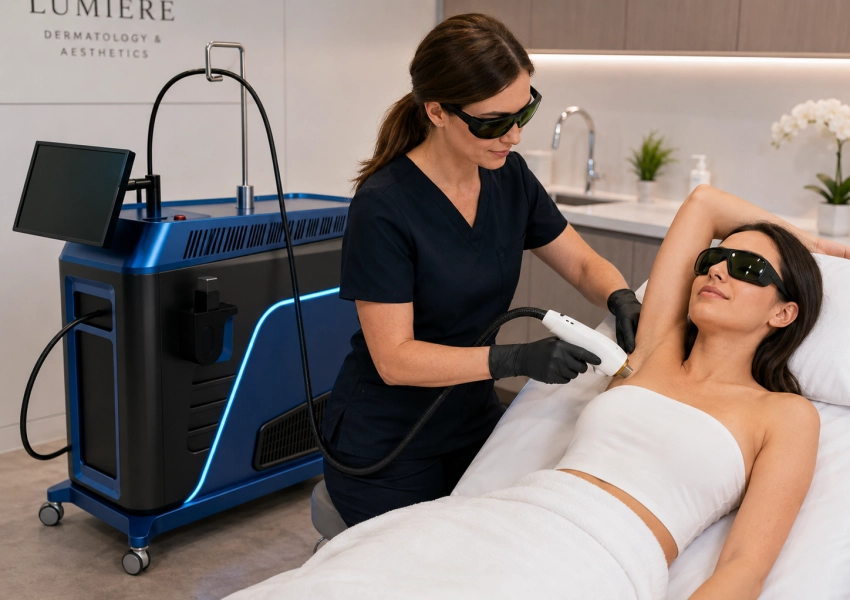
A growing hair-removal clinic does not need a dual-wavelength laser simply because two wavelengths look impressive on a brochure. The useful question is how quickly the team can move between client profiles, body areas, and service packages without creating calibration delays or adding avoidable maintenance work. Cynosure Elite iQ and MQLASER AlexPlus both use a 755 nm and 1064 nm route, yet the buying logic is different. One places visible weight on a melanin reader and an established high-power workstation; the other places visible weight on one fiber, large spot coverage, short pulse control, and configuration flexibility.
The Two Wavelengths Solve Different Operating Problems
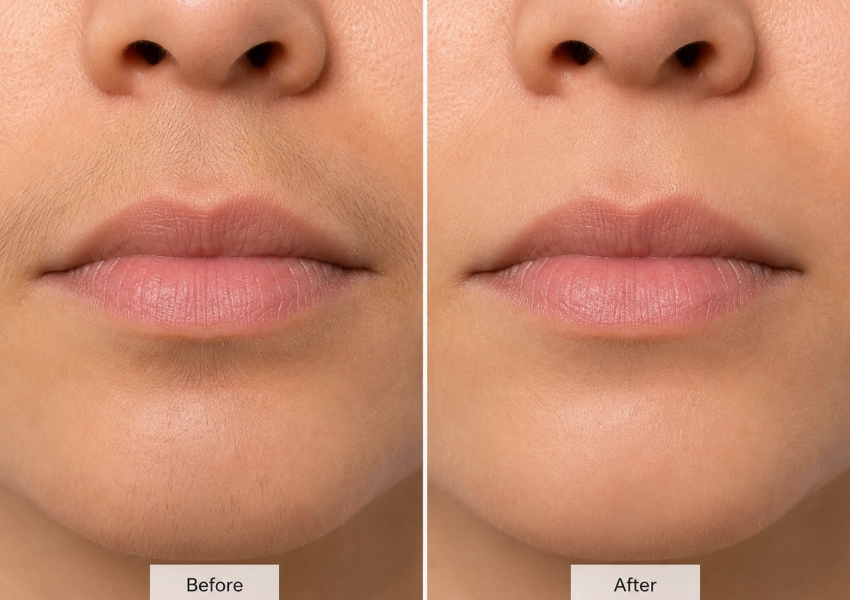
The 755 nm Alexandrite band is strongly absorbed by melanin and is commonly selected for lighter skin and finer hair. The 1064 nm long-pulse Nd:YAG band reaches deeper with lower melanin absorption at the surface, making it a practical route for darker skin tones and coarse hair when settings and cooling are appropriate. A dual-wavelength platform is therefore useful when the client base is mixed, but the operator still has to select pulse duration, fluence, spot size, and cooling for the actual service. Besides hair removal, AlexPlus can also treat many other skin problems.
Cynosure Elite iQ: Reader-Assisted Platform Control
Elite iQ has a dual-wavelength platform using 755 nm and 1064 nm Nd:YAG technology, higher maximum energy than the previous generation, and the Skintel Melanin Reader. It also describes a 30A Nd:YAG system, a modern touch interface, and lightly ergonomic handpieces. The reader is a workflow feature: it can help the operator assess skin type and set a test-spot starting point instead of relying only on visual judgment. The public page does not list a single universal fluence or spot-size range for every handpiece, so those values belong in the market-specific quote.
AlexPlus: One Fiber, Large Coverage, Short Pulse Option
The AlexPlus dual-wavelength platform lists 755 nm Alexandrite and 1064 nm ultra-long-pulse Nd:YAG output. It has a 26 mm maximum spot size, a 2 ms short-pulse option, DCD dynamic cooling, and one fiber covering mainstream spot sizes from 12 mm to 26 mm. Those details point to a simple commercial goal: fewer handpiece changes between a small face area and a large leg or back area.
Cynosure Elite iQ vs MQLASER AlexPlus
Clinical Decision-Making by Skin, Hair, and Treatment Area
A dual-wavelength platform becomes useful only when the operator can connect wavelength selection with the client’s actual hair and skin profile. The 755 nm route is generally more relevant to lighter skin and finer, more superficial hair, while 1064 nm has lower melanin absorption at the surface and can be considered for darker skin tones or coarser hair when the service protocol, cooling, and test-spot process are appropriate.
The same client may also require different decisions across body areas. Small facial contours need accurate placement and a manageable spot size. Legs, backs, and arms place more emphasis on coverage, repetition rate, handpiece balance, and cooling recovery. A wavelength should not be selected from skin tone alone. Recent sun exposure, hair density, hair thickness, body area, and the client’s previous response should also be recorded before the service begins.
The first appointment should include a parameter check and a test spot under the clinic’s approved operating protocol. The operator can then record the selected wavelength, spot size, pulse duration, fluence, cooling setting, and observed skin response. This creates a repeatable reference for later appointments without treating one setting as suitable for every client.
Example Workflow for a Mixed Appointment Schedule
A growing clinic can test both platforms with three practical service scenarios: fine hair on a small facial area, coarse hair on a large leg or back area, and a mixed schedule that changes wavelength and spot size between clients.
For the facial scenario, the operator should check whether the smaller spot option gives adequate access around contours without excessive repositioning. For a large body area, the 26 mm maximum spot listed for AlexPlus may reduce the number of placements, while the 12-26 mm range allows the operator to move between coverage requirements through one fiber. The 2 ms short-pulse option should be reviewed with the supplier as part of the ordered configuration and operating protocol rather than treated as a universal setting.
Between appointments, the team should record the handpiece used, cooling preparation, room reset time, and parameter changes. A useful demonstration is not simply a single pulse on a test area. It is a complete sequence from client assessment to cleaning and the next booking. That sequence shows whether the platform can support consistent service delivery when facial and full-body appointments are scheduled in the same room.
Performance Comparison for a Growing Clinic
In both systems, the selected handpiece, local electrical package, software version, and regional availability can change the final specification.
| Performance point | Cynosure Elite iQ | MQLASER AlexPlus |
| Wavelengths | 755 nm and 1064 nm Nd:YAG. | 755 nm Alexandrite and 1064 nm ultra-long-pulse Nd:YAG. |
| Energy expression | Higher maximum energy than the previous generation and a 30A Nd:YAG system. | 2 ms pulse option. |
| Spot size | Large spot sizes. | 26 mm maximum spot, with one fiber covering 12-26 mm mainstream sizes. |
| Cooling | Cooling configuration is handpiece and package dependent on the public page. | DCD dynamic cooling, with cryogen delivered before the laser pulse. |
| Skin and hair coverage | Dual wavelength plus optional Skintel assessment supports varied client profiles; operator settings remain essential. | Dual wavelength and interchangeable spot coverage support fine facial hair through large body areas; operator settings remain essential. |
| User interface | Modern intuitive touchscreen and Skintel integration. | A single-fiber workflow and spot adjustment; interface details should be checked in the demonstration. |
| Unconfirmed items | Exact fluence, pulse-width range, repetition rate, spot-size list, warranty, and service terms require a regional quote. | Exact maximum power, full pulse-width range, repetition rate, warranty, and service terms require a regional quote. |
Workflow, Training, and Maintenance Decide Throughput
On a busy day, small interruptions compound. A handpiece change, a cooling refill, a setting check, or a long restart can turn into an empty appointment slot. Before ordering, map the actual route from client intake to end-of-service cleaning. The best dual-wavelength laser for a growing clinic is the one the team can repeat accurately across that route.
From Facial Areas to Full-Body Sessions
A small spot helps with facial contours; a large spot reduces placements across legs, the back, or arms. AlexPlus is positioned around changing spot size through one fiber, which can reduce handpiece swaps. Elite iQ highlights light handpieces and reader-assisted workflow, but the exact accessory mix should be reviewed. Ask both suppliers to demonstrate a mixed schedule, including room reset, cooling preparation, and setting documentation.
Training and Maintenance Questions
Training should cover more than button sequences. The operator needs a wavelength selection rule, a spot-size rule, cooling checks, test-spot documentation, cleaning, and a stop point when the handpiece or skin response is outside the service protocol. Maintenance questions include cooling medium, filter access, handpiece service, consumables, calibration, and replacement-part response time.
Commercial Comparison Before the Purchase Order
A dual-wavelength platform earns its place through repeat bookings, usable room time, and a service menu that staff can sell with confidence. Compare ownership cost over the first 24 months rather than comparing machine prices alone. Include installation, training, shipping, cooling consumables, preventive service, downtime, replacement handpieces, and the revenue lost when a room cannot run. The diode laser can help frame the product range, but the business case still needs the exact AlexPlus configuration and local operating costs.
| B2B factor | Cynosure Elite iQ | MQLASER AlexPlus |
| Customization | Package and accessories depend on the regional platform and representative; confirm available options. | MQLASER supports OEM/ODM projects, allowing discussion of branding, package configuration, and market-specific requirements. |
| Cost and value | A premium workstation can make sense where the brand, reader, and established support model support higher service pricing. | Value depends on the quoted configuration; one-fiber spot flexibility may reduce accessory duplication and simplify room use. |
| R&D cooperation | Support is normally structured around the established platform and regional service organization. | MQLASER reports an experienced R&D team and annual R&D investment of 15% of turnover for new product development. |
| Market flexibility | Strong for a clinic that wants a recognized platform and standard operating package. | Strong for distributors building a differentiated package around dual wavelengths, spot choices, OEM/ODM, and local sales positioning. |
| Supply and service | Confirm representative coverage, warranty, parts, calibration, and service contract in the target country. | Confirm lead time, spare-part stock, warranty, training, remote support, and local compliance documents before deposit. |
| Certifications | Market-specific regulatory documentation must be checked for the exact sale route. | MQLASER products are presented with CE, ISO, and RoHS certifications; the exact certificates and scope should be attached to the project file. |
Which Platform Fits the Next Stage of Growth?
Elite iQ is a sensible choice when the clinic values reader-assisted parameter selection, a known dual-wavelength workstation, and established local support. AlexPlus fits a different growth pattern: a clinic or distributor wants dual-wavelength coverage, large-area speed, one-fiber spot flexibility, DCD cooling, and room to shape the package with the manufacturer. Neither platform should be ordered from a headline feature alone. The final selection should follow a demonstration, a written parameter sheet, and a service agreement.
A Practical Demonstration Script
Run three scenarios: fine hair on a small area, coarse hair on a large area, and a mixed client sequence that switches wavelength and spot size. Record setup time, handpiece changes, cooling behavior, screen steps, cleaning, and the operator’s ability to repeat settings. Then price the same schedule using local labor and service assumptions. That record gives the owner a much clearer ROI view than a brochure comparison.
Conclusion
Cynosure Elite iQ and AlexPlus both answer the need for 755 nm and 1064 nm coverage, but they package that capability differently. Elite iQ emphasizes a reader-assisted, high-power workstation. AlexPlus emphasizes one-fiber flexibility, a 26 mm spot, short-pulse control, and DCD cooling. For a growing clinic, the better platform is the one that fits the staff skill level, mixed client schedule, service price, maintenance plan, and supplier support available in the target market. A direct contact route can sit beside the technical request, provided the quotation states what is included rather than leaving the package open to interpretation. If you are also wondering more, our article answers that.
FAQ
Q1: Does Elite iQ use two wavelengths?
A1: Yes, 755 nm and 1064 nm Nd:YAG technology, with Skintel Melanin Reader availability noted for parameter assessment.
Q2: What is the largest AlexPlus spot size listed?
A2: A 26 mm maximum spot and one fiber covering mainstream spot sizes from 12 mm to 26 mm.
Q3: Should a clinic compare only machine price?
A3: No. Include training, cooling consumables, service, calibration, downtime, handpiece support, warranty, and the revenue capacity of the room.