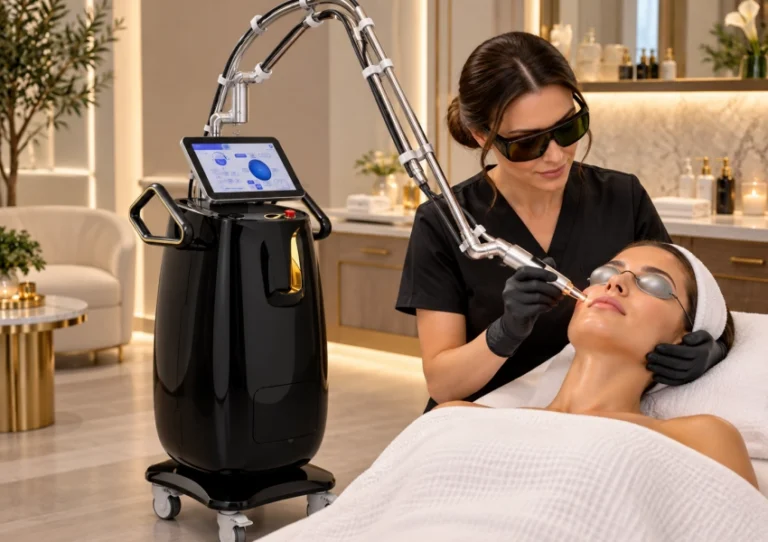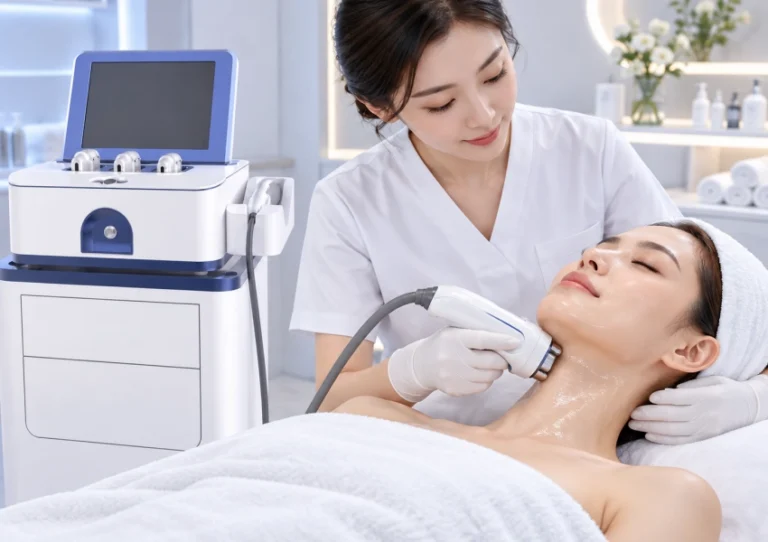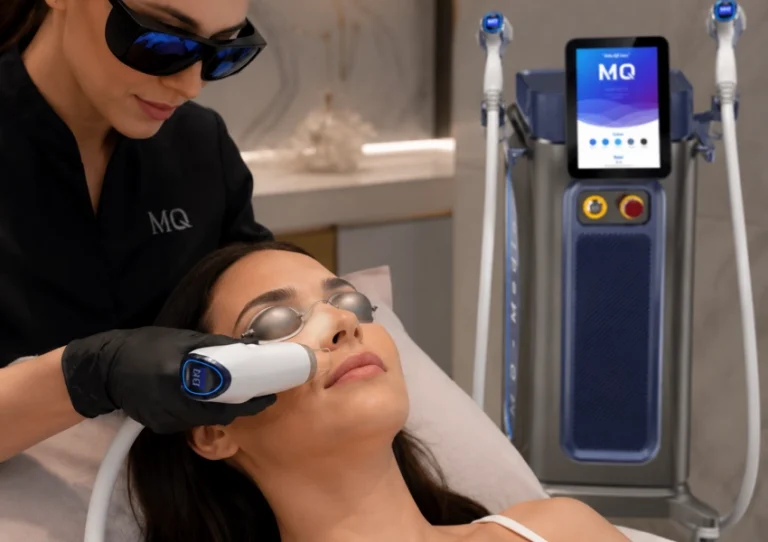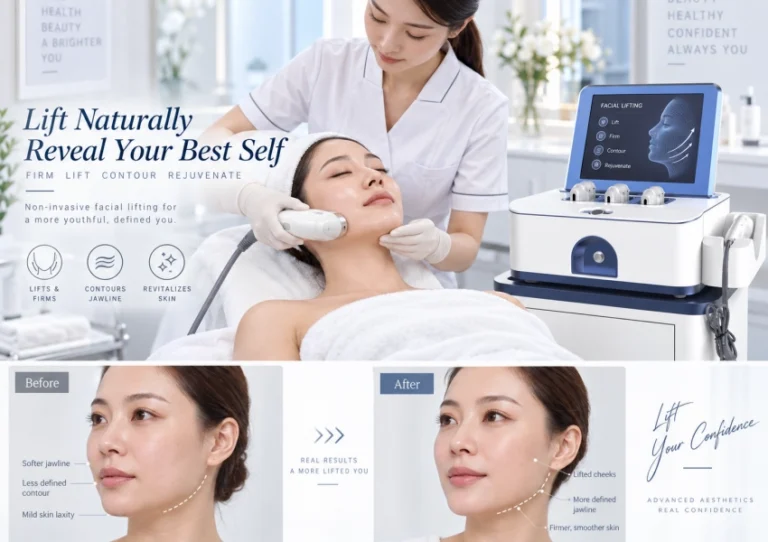
Picture restoring an old building to its original beauty. You could carefully smooth the outer walls, erasing flaws to reveal a fresh, clean surface—this is the approach of the Fractional CO2 Laser. Or, you could strengthen the building’s inner supports, building durability and lift from within—this is the method of RF Microneedling. Both paths lead to stunning results. However, knowing the structure of your client’s skin will guide you to the best plan.
Meet the Artisans: A Closer Look at Each Technology
To pick the right tool, we must first understand the experts and their special equipment.
Fractional CO2 Laser
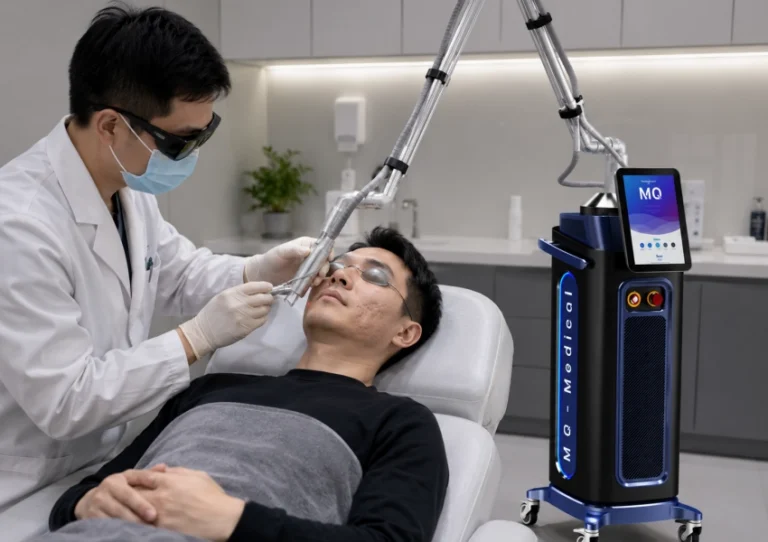
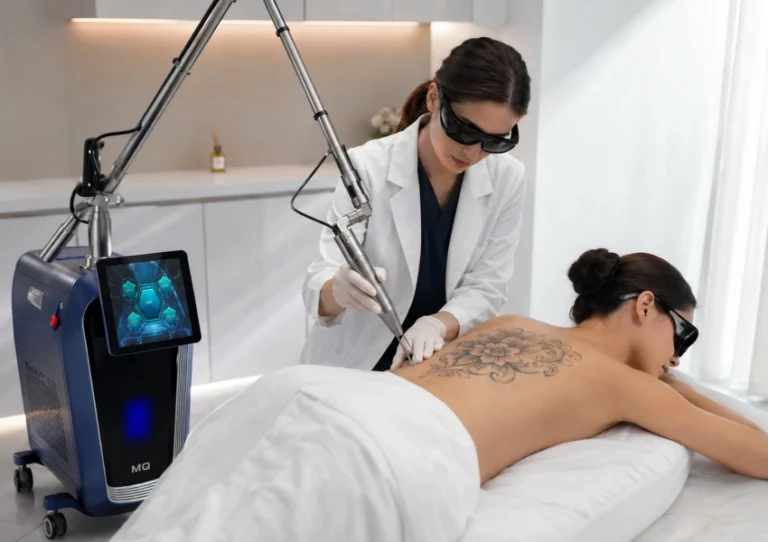
The Fractional CO2 Laser works like a skilled artist perfecting a surface. It sends thousands of tiny, precise light beams onto the skin. These beams create small, controlled heat spots on the surface. They gently remove old, damaged skin layers. This process triggers the skin’s natural healing, encouraging it to build new collagen beneath.

This method has clear strengths. It excels at improving skin texture dramatically. It works well for clients with deep wrinkles, noticeable sun damage, or stubborn scars. For those wanting striking results in fewer visits, the Fractional CO2 Laser is often the top choice.
RF Microneedling
RF Microneedling acts like an expert strengthening a building’s core. It renews skin from the inside out. The device uses very fine needles to make tiny, unseen channels deep in the skin. It skips the surface. Once the needles are in place, they send a controlled burst of radiofrequency (RF) energy to the skin’s deeper layers.
This deep heating has two benefits. It tightens the skin right away. More importantly, it boosts long-term collagen growth where it counts most. Its strengths include excellent skin tightening, firming, and lifting. Since the surface stays mostly untouched, recovery is quick, making it ideal for busy clients. It is also safe for a wide range of skin tones, adding to its flexibility.
The Project Brief: A Head-to-Head Comparison
To choose the best tool, every skilled professional needs a clear plan. Here’s how the two methods compare side by side.
This table offers a quick overview of their main differences.
| Feature | Fractional CO2 Laser | RF Microneedling |
| Primary Goal | Deep wrinkles, scars, texture | Improving skin looseness |
| Core Technique | Surface smoothing with light beams | Deep tissue heating with fine needles |
| Primary Work Zone | Skin surface and deeper layers | Mostly deeper layers (inside-out) |
| Downtime | Longer (3-7 days of visible recovery) | Short (a few hours to 1 day of mild redness) |
| Skin Tone Suitability | Best for lighter skin; needs care on darker tones | Safe for all skin tones |
| Typical Project Plan | Fewer sessions (e.g., 1-3) for bold results | More sessions (e.g., 3-5) for steady improvement |
The table shows the key difference in their approach. The CO2 Laser refines the “outer walls” to spark deep renewal. RF Microneedling strengthens the “inner supports” directly. This affects the timeline and recovery. The CO2 Laser needs a planned recovery time because the surface is actively renewed. RF Microneedling causes little disruption since the main work happens below the surface.
Skin tone is a vital factor in the plan. The Fractional CO2 Laser requires careful handling on darker skin tones. It has a higher risk of pigmentation changes. A skilled professional must guide its use. In contrast, RF Microneedling suits most skin tones. Its energy works safely beneath the surface, avoiding pigment-producing cells.
Equipping Your Workshop: Partnering with a Reliable Supplier
A skilled professional needs dependable tools. When choosing equipment like a Fractional CO2 Laser, working with a trusted manufacturer is essential.

MQLASER stands out with a highly skilled research and development team. This expertise supports clients through detailed OEM/ODM services. Clinics can tailor equipment to match their unique brand. The company invests 15% of its yearly revenue in research. This commitment keeps their tools advanced and supports the creation of new, innovative products. All MQLASER products meet strict global standards, including CE and ISO certifications. These ensure top performance and quality.
The Final Blueprint: Designing the Perfect Restoration Plan
In this comparison of methods, no single plan fits every project. The “best” choice depends on the client’s skin and goals. For a smooth surface renewal that tackles visible flaws and delivers bold results, the Fractional CO2 Laser is the ideal tool. For strengthening the inner structure to achieve impressive lift and firmness with little downtime, RF Microneedling is the top pick. The best professional knows when to smooth the surface and when to reinforce the core. They create a tailored plan for lasting beauty.
FAQs
Q1: Can Fractional CO2 Laser and RF Microneedling treatments be combined?
A: Yes, combining them often yields the best results. A professional can design a long-term plan using both methods. This addresses a wide range of issues. For example, a client might start with a Fractional CO2 Laser session to fix deep acne scars and texture problems. Later, they could have RF Microneedling sessions to tighten skin and maintain collagen growth. This approach improves both the “outer walls” and the “inner supports.”
Q2: How soon will my clients see results from these treatments?
A: Both methods show quick and gradual results. With RF Microneedling, clients often see a slight tightening effect right away due to tissue heating. With the Fractional CO2 Laser, skin looks smoother and brighter after the healing phase (about 1-2 weeks). For both, the biggest improvements appear over 3-6 months. The body produces new collagen, enhancing firmness, elasticity, and skin quality over time.
Q3: What are the primary long-term benefits of investing in these treatments?
A: The main long-term benefit is the ongoing production of healthy collagen. This is key to youthful skin. For clients, this means fewer visible wrinkles, firmer skin, and a smoother, stronger texture. With proper care and sun protection, results from these treatments can last years. They are a valuable investment in a client’s confidence and skin health.