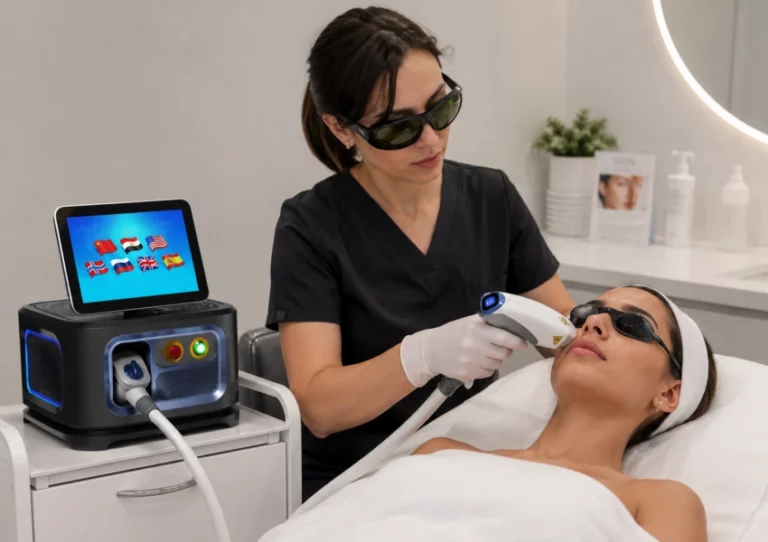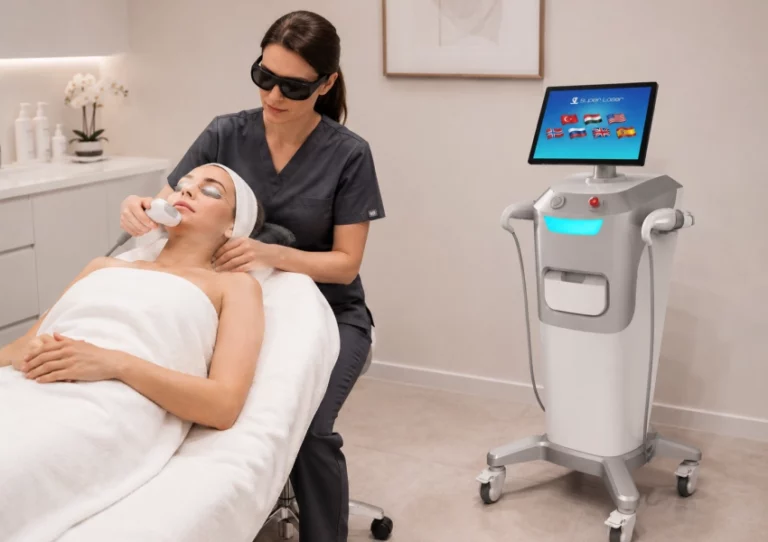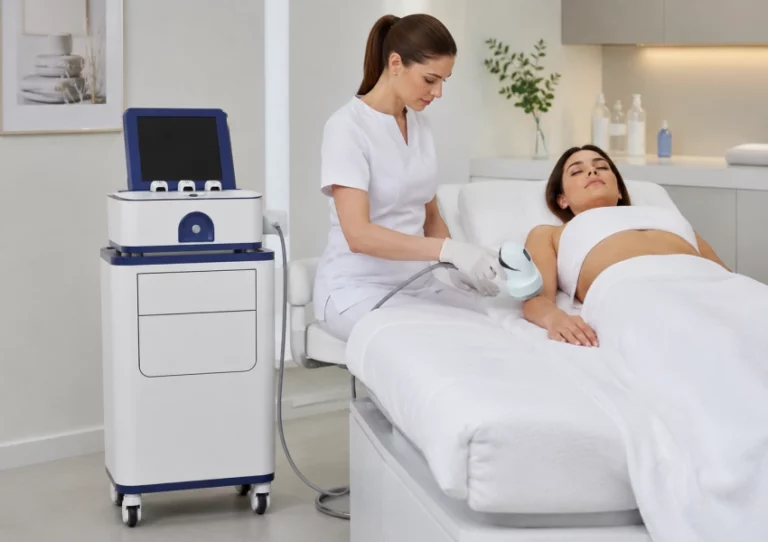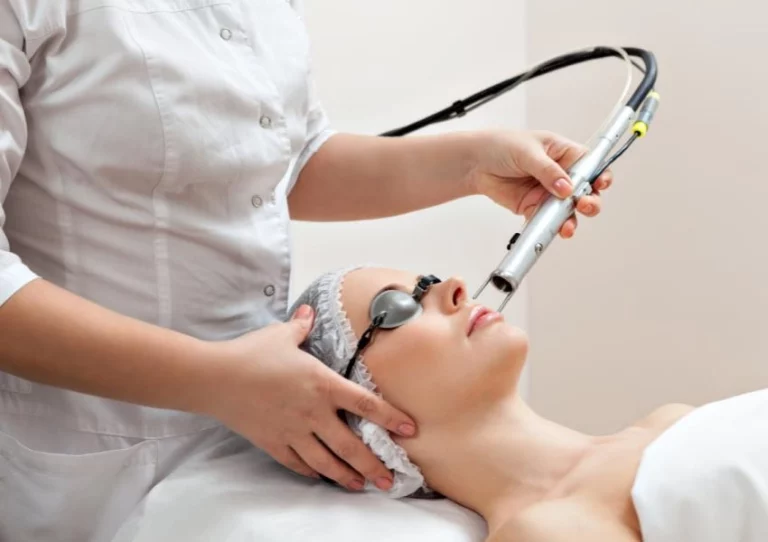
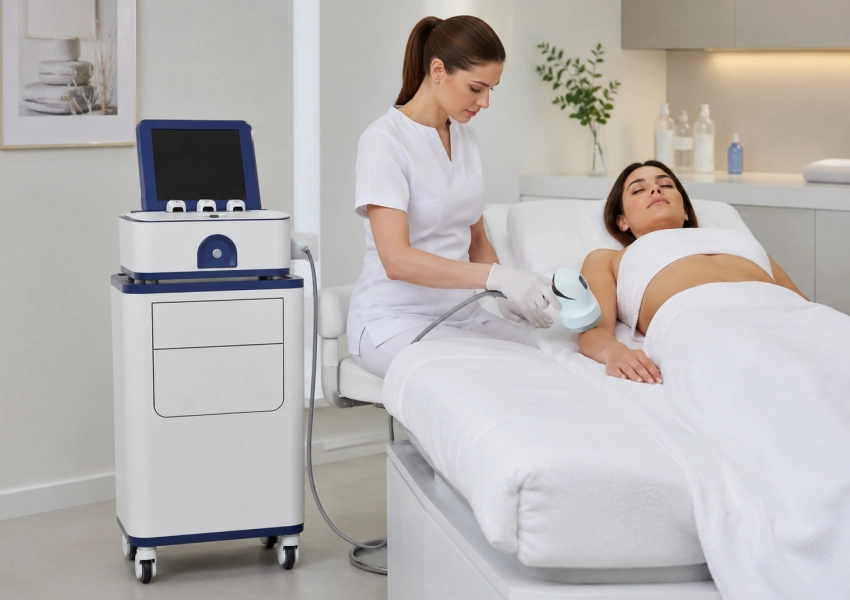
Focused ultrasound platforms are not bought only for lifting claims. Clinic buyers usually care about service menu design, cartridge cost, client comfort, operator learning curve, distributor margins, and whether the supplier can adapt to local demand. In an Ultraformer MPT vs HIFU machine discussion, brand recognition may be part of the decision, but it should not be the only one. A professional HIFU machine has to support daily work, not just a convincing demonstration. MQLASER HIFU direction is positioned around focused ultrasound energy for beauty clinics that want face and body programs with controllable depth selection.
Focused Ultrasound Buying Starts With Depth And Coverage
A useful HIFU machine comparison should begin with how the platform places energy. Focused ultrasound concentrates energy below the skin surface and forms thermal focal points at selected depths. In aesthetic use, this allows beauty clinics to build tightening, contouring, and lifting-style service menus without making every session the same. The practical question is whether the platform gives enough depth choices and coverage for the treatments your team wants to sell.
Layer Targeting For Face And Body Programs
Common aesthetic-focused ultrasound work uses different depths for superficial facial areas, deeper facial support layers, and selected body contouring zones. Industry reference ranges often include focal depths such as 1.5 mm, 3.0 mm, and 4.5 mm for face-oriented work, with deeper cartridges used for body areas where appropriate. Energy density and frequency also change by cartridge, so cartridge matching is a real operating cost issue, not a small accessory detail.
A HIFU machine for beauty clinic use should let your team set programs by area, client tolerance, and service positioning. If every cartridge is expensive or difficult to source, the menu becomes narrower over time. If cartridge cost is manageable, the clinic can price packages more flexibly.
Why Cartridge Cost Changes The Real Payback
HIFU cartridge cost affects every business model. A clinic with premium pricing may absorb high consumable cost more easily. A distributor selling into mixed markets may need a wider cost-performance range, especially where entry packages, bundle sales, and seasonal promotions matter. Cartridge life, replacement availability, warranty terms, and training all influence return on investment.
For many buyers, the stronger question is not whether one platform sounds more advanced. It is whether the machine supports enough service variety while keeping consumables, replacement parts, and staff training under control.
Ultraformer MPT vs MQLASER HIFU Performance Comparison
The first comparison should stay close to the instrument. Buyers need to see how each option fits service design, operating depth, session flow, consumables, and support.
| Performance Area | Ultraformer MPT | MQLASER HIFU |
| Core positioning | A recognized focused ultrasound platform often selected by clinics that value established branding and premium-room positioning. | A professional HIFU machine option for clinics and distributors seeking focused ultrasound service design with stronger customization room. |
| Energy approach | Focused ultrasound delivery for non-invasive aesthetic programs, with treatment modes depending on system configuration. | Focused ultrasound platform for skin tightening, lifting-style facial programs, and body contouring service menus. |
| Depth planning | Suitable when the buyer’s menu is already built around its available cartridge set and branded protocol style. | Supports depth-based program planning for face and body needs, with supplier discussion around cartridge configuration. |
| Cartridge economics | Can work well in premium clinics, though cartridge cost and supply terms should be checked before purchase. | Better suited for buyers who need more flexible HIFU cartridge cost planning across multiple clinics or dealer channels. |
| Operator workflow | Brand-led training may help teams follow a defined premium service routine. | Training can be adapted for local menus, operator experience, and service bundles through MQLASER project support. |
| Service menu flexibility | Strong when the clinic wants a recognizable premium offer with less supplier-side customization. | Useful when you need a HIFU machine for beauty clinic packages, dealer pricing, and market-specific service combinations. |
| Long-term support question | Buyers should confirm consumable price, warranty, and local service access. | Buyers can discuss OEM/ODM needs, accessory plans, and after-sales support with the supplier during sourcing. |
Commercial Comparison For Distribution And Clinic Growth
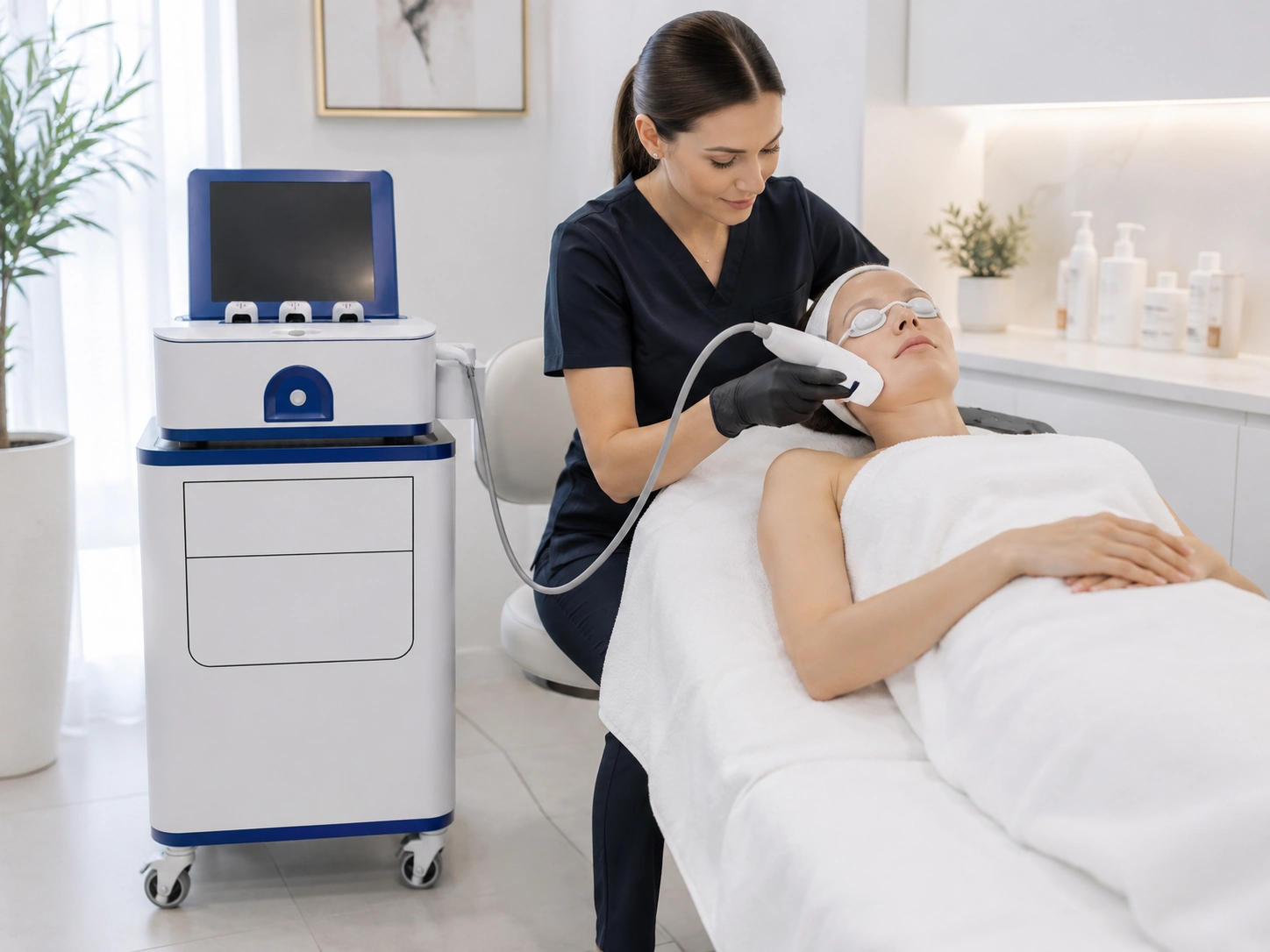
The second comparison is where many sourcing decisions are actually made. A machine that performs well but gives the distributor little room on price, branding, cartridge planning, or local service packages may be difficult to scale. MQLASER should be judged not only as a device supplier, but also as a project partner for beauty equipment businesses that need market flexibility.
| Business Factor | Ultraformer MPT | MQLASER HIFU |
| Customization | Usually bought as a branded platform with limited customization space for distributors. | OEM/ODM discussion is available, including configuration, appearance, packaging, and project needs where feasible. |
| Cost-performance | Suitable for premium clinics that can charge enough to absorb higher entry and consumable costs. | A stronger fit for buyers who need professional function, practical HIFU cartridge cost control, and flexible package pricing. |
| Cooperation on new technology R&D | Innovation is typically received through the brand’s own product roadmap. | MQLASER invests 15% of annual turnover in new product development and can discuss market feedback with its R&D team. |
| Market flexibility | Good for clinics where end users already recognize the brand and premium pricing is accepted. | Better for distributors building different price tiers, private-label channels, or regional packages around focused ultrasound skin tightening. |
| Training and documentation | Often structured around fixed brand protocols and premium positioning. | Can be aligned with local dealer training, beauty clinic service menus, and multilingual sales support needs. |
| Certification base | Buyers should verify documentation by target market before importing. | CE, ISO, and RoHS certification support international B2B sales and distributor compliance preparation. |
How To Choose For Your Clinic Or Dealer Network
The right choice depends on the way you make money from the machine. A single high-end clinic, a multi-room beauty center, and a regional distributor do not face the same pressure.
When Brand Recognition Is The Main Driver
Ultraformer MPT may fit clinics that already sell branded premium treatments and can defend a higher session price. If clients in your market ask for that name, and if consumables, service access, and training are commercially acceptable, a brand-led platform can make sense. The buyer still needs to check cartridge cost, local warranty response, delivery time, and whether the clinic can fill enough appointments to support the investment.
When Flexible Service Design Matters More
MQLASER HIFU is more attractive when your business needs service menus that shift by market. A distributor may sell one configuration to a city clinic, another to a beauty chain, and another to a new salon. In that setting, configuration, training, documents, and OEM/ODM support become commercially valuable.
The broader professional beauty equipment line also matters for channel buyers. When one supplier can support several energy-based categories, dealers can reduce training fragmentation and keep after-sales communication more consistent.
Supplier Support And Long-Term Project Control
Focused ultrasound skin tightening is not a one-time hardware sale. Your team needs cartridge planning, staff training, technical support, and clear service boundaries. MQLASER’s experienced R&D team, OEM/ODM capacity, and annual R&D investment give buyers room to discuss local requirements.
Certifications such as CE, ISO, and RoHS do not replace local import checks, but they give distributors a stronger starting point. Buyers can also review related education content when training sales teams on the difference between ultrasound depth planning and other beauty equipment categories.
For a first purchase, ask the supplier for cartridge options, cartridge life, after-sales process, warranty boundaries, sample settings, and training support. For distribution, ask about private labeling, spare-part lead time, documentation packages, and future product updates. The MQLASER site can serve as the central brand reference point for those discussions. For more information, please do not hesitate to contact us.
Conclusion
Ultraformer MPT vs MQLASER HIFU is not a simple premium-versus-budget decision. Ultraformer MPT can suit clinics that depend on brand pull and premium positioning. MQLASER HIFU is stronger for buyers who want focused ultrasound service flexibility, cartridge cost control, OEM/ODM discussion, and distributor-friendly project support. The better platform is the one that fits your pricing model, staff capacity, market education level, and long-term service plan. If you would like to learn more, please read this article.
FAQ
Q1: What should buyers compare first in a HIFU machine comparison?
A1: Compare depth options, cartridge cost, service menu fit, operator training, warranty, and local support before focusing on branding.
Q2: Is MQLASER HIFU suitable for a beauty clinic?
A2: Yes. It supports focused ultrasound skin tightening and contouring-style service menus, with configuration and support discussion for clinic or distributor needs.
Q3: Why does HIFU cartridge cost matter so much?
A3: Cartridge cost affects every session margin, package price, replacement planning, and distributor payback. A lower machine price alone is not enough.