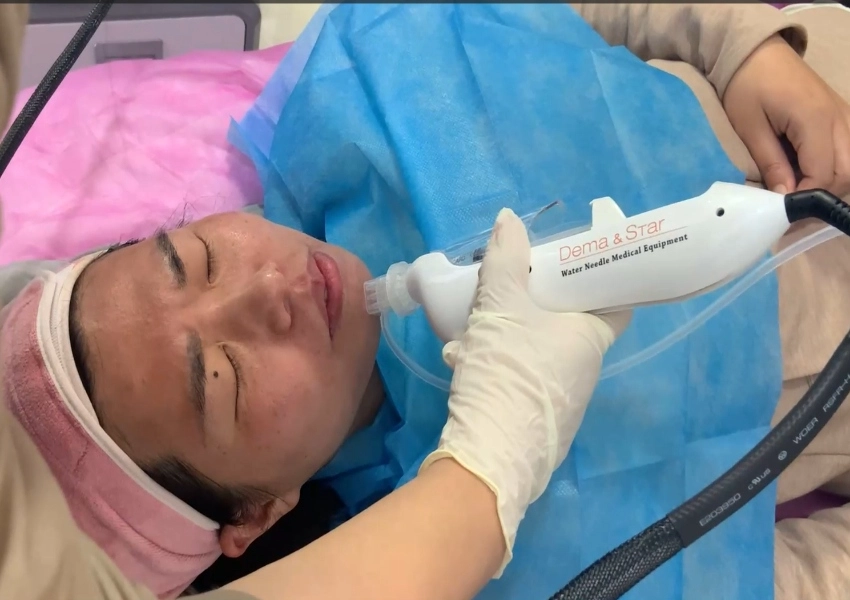
Mesotherapy services can look calm from the outside. Inside the treatment room, the real pressure is timing, dosage, skin contact, and consistency. Manual injection depends heavily on hand skill. It can work well in skilled hands, but it is slow to repeat across large facial areas and harder to standardize across multiple operators. A vital injector mesotherapy gun changes the workflow by using negative pressure, multi-needle delivery, and adjustable dose settings.
The question is not whether one method replaces all professional judgment. It does not. The better question is which method helps a beauty business keep service quality steadier when appointment volume grows. DEMA STAR is presented by MQLASER as a vital injector mesotherapy gun with negative pressure vacuum technology, 9-needle injection support, syringe compatibility, and fast full-face treatment timing. Those functions speak directly to service efficiency.
Where Manual Mesotherapy Slows Down Service Flow
Manual mesotherapy can be flexible. A trained operator can adjust angle, depth, spacing, and dosage by feel. That flexibility is useful for small areas or custom work. It also creates variation. Two operators may deliver different coverage. One may be slower. Another may leave more visible marks. When a beauty salon sells skin booster packages, the brand experience should not depend too much on who happens to be working that day.
Consistency Becomes a Business Issue
A manual mesotherapy injector relies on hand pressure and repeated judgment. Over many points, small differences build up. Some areas may receive too much product while others receive too little. Vacuum assistance helps guide nourishing solutions such as hyaluronic acid and collagen into the dermis and supports more even distribution. For buyers, that means the automatic mesotherapy gun is not only about speed. It is about repeatability.
| Service factor | Vital injector mesotherapy gun | Manual mesotherapy |
| Treatment speed | Designed for larger areas and faster facial service flow. | Depends on hand speed and operator endurance. |
| Dose control | Adjustable injection volume and speed support more consistent delivery. | Dose control depends on hand pressure and syringe handling. |
| Skin contact | Negative pressure lifts the skin before needle entry. | Contact angle and skin tension vary by operator. |
| Staff training | Easier to standardize once protocols are set. | Requires stronger individual technique and longer practice. |
How Negative Pressure Injection Changes the Experience
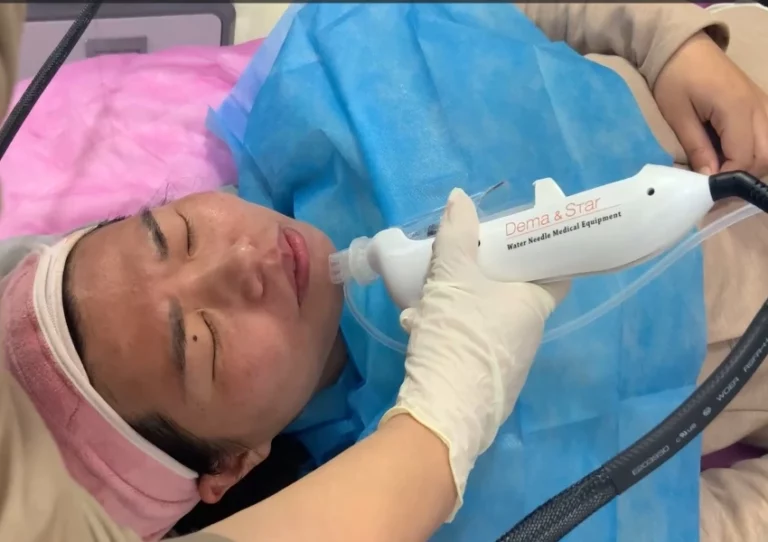
Negative pressure is the working detail that separates DEMA STAR from a simple powered syringe. The skin is lifted before the microneedle enters, then the measured amount is injected. Syringe pressure is released before the needle comes out, reducing the loss of nutrients. In practice, this helps the operator keep the target area stable while working across cheeks, forehead, jawline, or other service zones.
A skin booster injector machine also helps with timing. A whole-face treatment can be finished in about 8-15 minutes and notes a 185g ultra-light injection handle with an ergonomic design. A lighter handle matters in a busy room because operator fatigue often affects the final pass. When the handpiece is easier to control, the service feels calmer, and the result is easier to repeat.
Dose Settings Give Managers Something to Train Around
The injection pump manual includes examples such as Auto-Sensing 0.0100ml, DOSE 0.0143ml, and Auto-DOSE 0.0250ml. Parameters still need trained professional judgment and local compliance checks. They do show why device-led work is easier to document. A salon can build service notes around dose, speed, area, syringe type, and aftercare instead of relying on loose verbal habits. Negative pressure injection also gives managers a clear process to review during staff training: suction first, measured delivery second, clean release third.
When Manual Work Still has a Place
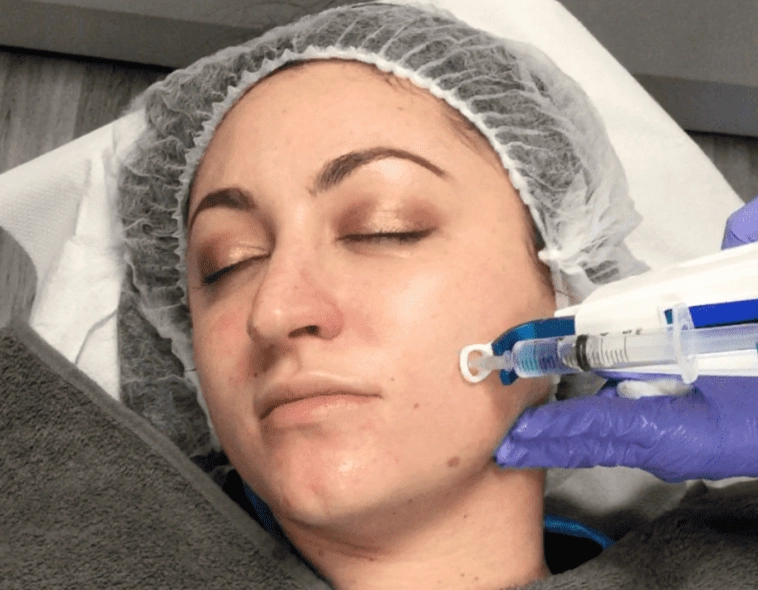
Manual mesotherapy is not outdated. It still fits focused touch-up work, highly personalized service, and operators who prefer direct tactile feedback. Some buyers also keep manual tools as backup when the main device is being serviced. For a very small studio, the cost of an automatic mesotherapy gun may not feel urgent at first.
The limit appears when the business wants to scale. Manual work is harder to turn into a clear service script for several branches, new staff, or distributors training end users. A vital injector mesotherapy gun supports a more teachable workflow: skin suction, needle entry, dose delivery, release, and movement to the next area. The operator still matters, but the device helps reduce avoidable variation.
There is another practical point: customer communication. Manual services can be harder to explain because the process depends on hand movement and personal technique. With a device-led mesotherapy injector, the salon can describe vacuum lifting, multi-needle coverage, dose settings, and treatment timing in clearer language. That makes the service easier to sell, easier to repeat, and easier to package with post-care products or maintenance appointments.
How DEMA STAR Fits a Beauty Business Purchase Plan
DEMA STAR is positioned for negative pressure multi-needle delivery with compatible syringe types including 1 ml, 2 ml, 2.5 ml, 3 ml, 4 ml, and 5 ml. Filter covers for needle hygiene, a stable vacuum pump, a 9-needle design, adjustable injection volume and speed, and auto-sensing support for its private treatment needle. This makes the product more than a handpiece. It is a workflow platform for timed services.
For a multi-room beauty center, the purchase case becomes stronger when different staff members need to deliver the same skin booster injector machine service. Negative pressure injection reduces the guesswork around skin lifting and dosage rhythm. Manual mesotherapy can still provide a custom touch, but an automatic mesotherapy gun helps the business write clearer service standards and train new operators with less drift between rooms. A mesotherapy injector with documented settings also makes follow-up records easier to compare.
Questions to Ask Before Placing an Order
A buyer should confirm syringe compatibility, needle options, dose range, vacuum stability, consumable replacement, cleaning steps, training support, and after-sales response. It is also worth checking whether the supplier can provide practical use videos and service notes. MQLASER has 1V1 service and product training, and the mesogun vital injector guide gives a useful starting point for the working principle. For more detail, see our guide on this article.
FAQ
Q1: Is a vital injector mesotherapy gun faster than manual mesotherapy?
A1: Usually yes for larger facial areas. Device speed depends on settings, operator training, skin condition, and service protocol.
Q2: Does an automatic mesotherapy gun remove the need for training?
A2: No. It supports repeatability, but staff still need training in hygiene, skin assessment, parameters, and aftercare communication.
Q3: When should a buyer choose DEMA STAR?
A3: Choose DEMA STAR vital injector when service speed, dose consistency, and repeatable skin booster packages matter. Supplier details are available from MQLASER.