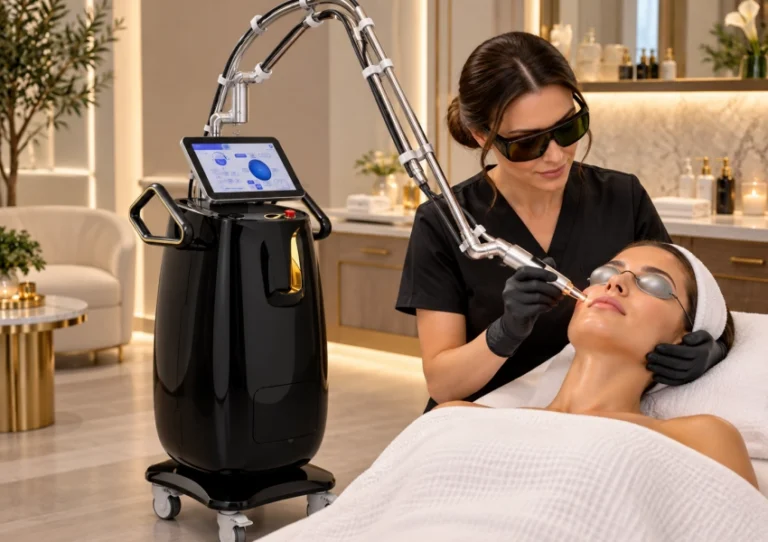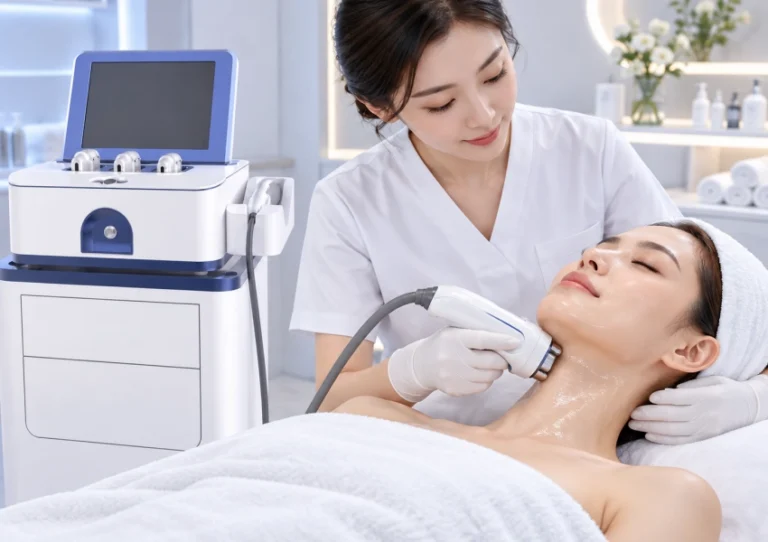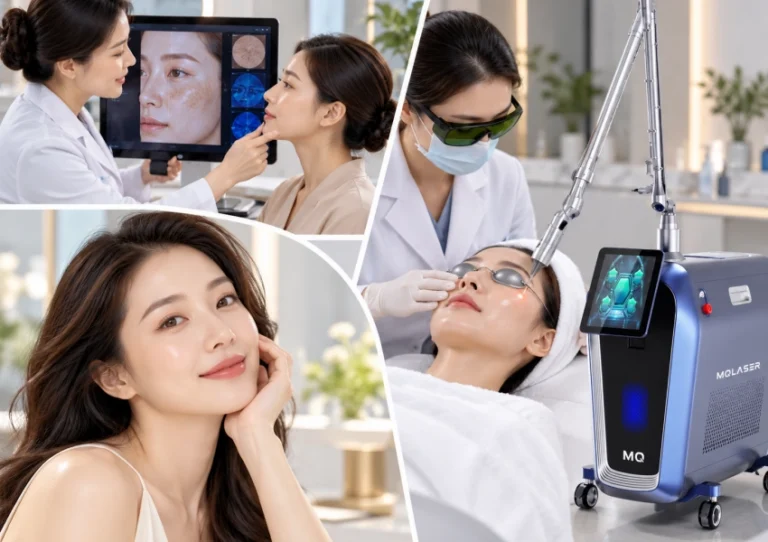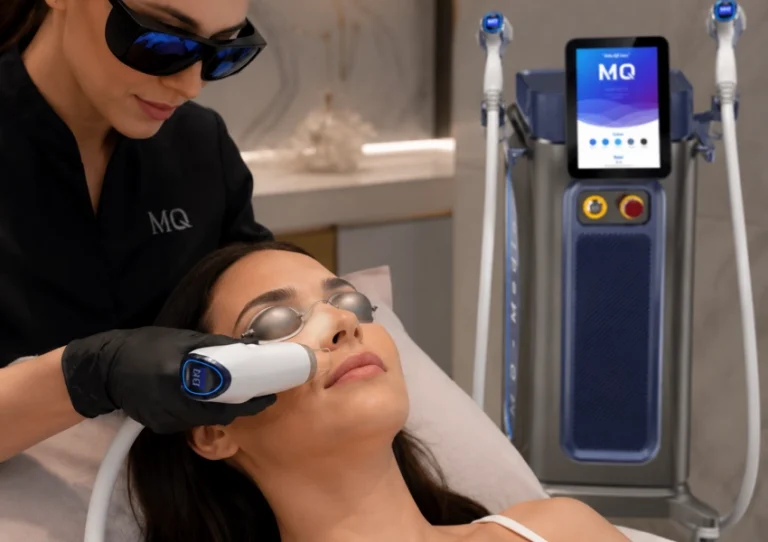
For beauty salons and equipment distributors, hair removal equipment is not only a service tool. It affects room planning, staff training, customer communication, service speed, and long-term operating costs. In 2026, many buyers compare several wavelength options before placing an order. Yet 808 nm diode laser hair removal still holds a clear place in professional salon equipment.
The reason is practical. The 808 nm range gives salon operators a balanced laser hair removal wavelength for many common service areas. It is familiar in the beauty equipment market, easy for sales teams to explain, and suitable for a wide range of salon service planning. When it is combined with proper cooling, adjustable pulse settings, and a flexible applicator design, it remains a strong option for B2B buyers.
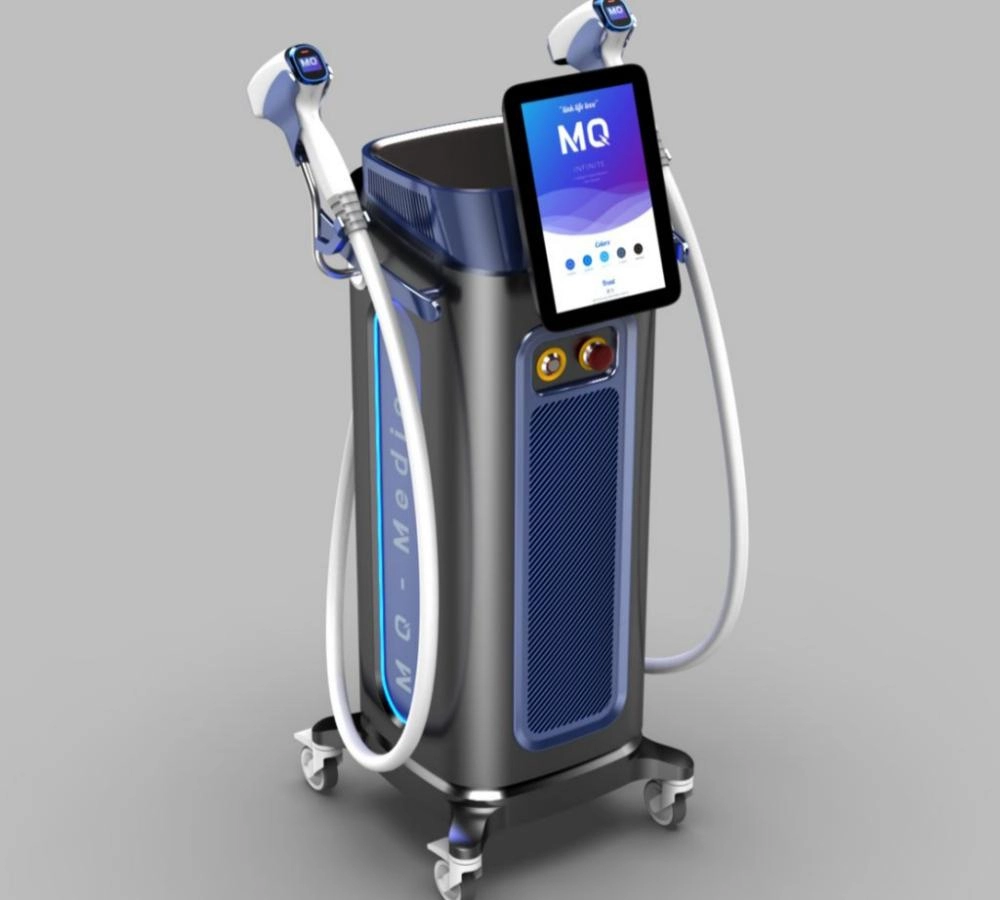
SPLASER is built around this business need. Its product configuration focuses on 808 nm diode laser hair removal, with optional 755 nm, 940 nm, and 1064 nm customization for buyers who need broader market positioning. For salons and distributors, it gives a clear product route: a familiar diode laser wavelength, strong technical range, daily-use cooling support, and customization options.
Why 808 nm Still Has Business Value in 2026
Many salon buyers now hear about multi-wavelength systems. That does not mean 808 nm has become less useful. A salon machine needs a wavelength that your team can explain, train, and use across regular appointments.
808 nm Balances Absorption and Depth
The 808 nm diode laser wavelength sits in a practical middle range. It offers useful absorption for darker hair while still reaching the depth needed for many salon hair removal services. This balance is why 800–810 nm remains common in diode hair removal equipment. For your business, this matters because a machine should not only sound advanced. It should help your team create a repeatable service process. With 808 nm diode laser hair removal, your staff can build a simple service message around a widely recognized wavelength instead of relying on a complicated technical explanation.
808 nm Supports Common Salon Service Areas
Beauty salons usually handle underarms, legs, arms, back, facial areas, and bikini-line services. These areas differ in size, hair profile, and customer comfort needs. A practical laser hair removal wavelength should support these differences through adjustable settings. SPLASER uses an 800±15 nm configuration in its listed technical specifications, with 808 nm as its core product message. This gives you a clear base for daily service planning. If your market needs more wavelength options, the product can also support optional customization around 755 nm, 940 nm, and 1064 nm.
What Makes SPLASER More Than a Basic Diode Machine?
After wavelength, you need to check whether the machine can support real salon work. Power, fluence, pulse duration, spot size, cooling, and mode control all affect how your operators use the device.
2400W Peak Power and Wide Fluence Range
SPLASER is listed with 2400W peak power and a fluence range of 1–200J/cm². These specifications give trained operators room to plan sessions for different service areas and customer comfort levels.
Higher power alone should not be treated as the only buying reason. For B2B use, the better value is an adjustable range. You need a machine that lets staff choose suitable settings, rather than forcing every service into one narrow output style. This is especially important when one salon serves customers with different hair and skin profiles.
5–170 ms Pulse Duration and Up to 10 Hz Rate
The machine offers a 5–170 ms pulse duration and a pulse repetition rate up to 10 Hz. These settings help your team manage both larger areas and smaller zones. For larger areas, a higher repetition rate can support smoother work when used with the correct mode. For smaller areas, adjustable pulse duration helps operators work with more control. A professional 808 nm diode laser hair removal device should give this kind of practical working range.
How Spot Sizes Affect Daily Salon Efficiency
Spot size is often ignored during early purchasing, but it becomes important after the device enters daily use. If the spot size is too limited, your team may need more time for large areas or more effort for detail zones.
Seven Tips for Different Service Areas
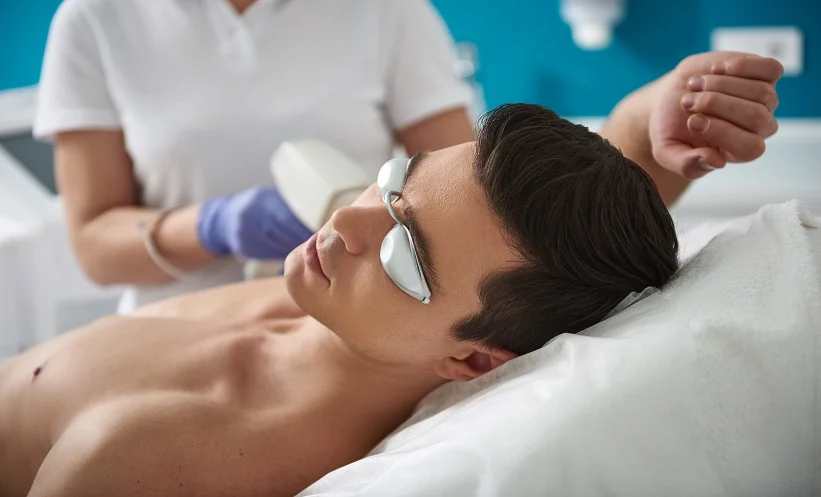
SPLASER includes seven tips: 12×12 mm, 12×28 mm, 12×34 mm, 12×40 mm, 4×4 mm, Φ8 mm, and Φ10 mm. This supports different service areas without forcing the salon to rely on one fixed tip. Larger tips can support areas such as legs, arms, and back. Smaller tips can help with detail work where positioning needs more care. For salon owners, this makes the device more useful across a broader service menu. For distributors, it makes the product easier to present to different buyer groups.
One Applicator Helps Reduce Setup Pressure
The tips fit onto one lightweight applicator. This helps simplify storage, setup, and staff training. Your team does not need to manage several bulky applicators to change spot sizes. This matters in real salon work. Operators often move between service areas during the same day. A simpler applicator design can help reduce small workflow issues that create training pressure over time.
Why Cooling and IoT Matter for Salon Buyers
Cooling is not only about comfort. It also affects service consistency, staff confidence, and equipment management. A salon that schedules repeated sessions needs a system that can support stable temperature control during daily work.
Real-Time Cooling for Repeated Sessions
SPLASER includes real-time cooling monitoring. The system monitors applicator temperature 1,000 times per second. This feature supports more consistent temperature delivery during repeated salon sessions. For you as a buyer, this means cooling should be reviewed as part of the machine structure, not as an extra feature. Ask how the applicator temperature is monitored, how cooling is maintained, and what support is available if cooling performance changes.
IoT for Usage and Performance Review
SPLASER includes IoT capability for device usage and performance monitoring. This can be useful for salon owners who want to review equipment use. It is also helpful for distributors who need service data when supporting local buyers. IoT does not replace staff training, but it can support better equipment management. In a B2B setting, data records can help with after-sales communication, usage review, and long-term customer support.
How PULSE and SLIDE Modes Support Different Service Styles
A good laser hair removal machine should not force all services into one operating pattern. Different body areas and staff habits may need different working modes.
PULSE Mode for Controlled Delivery
PULSE mode supports higher energy delivery at shorter pulse durations. This mode can be useful when operators want a more focused session on selected areas. For salon buyers, this gives staff a clear mode option when steady placement is preferred. It also helps training teams explain how to choose between different operating styles.
SLIDE Mode for Smooth Area Coverage
SLIDE mode supports continuous movement across the service area with shorter pulses and higher repetition. This can help operators manage larger areas with smoother motion. For a salon that handles many leg, arm, or back services, SLIDE mode can support a more efficient workflow. Combined with 808 nm diode laser hair removal, it gives the salon a practical route for routine large-area service planning.
What B2B Buyers Should Confirm Before Ordering
A diode laser wavelength is important, but it is not the only purchasing point. You should also confirm machine configuration, warranty, training, maintenance, and local market documents.
Model Configuration and Training
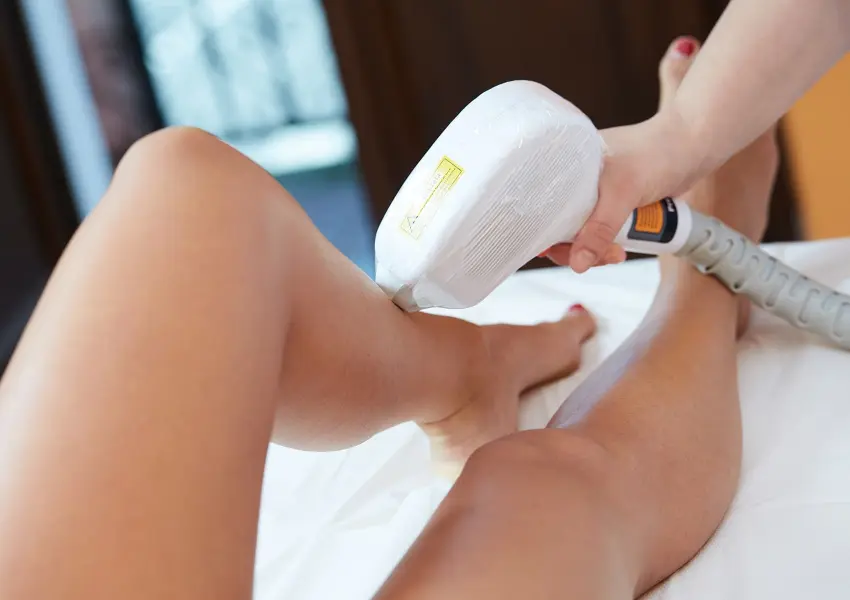
Before ordering SPLASER, confirm the wavelength package, peak power, fluence range, spot-size set, pulse duration, repetition rate, voltage, machine size, and weight. If you are a distributor, ask for product photos, operating videos, and sales materials that match the exact model. Training also matters. Staff should know how to explain the laser hair removal wavelength, choose mode settings, switch tips, and manage customer comfort during the session.
Maintenance, Documents, and Customization
MQLASER has an experienced R&D team and supports OEM/ODM cooperation. The company allocates 15% of annual turnover to new product research and development, which supports product updates and long-term equipment improvement. Products have international certifications such as CE, ISO, and RoHS, and the factory has FDA, MDR, CE, and ISO 13485.
The team can also assist customers with related certification documents required for local registration. Equipment maintenance and after-sales service are available. Customization can include software interface, appearance design, selected technical parameters, logo design, and promotional materials. For distributors, this helps turn SPLASER into a market-ready product line rather than a standard machine only.
Conclusion
808 nm diode laser hair removal still matters because it gives salon buyers a practical balance between wavelength value, service flexibility, and market familiarity. It is easy for staff to explain, useful for many common salon areas, and still relevant when paired with the right cooling and parameter control.
SPLASER builds on this foundation with 2400W peak power, 1–200J/cm² fluence, 5–170 ms pulse duration, up to 10 Hz repetition rate, seven spot-size options, IoT monitoring, real-time cooling, PULSE mode, SLIDE mode, and OEM/ODM support. If you are comparing diode laser wavelength options for 2026, this machine gives you a clear and practical product route. If you would like to learn more, please read this article.
FAQ
Q1: Why is 808 nm diode laser hair removal still popular for salons?
A1: It offers a practical balance between absorption and depth, making it useful for many common salon hair removal services.
Q2: What makes SPLASER different from a basic diode laser machine?
A2: SPLASER offers 2400W peak power, seven spot sizes, IoT, real-time cooling, PULSE/SLIDE modes, and customization options.
Q3: Can SPLASER be customized for distributors?
A3: Yes. Customization can include software, appearance, selected technical parameters, logo design, and promotional materials.