Choosing a diode laser hair removal machine is no longer a simple comparison of output power or brand visibility. If you run a beauty salon, salon chain, spa business, or equipment distribution company, you need to compare how each machine fits your service rooms, staff workflow, customer profile, and after-sales plan.
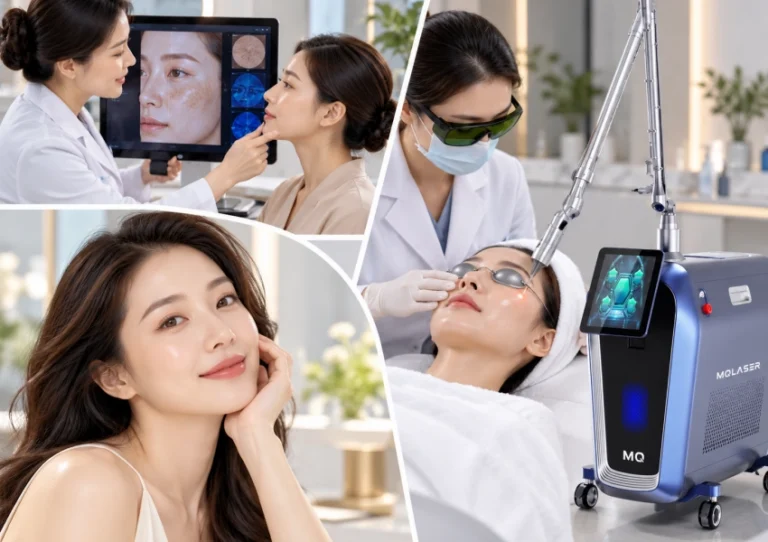
Two product routes are often considered by B2B buyers. One is a premium multi-wavelength diode laser platform with a fixed high-end configuration, large spot design, cooling support, and smart usage management. The other is a factory-direct portable laser hair removal machine with four wavelengths, multiple spot sizes, IoT monitoring, and customization support.
Why Product Format Matters for Salon Buyers
Before comparing wavelength count or spot size, you should first look at the way your business uses equipment. A machine may have a strong specification sheet, but it still needs to fit your rooms, appointment flow, and staff training process.
Fixed Premium Platform for High-Volume Service Rooms
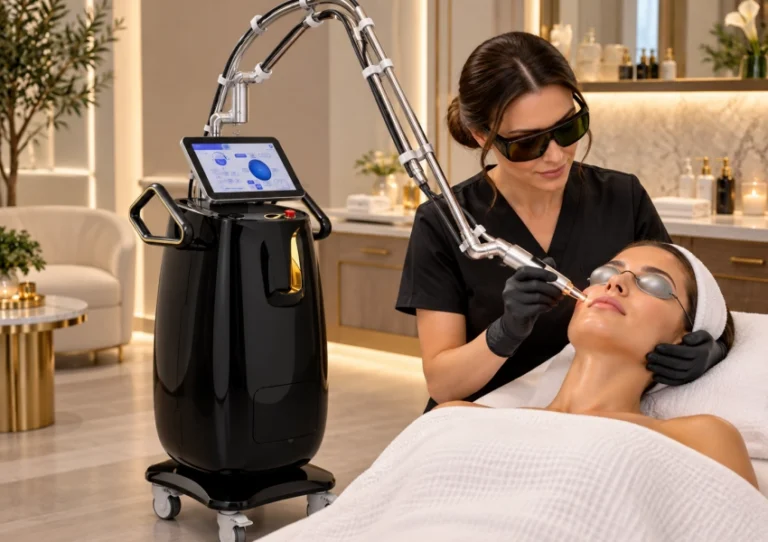
Alma Lasers Soprano Titanium often suits salons that prefer a fixed equipment route. This format usually works best in a dedicated service room where the device stays in one place. This route with 755 nm, 810 nm, and 1064 nm wavelengths, a 4 cm² spot, cooling support, and IoT-style management. For a salon with high customer flow and enough room space, this type of diode laser hair removal machine can support standardized service planning. It may also help businesses that value a premium system image and fixed operating process.
Portable System for Flexible Room Planning
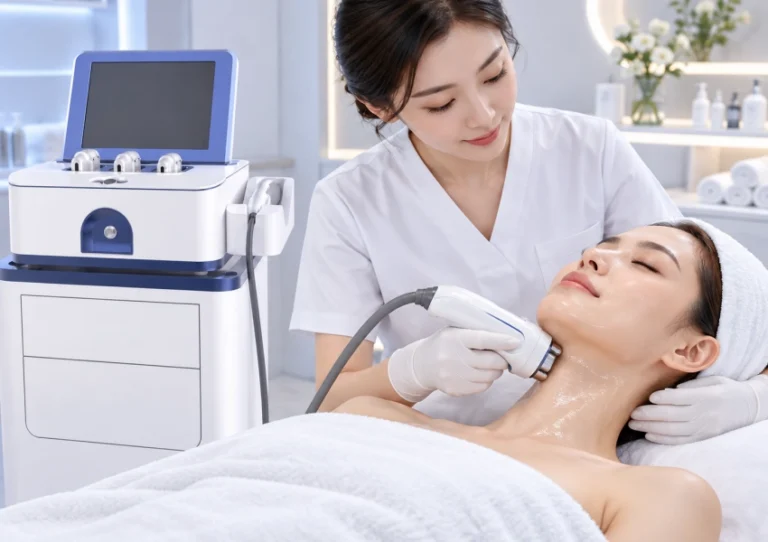
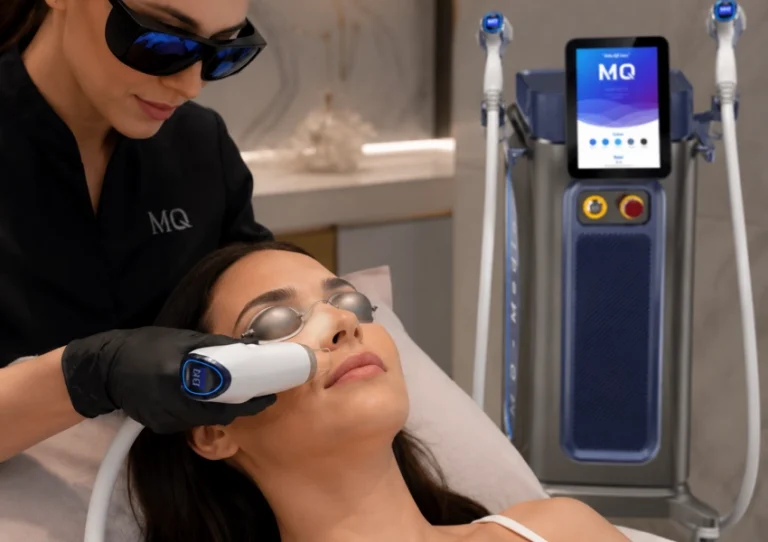
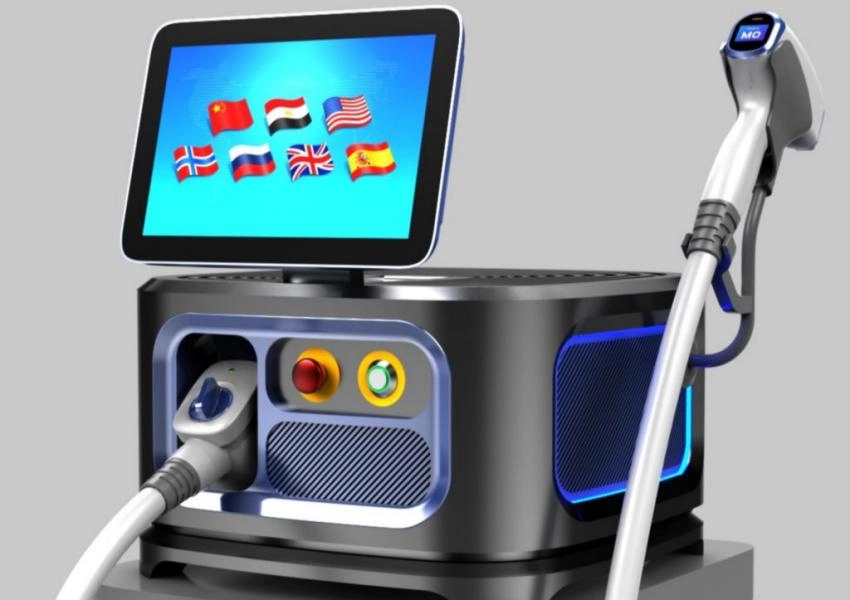
SUPLASER follows a different route. It is a portable laser hair removal machine with a compact 25kg structure and a 55cm × 65cm × 55cm body size. This makes it more practical for salons that share rooms across several beauty services. A portable format can help you move the machine between rooms, store it with less pressure on floor space, and offer hair removal services without setting aside one permanent room. For distributors, this also makes the product easier to introduce to small and mid-sized salon buyers.
How the Wavelength Designs Compare
Wavelength design is one of the first topics salon buyers ask about. More wavelengths do not automatically make a device better for every buyer, but the structure should match your customer profiles and service menu.
Premium Three-Wavelength Route
Alma Lasers Soprano Titanium uses 755 nm, 810 nm, and 1064 nm. This combination gives salons a broad structure for different hair and skin profiles. The 755nm wavelength supports selected finer hair-planing; 810nm works as a common diode option; and 1064nm supports deeper hair-profile planning when settings are selected carefully. This route is useful for buyers who want a fixed, standardized configuration. It is also easier to manage when a salon wants one premium platform with a clear service process.
SUPLASER Four-Wavelength Route
SUPLASER uses 755 nm, 808 nm, 940 nm, and 1064 nm. This makes it a four-wavelength laser hair removal machine with wider configuration logic. The 755nm wavelength supports finer or shallower hair profiles. The 808 nm wavelength remains a core diode laser hair removal machine wavelength for common salon services. The 940 nm wavelength adds another planning option, while 1064 nm supports deeper hair profiles and darker skin-profile planning when the operator uses suitable settings.
For buyers comparing a four-wavelength laser hair removal machine with a three-wavelength platform, the extra 940nm option can make the product story more flexible. It also gives distributors another point to explain when serving different local markets.
Spot Size and Service Area Planning
Spot size affects daily salon workflow more than many buyers expect. It influences area coverage, detail work, staff movement, and session planning.
Large Spot for High-Flow Area Coverage
Alma Lasers’ Soprano Titanium is described with a 4 cm² spot. This can support faster coverage on larger areas such as legs, arms, and back, especially when the salon has a high-flow service model. This route may be suitable if your business mainly wants one large-area working style and has trained staff using the same process every day.
Seven Spot Sizes for More Service Flexibility
SUPLASER gives a different type of flexibility. The product includes seven changeable spot sizes: 12×12 mm, 12×20 mm, 12×28 mm, 12×34 mm, 4×4 mm, Φ8 mm, and Φ10 mm. Larger tips can support broader areas, while smaller tips can help operators work on detailed areas that need closer positioning.
This is useful for salons with mixed service needs. Your staff may handle a leg service in one booking and a smaller detail area in the next. With one lightweight applicator and several tips, the setup stays simple. For B2B buyers, this makes SUPLASER more than a standard portable laser hair removal machine; it becomes a service-menu tool.
Cooling, IoT, and Daily Operation
Cooling and usage data should not be treated as secondary features. They affect customer comfort, operator confidence, and after-sales communication.
Cooling in a Premium Multi-Wavelength Platform
Alma Lasers’ Soprano Titanium route with contact cooling and IoT-style management. For high-volume salons, these features can support more organized equipment use and better service records. Still, buyers should avoid judging cooling by marketing terms alone. Ask how temperature is monitored, how cooling is maintained, and what operating guidance is available for repeated daily use.
SUPLASER Real-Time Cooling and IoT
SUPLASER includes real-time cooling monitoring. Its system monitors applicator temperature 1,000 times per second. It also includes IoT capability for device usage and performance monitoring. For salon owners, this supports more stable daily service management. For distributors, IoT data can help with equipment review, usage discussion, and after-sales support. When you evaluate a diode laser hair removal machine, cooling design and monitoring should be part of the main purchase checklist, not an optional detail.
Operating Modes and Staff Workflow
A machine should match the way operators work. Some service areas need steady placement. Others benefit from smooth motion across a larger area.
Fixed Workflow in a Premium Platform
Alma Lasers Soprano Titanium is often built around standardized operations. This can be useful for larger salons that want a fixed service method and consistent staff training. However, this type of system may offer less flexibility for buyers who need product customization or several local market versions.
PULSE and SLIDE Modes in SUPLASER
SUPLASER supports PULSE mode and SLIDE mode. PULSE mode is useful when the operator needs more focused delivery on selected areas. SLIDE mode supports continuous movement over larger areas with shorter pulses and higher repetition. This two-mode structure helps salons plan different working styles without making the system overly complex. It also gives distributors a clearer training message. A portable laser hair removal machine should be easy to explain, and this modular structure helps support that goal.
| Comparison Item | Alma Soprano Titanium | MQLASER SUPLASER |
|---|---|---|
| Wavelengths | 755 nm, 810 nm, 1064 nm | 755 nm, 808 nm, 940 nm, 1064 nm |
| Pain Level | Marketed as virtually painless with SHR and ICE Plus cooling | Designed for comfortable treatment with cooling and SLIDE mode |
| Hair Removal Speed | Promotes faster treatment with Trio MAX and a 4 cm² spot size | Supports up to 10 Hz, multiple spot sizes, and continuous-motion treatment |
| Skin Tone Adaptability | Suitable for Fitzpatrick skin types I–VI | Four-wavelength design supports a wide range of skin tones and hair types |
| Commercial Value | Premium brand option for clinics focused on recognition and established technology | Factory-direct option for buyers seeking flexible configuration, lower investment, and business support |
Customization and Distributor Value
For distributors and salon chains, the buying decision does not stop at the machine itself. You also need branding, documents, training, support, and a product route that can fit your market.
Premium Fixed System for Brand Recognition
Alma Lasers’ Soprano Titanium may suit buyers who prefer established market positioning and a fixed product route. It can work for salons that use equipment recognition as part of their customer-facing service story. The limitation is that fixed premium systems may not fit every B2B buyer. If you need software interface adjustment, logo design, appearance customization, or selected parameter options, a factory-direct route may be easier to manage.
| Comparison Metric | Alma Soprano Titanium | MQLASER SUPLASER |
| Machine Customization | Standardized design; no brand customization | Superior Advantage: Full OEM/ODM support, custom logos, colors, and tailored software interface. |
| Cost-Effectiveness | High initial investment driven by brand premium | Superior Advantage: Factory-direct pricing significantly lowers upfront costs, accelerating ROI. |
| Collaborative R&D | Closed ecosystem; fixed updates | Superior Advantage: 15% of turnover dedicated to R&D, allowing for technical parameter customization based on your needs. |
| Market Flexibility | Rigid packages promote the manufacturer’s brand | Superior Advantage: Free promotional materials and design support help you build and promote your independent salon brand. |
MQLASER Support for SUPLASER Buyers
MQLASER supports OEM/ODM projects and invests 15% of annual turnover into new product research and development. This supports product updates and long-term configuration work. The company’s products have international certifications such as CE, ISO, and RoHS, while the factory also has FDA, MDR, CE, and ISO 13485.
For buyers preparing local sales, MQLASER can assist with related certification documents required for local registration. The company also provides equipment maintenance and after-sales service. Customization can include software interface, exterior appearance, selected technical parameters, logo design, and promotional materials. For distributors, this support can turn SUPLASER from a four-wavelength laser hair removal machine into a local product line with a clearer brand image.
What Should You Confirm Before Ordering?
Before placing an order, you should ask for the exact model documents, not only product photos. Confirm wavelength configuration, spot-size set, peak power, fluence range, pulse duration, repetition rate, cooling design, voltage, machine size, weight, warranty terms, spare parts, and training materials.
For SUPLASER, the listed product data includes 755 nm, 808 nm, 940 nm, and 1064 nm wavelengths, 1200W peak power, 1–200J/cm² fluence range, up to 10Hz pulse repetition rate, and 5–170ms pulse duration. These details help you judge whether the machine fits your service menu and operator workflow. For any diode laser hair removal machine, the better purchase decision comes from matching technical settings with real salon use. A high number alone does not decide long-term value. For more information, please do not hesitate to contact us.
Conclusion
Alma Lasers Soprano Titanium and SUPLASER serve different B2B needs. The premium route may suit salons that prefer a fixed high-end system, large spot workflow, and established product positioning. SUPLASER may suit buyers who need a portable laser hair removal machine with four wavelengths, seven spot-size options, IoT monitoring, real-time cooling, PULSE and SLIDE modes, customization, and distributor support.
For salon owners, chain buyers, and distributors, the final choice should be based on product fit. Compare wavelength design, spot-size structure, cooling, operating modes, room use, documentation, maintenance, customization, and after-sales support. If you need a four-wavelength laser hair removal machine that can support flexible salon operation and local market branding, SUPLASER is worth reviewing. If you would like to learn more, please read this article.
FAQ
Q1: Is SUPLASER suitable for salons that need a portable laser hair removal machine?
A1: Yes. SUPLASER has a 25kg portable structure, four wavelengths, seven spot sizes, cooling control, and PULSE/SLIDE modes for flexible salon use.
Q2: How does SUPLASER compare with Alma Lasers Soprano Titanium?
A2: A premium platform often focuses on fixed high-end positioning and large-spot service flow. SUPLASER focuses on portability, four wavelengths, spot-size flexibility, IoT, customization, and supplier support.
Q3: Can SUPLASER be customized for distributors?
A3: Yes. MQLASER can support software customization, exterior appearance, selected technical parameters, logo design, promotional materials, and related document support for eligible orders.