Choosing hair removal equipment is not only a matter of comparing brand awareness or a few power figures. For salon owners, chain buyers, and beauty equipment distributors, the better question is how the machine fits daily service speed, customer comfort, operator workflow, maintenance, and local sales positioning. Two product routes are often compared in the market. One is Alma Lasers Soprano Titanium, which combines several wavelengths in one applicator and focuses on fast area coverage. The other is an MQLASER Alexandrite platform that gives buyers a more focused wavelength structure for professional hair removal services.
Why Wavelength Strategy Comes First
Before you compare price or machine appearance, you need to check the wavelength logic. Hair color, hair thickness, service area, and skin profile all affect how operators choose settings. A machine with more wavelengths is not always better for every buyer. A machine with fewer but clearer wavelengths can also be easier to position and train.
755 nm for Fine and Lighter Hair Profiles
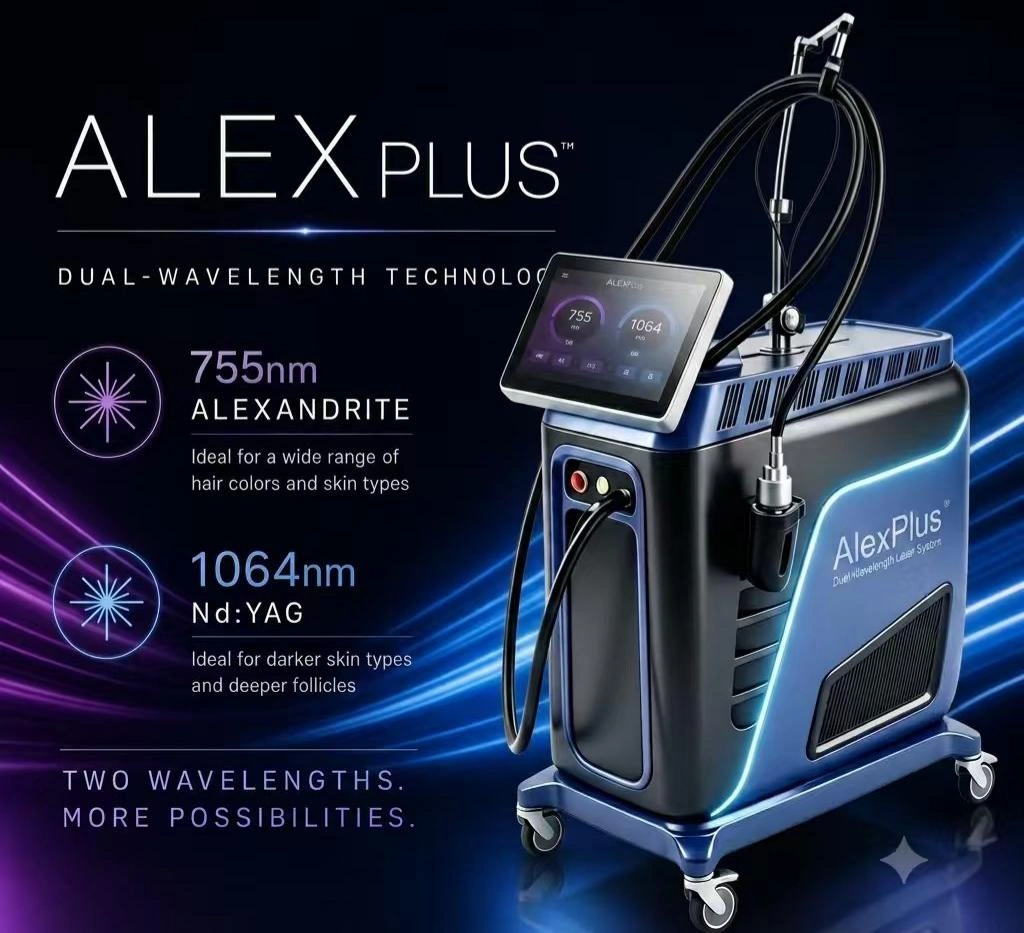
The 755nm Alexandrite wavelength is often selected for finer and lighter hair profiles. It can be useful for salons that want to offer hair removal services for areas such as the face, arms, or other zones where hair may be softer or shallower. This is one reason 755nm remains important in professional hair removal equipment. It gives your salon a clear service point, especially when customers ask why one machine may work better for fine hair than another.
1064 nm for Deeper Hair Profiles and Darker Skin Profiles
The 1064nm wavelength gives operators another planning option. It penetrates deeper and is less strongly absorbed by surface pigment than shorter wavelengths. For salons serving customers with darker skin profiles or deeper hair roots, this can be a useful addition when settings are chosen carefully. This is where the MQLASER Alexandrite laser hair removal machine becomes practical. It gives your team two clear choices instead of asking staff to explain a long list of wavelengths during every sales conversation.
How Alma Lasers Soprano Titanium Works for Salons
Alma Lasers Soprano Titanium usually focuses on broad coverage. This type of system uses 755 nm, 810 nm, and 1064 nm in one applicator, with a large 4 cm² spot and cooling support for high-volume salon use. This product route can fit salons that want a standardized premium system with fast service flow and smart management tools.
Three-Wavelength Design for Broad Service Coverage
Alma Lasers Soprano Titanium combines different depths of energy delivery in one handpiece. For busy salons, this can simplify service planning because the operator does not need to switch between separate machines. The 755 nm wavelength supports shallower hair profiles, 810 nm is commonly used for general diode hair removal, and 1064 nm supports deeper hair and darker skin profile planning. This makes the platform suitable for businesses that prefer one fixed high-end configuration.
Large Spot and Smart Management
The premium platform with a 4 cm² spot design, cooling support, and IoT-style usage management. These features may help larger salons manage service records, operator activity, and equipment use. For a high-flow salon, this structure can be useful. The trade-off is that such systems are usually positioned as fixed premium platforms. Buyers who need private-label options, stronger customization, or a more flexible supply route may need to compare other formats before ordering.
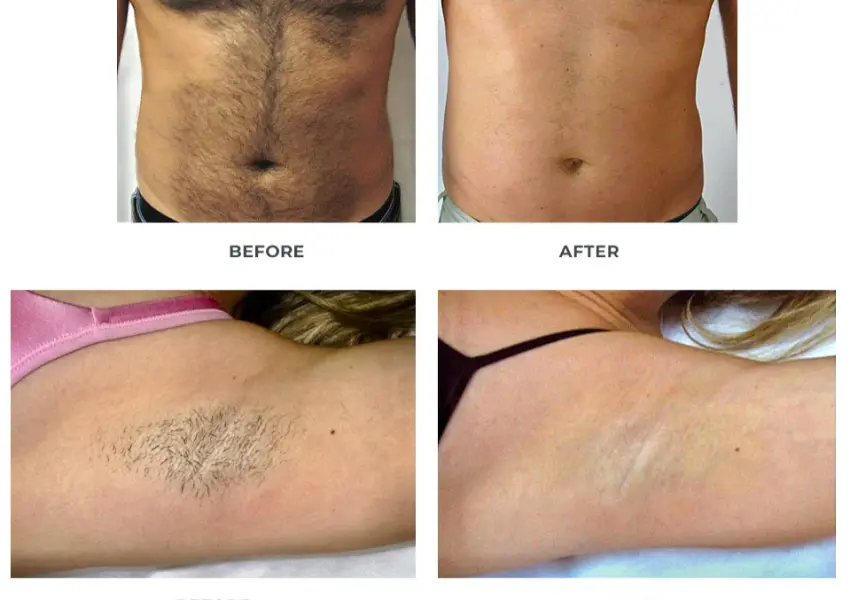
How MQLASER Alexandrite Laser Hair Removal Machine Compares
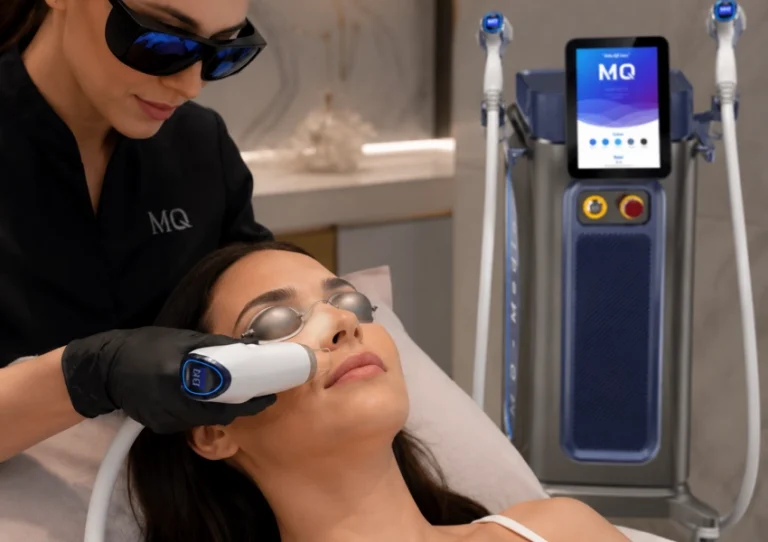
The MQLASER product takes a different route. Instead of building the message around three wavelengths in one diode platform, it focuses on the 755 nm, 1064 nm dual-wavelength structure. This makes the product easier to explain to salon buyers and distributor customers. It’s a dual-wavelength system with 755 nm Alexandrite and 1064 nm Nd:YAG, a 20 mm large spot, a 10 Hz repetition rate, adjustable pulse duration, multi-cooling, an intelligent water-flow and temperature alarm, and a modular design.
755nm and 1064nm in One Business-Friendly Structure
For many distributors, the sales message needs to be simple. A 755nm/1064nm dual-wavelength platform gives you that structure. You can present 755 nm for fine and lighter hair-profile planning and 1064 nm for deeper hair roots and darker skin-profile planning. This does not mean one machine fits every customer without proper setting selection. It means your sales team and salon operators have a clear product story. That matters when the buyer is comparing the best laser wavelength for hair removal across different machines.
20mm Spot and 10Hz Repetition Rate
The product material lists a large spot size up to 20mm and a 10Hz repetition rate. For salon use, these two details matter because they affect area coverage and daily scheduling. A 20mm spot can help operators work across larger areas such as legs, arms, and back. A 10Hz repetition rate can support smoother passes when operators use the machine within the recommended settings.
Multi-Cooling and Smart Protection
Cooling is a key part of hair removal service comfort and operator confidence. The MQLASER has air cooling, water cooling, and DCD/HFC cooling support. It also includes an intelligent working system with water flow, water level, and water temperature alarm. These details are important for salons that run repeated sessions. A cooling system is not just an accessory. It helps the operator keep the service process stable and gives the buyer more confidence in daily machine use.
Modular Design for Maintenance
Beauty equipment buyers often focus on the first purchase cost, but maintenance matters after the machine arrives. The product file describes the MQLASER Alexandrite machine as having a modular design for easier replacement and after-sales support. For distributors, modular design can make service communication easier. For salon chains, it can reduce long delays when parts need inspection or replacement. This is one reason MQLASER Alexandrite can be attractive for buyers who care about long-term equipment use.
Which Product Route Fits Your Business?
The best laser wavelength for hair removal depends on your customer group and business model. Alma Lasers Soprano Titanium may suit salons that want a fixed high-end system, smart management, and broad wavelength coverage in one applicator. The MQLASER system may suit buyers who want clearer wavelength positioning, large-spot speed, cooling support, modular service, and customization. If you operate a premium salon with strong local demand and a higher equipment budget, the Alma Lasers Soprano Titanium route may be suitable. If you are a distributor, private-label buyer, or salon chain that needs customization and more direct supplier communication, the MQLASER product may be easier to build into a local product line.
What B2B Buyers Should Confirm Before Ordering
Before placing an order, you should not rely only on product photos or headline specifications. Ask for model-specific files, available certificates, service terms, spare parts details, training support, and local registration guidance. You should also confirm whether the machine’s cooling structure, pulse settings, and spot sizes match your service menu. If your salon handles mostly large body areas, spot size and repetition rate matter. If your customers ask more about fine hair or darker skin profiles, wavelength structure and setting range matter more. The best laser wavelength for hair removal is not a single fixed answer. It depends on your service positioning, customer profile, operator training, and after-sales support.
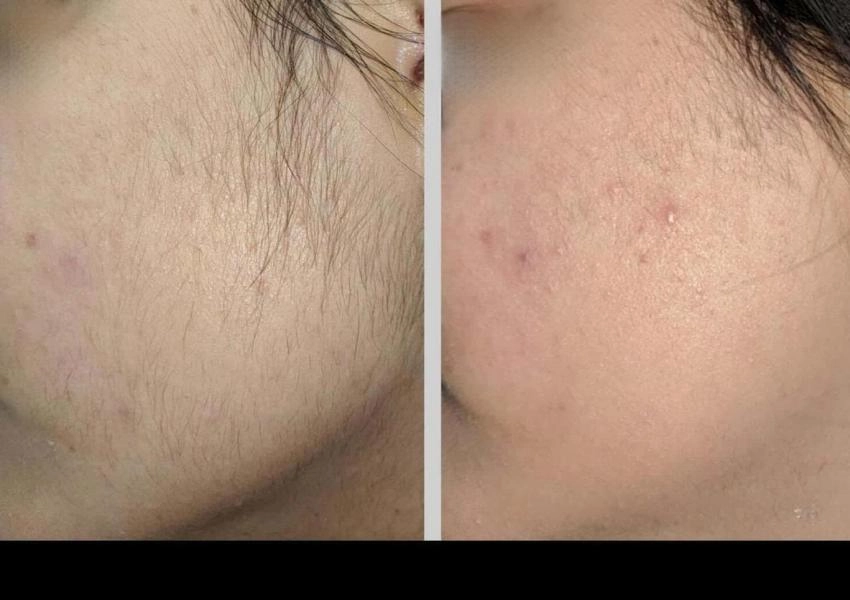
MQLASER Support for Beauty Equipment Buyers
MQLASER has an experienced R&D team, supports OEM/ODM projects, and invests 15% of annual turnover into new product research and development. This supports product updates and long-term cooperation with distributors.
MQLASER products have international certifications such as CE, ISO, and RoHS. The factory also has FDA, MDR, CE, and ISO 13485. The team can assist customers with related documents required for local registration. Equipment maintenance and after-sales service are also available. Customization can include software interface, appearance design, selected technical parameters, logo design, and promotional materials. For distributors and salon chains, this helps turn the machine from a standard device into a market-ready product.
Conclusion
Alma Lasers Soprano Titanium and MQLASER Alexandrite laser systems serve different B2B needs. The diode route can fit salons that prefer a premium fixed platform with broad wavelength coverage and smart management. The 755nm/1064nm dual-wavelength route can fit buyers who need clear wavelength positioning, large spot use, cooling support, modular maintenance, and OEM/ODM flexibility.
For salons and distributors, the right choice should be based on service menu, customer profile, operator workflow, documentation, maintenance, and supplier support. If your business needs a clear dual-wavelength product story with practical B2B support, MQLASER Alexandrite Laser Hair Removal Machine is worth reviewing. If you would like to learn more, please read this article.
FAQ
Q1: What is the best laser wavelength for hair removal in salons?
A1: There is no single best option. 755 nm supports finer hair planning, while 1064 nm supports deeper hair and darker skin-profile planning when settings are selected properly.
Q2: Is a 755 nm/1064 nm dual-wavelength machine suitable for distributors?
A2: Yes. It gives distributors a clear product message, strong service positioning, and customization options for local salon markets.
Q3: How does Alma Lasers Soprano Titanium compare with dual-wavelength Alexandrite equipment?
A3: A multiwavelength diode laser offers broad wavelength coverage, while dual-wavelength Alexandrite equipment gives a simpler 755 nm and 1064 nm structure for focused salon positioning.