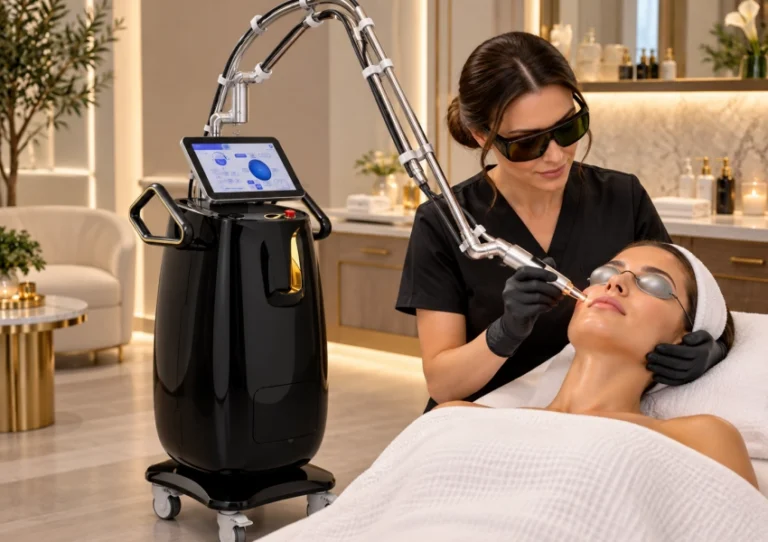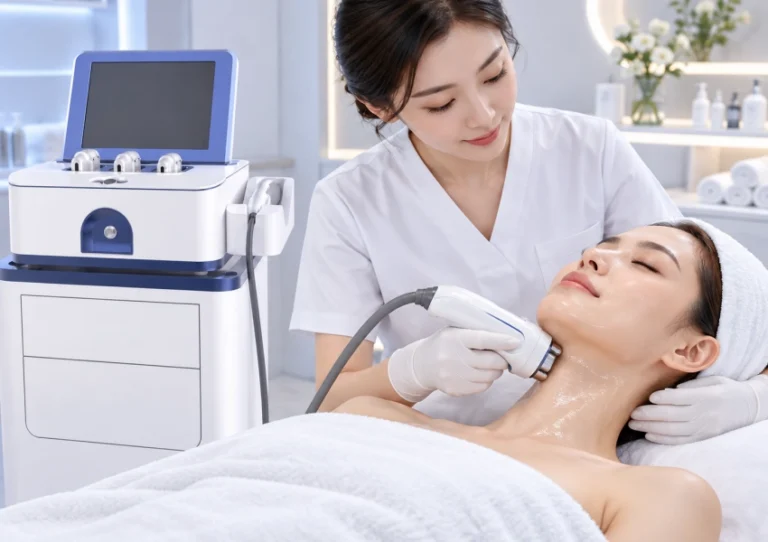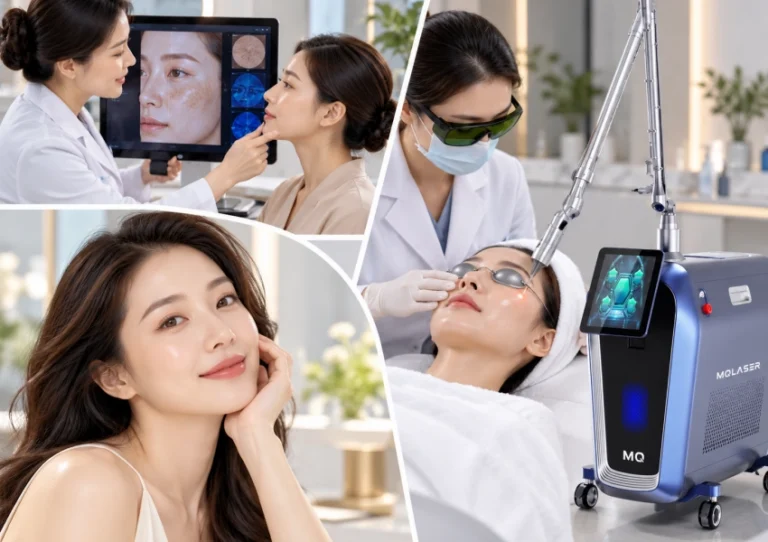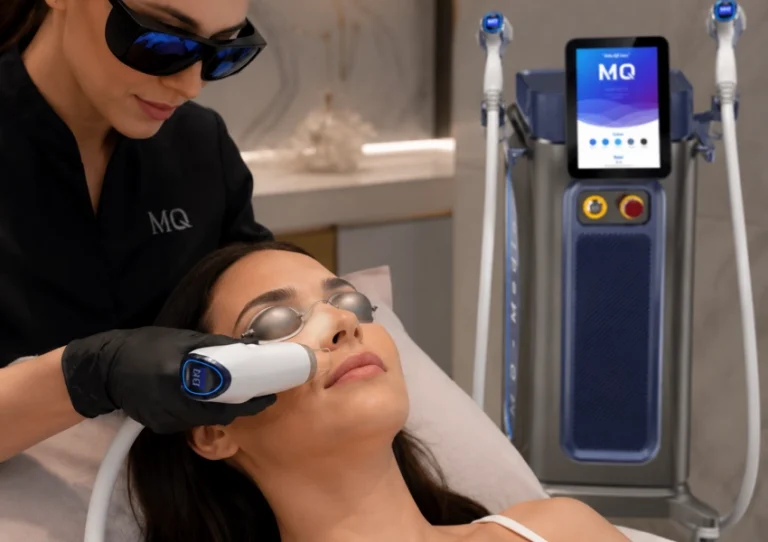
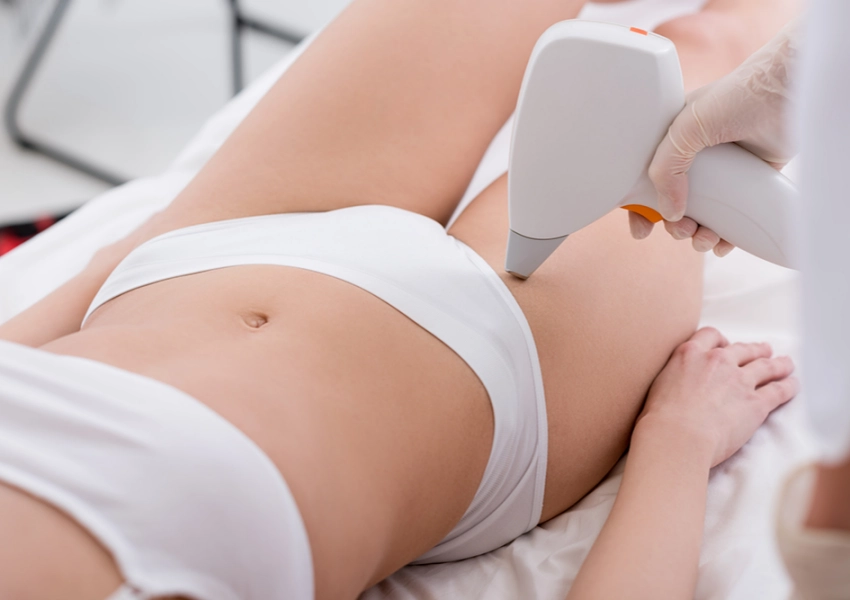
Choosing a professional laser hair removal machine in 2026 is not something a salon should decide based on one power figure. A device may look strong in a catalog, but daily salon use brings other questions. Can your staff move it between rooms? Does the applicator feel manageable after several sessions? Can it cover large areas and small details without changing the whole setup? Is cooling stable enough for repeated appointments? These are the questions that matter when you buy a laser hair removal machine for salon use. The machine has to fit your service menu, your room size, your customer groups, and your staff training plan.
Start with Your Salon’s Actual Service Needs
A professional laser hair removal machine should match how your salon works. A small salon may need one device to serve several rooms. A chain store may care more about staff training and repeatable settings. A distributor may need a machine that is easy to explain to different salon owners. So, before comparing numbers, look at the service cases first. Are your customers asking for underarm, leg, arm, back, facial, or bikini-line hair removal? Do you need faster work on large areas or more careful control on smaller zones? Do your operators prefer fixed shots or smooth sliding movement?
A laser hair removal machine for salon use should give your team enough choices without making the operation complicated. If every session needs too much adjustment, training becomes harder. If the machine has too few options, your service menu becomes narrow.
Check the Wavelength Combination, Not Just One Wavelength
Wavelength is still one of the first things buyers ask about. That makes sense. Different wavelengths help operators plan for different hair profiles, skin profiles, and service areas. SUPLASER uses four wavelengths in one system: 755 nm, 808 nm, 940 nm, and 1064 nm. The 755nm wavelength can support selected finer or shallower hair areas. The 808nm wavelength remains a common core option for diode hair removal because it offers a practical balance between melanin absorption and penetration depth. The 940nm wavelength gives another working option, while 1064nm can be useful for deeper hair profiles and darker skin profiles when settings are selected carefully.
This does not mean one setting fits everyone. It means your staff has more room to plan the session. For a salon, that flexibility matters. For a distributor, it also makes the product easier to position across different customer groups. This is one reason a portable laser hair removal machine with four wavelengths can be more useful than a single-wavelength device for many beauty businesses.
Pay Attention to Spot Sizes
Spot size is easy to ignore when buyers focus only on power. In daily work, it affects speed, comfort, and staff control. SUPLASER includes seven changeable spot sizes: 12×12mm, 12×20mm, 12×28mm, 12×34mm, 4×4mm, Φ8mm, and Φ10mm. Larger tips can help operators cover bigger areas such as legs, arms, and backs. Smaller tips can support areas that need closer positioning.
This setup is practical because the tips fit one lightweight applicator. Your staff does not need several large handpieces for different areas. Storage is easier, setup is simpler, and training can stay more direct. For buyers looking at beauty salon hair removal equipment, this kind of applicator design can reduce small daily problems that often appear after purchase. A machine is not only judged when it arrives. It is judged after your team has used it for weeks.
Review Power and Settings Together
Technical numbers should be read as a group. A single high number does not tell you how the machine behaves in a real salon. SUPLASER has a maximum peak power of 1200W, a fluence range of 1–200 J/cm², a pulse repetition rate up to 10 Hz, and a pulse duration from 5 to 170 ms. These settings give operators a wide working range for different service areas and hair profiles.
For larger areas, operators may need efficient coverage and smoother movement. For smaller areas, they may need slower control. That is why adjustable pulse duration and repetition rate matter. They help your team choose a service style instead of forcing every customer into one fixed method. A professional laser hair removal machine should be flexible enough for daily salon work but still clear enough for staff to learn.
Compare PULSE Mode and SLIDE Mode
SUPLASER offers two working modes: PULSE mode and SLIDE mode. PULSE mode supports higher energy delivery with shorter pulse duration. It is useful when the operator wants more focused delivery on a selected area. SLIDE mode supports continuous movement over the service area with shorter pulses and higher repetition. This can help when the operator works on larger zones and needs smoother movement. This difference is useful for salons. Some areas are better handled with fixed, careful placement. Other areas need steady motion and wider coverage. A laser hair removal machine for salon use should support both working habits, especially when several staff members use the same device.
Do Not Treat Cooling as a Side Feature
Cooling is a key part of comfort control and service stability. If the applicator becomes too warm or the contact surface is not managed well, the session becomes harder for both the customer and the operator. SUPLASER includes real-time cooling control. Its system monitors applicator temperature 1,000 times per second. It also has IoT capability, which helps track device use and performance.
For salon owners, this can support more stable service planning. For distributors, IoT can also help with usage records, service guidance, and after-sales discussion. Cooling is not just a comfort feature. It is part of long-term equipment use. When comparing a portable laser hair removal machine, ask how the system controls temperature, how cooling is maintained, and what support is available if cooling performance changes.
Think About Portability in Real Rooms
Portability is not only about moving the machine once. It is about whether the device fits the way your rooms are used every day. SUPLASER weighs 25kg and measures 55cm × 65cm × 55cm. This size is manageable for many salons that cannot keep one room for one fixed service. You can move the device when needed, store it with less pressure, and place it in a service room without changing the full layout. For a salon with limited space, this can be more practical than a large stationary system. For a distributor, a portable laser hair removal machine is also easier to sell to small and mid-sized beauty businesses.
Look at Supplier Support Before Ordering
The machine itself is only one part of the purchase. You also need training, documents, spare parts, and service support. MQLASER supports OEM/ODM projects and invests 15% of annual turnover into new product research and development. Custom options can include software interface, appearance, selected technical parameters, logo design, and promotional materials. For distributors, this can help build a local product line. For salon chains, it can help keep the equipment closer to their own brand style. MQLASER products have international certifications such as CE, ISO, and RoHS. The factory also has FDA, MDR, CE, and ISO 13485. The team can assist with related documents required for local registration. Equipment maintenance and after-sales service are also available. Before you place an order, ask for the exact model files, warranty terms, spare parts plan, training videos, and remote support process. These details will matter after the machine enters daily use. For more information, please contact us immediately.
Conclusion
A professional laser hair removal machine should be chosen by product fit, not by one impressive number. You need to compare wavelength design, spot-size options, cooling, working modes, portability, training, documents, customization, and after-sales support.
SUPLASER gives salons and distributors a practical option with four wavelengths, seven spot sizes, real-time cooling control, IoT monitoring, PULSE and SLIDE modes, and B2B customization support. If you are comparing beauty salon hair removal equipment for 2026, it is worth reviewing as a portable system built for real salon operation. If you would like to learn more, please read this article.
FAQ
Q1: What should I check before buying a professional laser hair removal machine?
A1: Check wavelengths, spot sizes, cooling, pulse settings, machine size, training support, warranty, spare parts, and model documents.
Q2: Why is 808nm important in a laser hair removal machine for salon use?
A2: 808nm offers a practical balance between melanin absorption and penetration depth, so it supports many common salon hair removal services.
Q3: Is a portable laser hair removal machine suitable for distributors?
A3: Yes. A portable model with customization, training, documents, and after-sales support can fit different salon buyers.