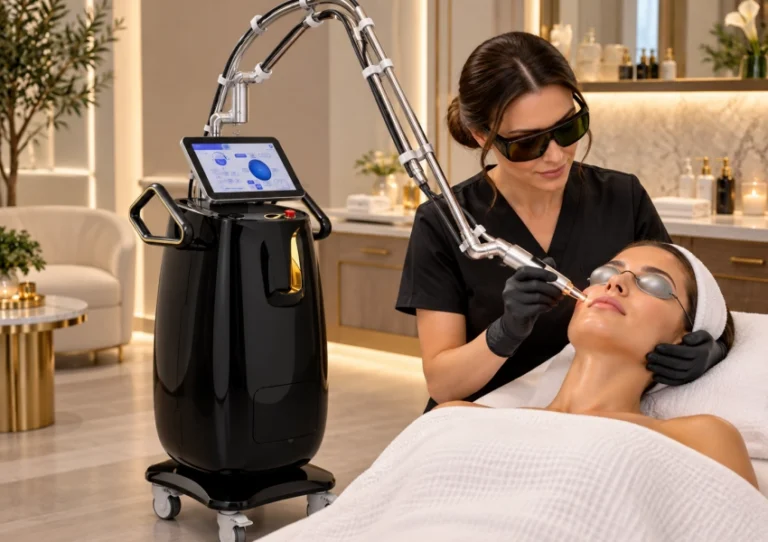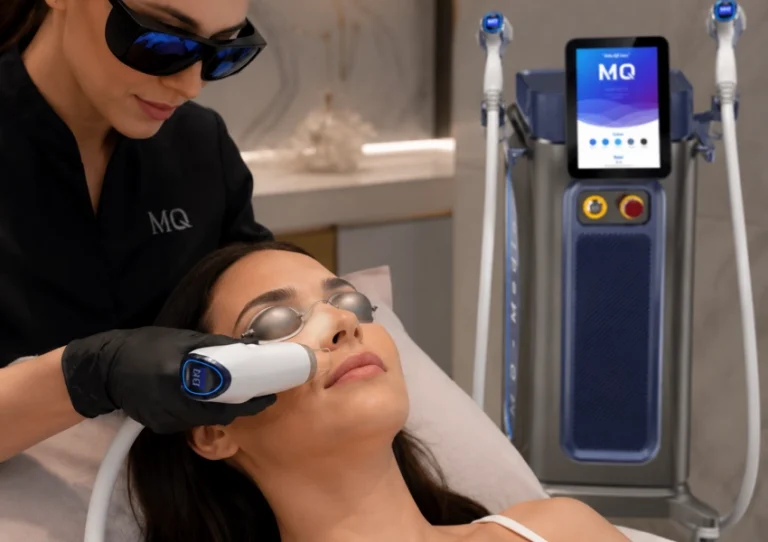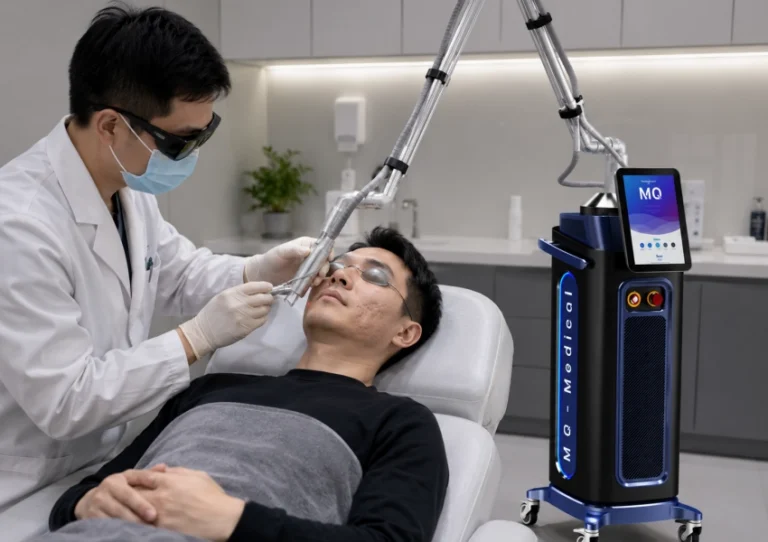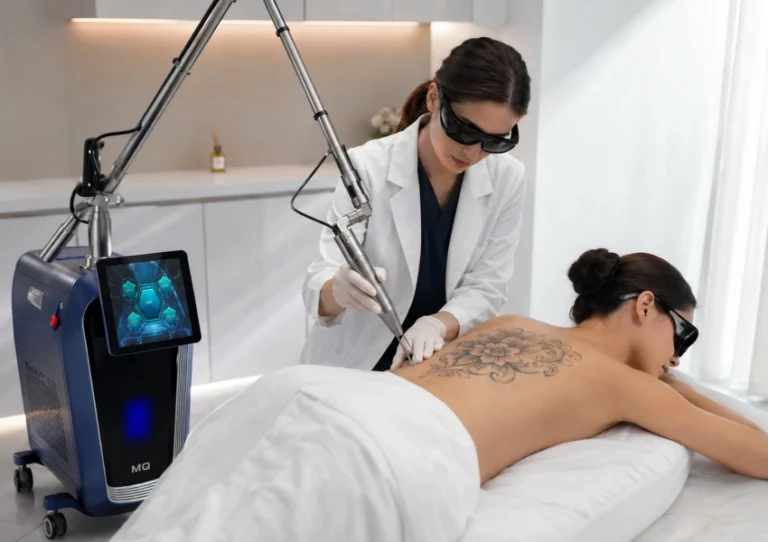
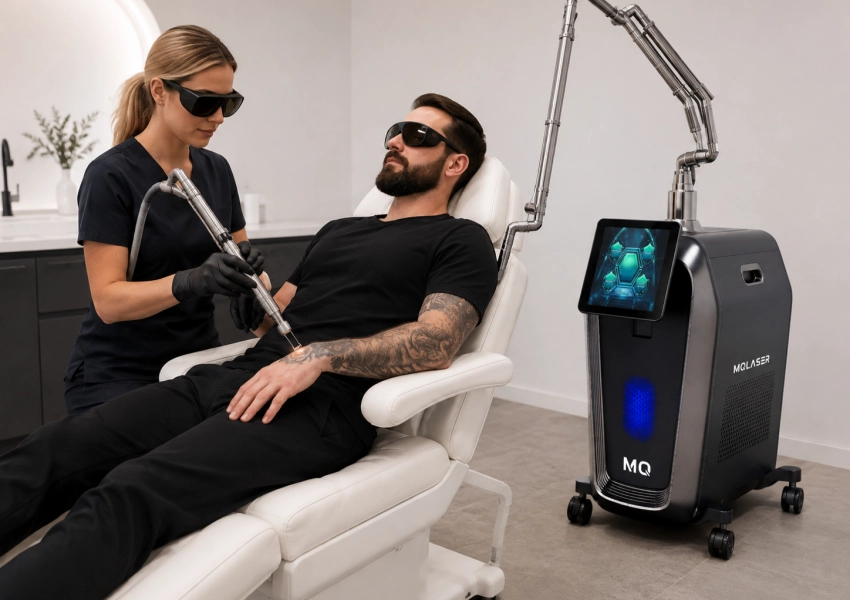
A tattoo removal service lives or dies by wavelength choice. The same client may bring black script, red pigment, faded eyebrow work, or an older mixed-color tattoo. If the machine treats every color as the same job, staff will struggle with inconsistent fading, longer appointment plans, and harder client conversations.
DEPELITE gives beauty businesses a picosecond laser platform built around the two essential tattoo removal wavelengths: 1064 nm and 532nm. For clinics, salons, and distributors, the real question is not whether one wavelength is better. It is how each wavelength behaves, how the device controls energy, and how reliably the supplier can support repeated service work.
Wavelength Choice Shapes The Service Menu
Tattoo removal wavelengths are not interchangeable labels on a screen. They decide how deeply light can travel, which pigment colors absorb energy more readily, and how staff should explain the likely number of sessions. A strong service menu starts with that technical difference, then turns it into a practical booking rule.
Black Ink Responds Differently From Warm Colors
1064 nm laser tattoo removal is usually the safer starting point for black and dark blue-black pigment because the wavelength travels deeper and is less aggressively absorbed by surface melanin. In a busy tattoo removal room, that matters. Dark tattoos are common, and many clients expect visible progress without a harsh recovery story after every visit.
A 532 nm laser tattoo removal works closer to the surface and is absorbed more strongly by red, orange, and some warm-toned pigments. It can be useful when a tattoo contains brighter ink that does not respond well to 1064 nm. The tradeoff is that shallow absorption calls for careful fluence selection and clear aftercare language.
Pigment Depth Changes The Treatment Plan
Older professional tattoos may contain dense pigment placed deeper in the skin. Cosmetic tattoo work, eyebrow pigment, and lip liner can sit differently and may include colors that shift response over time. Good staff need room to adjust spot size, energy, pulse mode, and interval between visits instead of pushing every client into one fixed package.
A picosecond laser machine should therefore help you design several service levels: black tattoo reduction, warm-color tattoo correction, cosmetic pigment fading, and selected skin-brightening programs where local rules allow. The value of 532 nm and 1064 nm is commercial as well as technical. Together they let one device cover more inquiries without turning the menu into guesswork.
How DEPELITE Handles 532 nm And 1064 nm Work
A machine must deliver stable pulses, a predictable beam shape, practical spot size adjustment, and an interface staff can use without constant supplier calls. DEPELITE was built for that daily operating reality, not only for a specification sheet.
Energy Range And Pulse Control Matter
DEPELITE is specified as a real picosecond laser with a 350 ps pulse width, 1064 nm and 532 nm wavelength output, 1-10 Hz frequency, 2-10 mm spot size, and 20-3000 mJ energy range. Its single-pulse mode covers 50-1200 mJ at 1064 nm and 20-600 mJ at 532 nm, while dual-pulse PTP mode can reach 300-2400mj at 1064 nm. Multi-pulse mode extends the platform to 500-3000mj work for selected rejuvenation-style programs.
That range gives operators more room to match the ink and service stage. Early sessions on dense black pigment may need different settings from later sessions on broken-down residue. Warm-color work using 532 nm often needs a more cautious path. DEPELITE also includes treatment parameter suggestions for 11 common items, so new staff can start from guided settings while experienced operators still adjust based on the client’s case.
Beam Delivery And Spot Stability Affect Repeatability
A tattoo removal business depends on repeatability. If the spot is uneven or the arm is difficult to control, the operator may overtreat one area and under-treat another. DEPELITE uses a 7-joint arm, uniform light spot design, 360-degree flexible rotation, adjustable light output, and a flat-top beam profile. These details support even energy distribution and reduce avoidable variation between sessions.
The device also carries built-in self-check functions with more than 30 detection points and a modular maintenance concept. For distributors, that matters because after-sales pressure can eat into margin quickly. A machine that is easier to check, maintain, and explain to technicians gives the channel a better base for selling picosecond laser equipment across more than one location.
Buyer Checks Before Adding Tattoo Removal
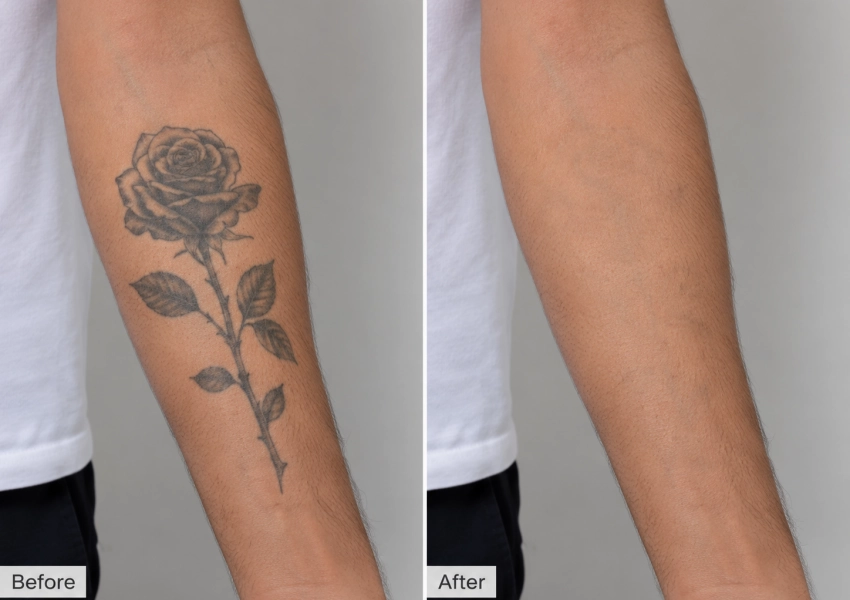
A tattoo service is not only a machine purchase. The buyer has to plan training, consent language, service intervals, room workflow, staff confidence, and the difference between realistic fading and overpromised removal. Wavelength choice should sit inside that full operating plan.
Training, Maintenance, And Room Flow
Before ordering, ask how staff will choose between 1064 nm and 532 nm, how they will record settings, and what maintenance checks are needed before a full appointment day. DEPELITE’s interface supports SP, PTP, and MP modes, with energy, frequency, and spot-size guidance for common work. That can shorten the learning curve, but buyers still need internal rules for patch testing, documentation, and return visits.
Tattoo removal appointments often include consultation, photography, protective eyewear, setting review, service time, cooling or comfort steps, and aftercare instruction. A platform with a clear display, adjustable spot size, and stable delivery can keep that workflow tidy. It also helps staff avoid long explanations when the client asks why black ink and red ink are handled differently.
Skin Tone, Ink History, And Client Expectation
When choosing laser tattoo removal equipment for your tattoo removal facility, it is crucial that your technicians have adequate information regarding tattoo removal. Information such as how to remove darker skin tones and tattoos of multiple layers, amateur tattoos and cosmetic tattoos, and removal of scarred areas and older cover-up tattoos can be provided.
That is where tattoo removal wavelengths become part of the sales conversation. A buyer should train staff to explain that wavelength selection improves targeting, but it does not erase the need for patience. This protects the business from refund disputes and helps clients accept a staged fading plan.
Where MQLASER Support Enters The Buying Decision
The product decision becomes sharper in the second half of sourcing. Once wavelength coverage and machine parameters look suitable, buyers should compare supplier behavior: customization, training, documentation, replacement parts, warranty communication, and whether technical questions get answered in workable detail.
OEM/ODM Choices For Local Markets
MQLASER supports OEM/ODM cooperation for buyers who need local branding, interface language, packaging, or market-specific service materials. DEPELITE’s software-guided treatment items, multi-mode interface, and compact picosecond platform make it suitable for private-label or distributor projects where staff need a clear operating story. The company also invests 15% of annual turnover into new product development, which matters when a channel needs updates rather than one static model.
For a buyer building a regional tattoo removal business, this can be more useful than one generic device. Marketing may need to focus on black tattoos in one city, eyebrow pigment in another, and mixed-color tattoo fading for salons. Custom materials and technical support help the machine fit the local service mix without adding unsupported claims.
Documentation And After-Sales Reduce Channel Risk
DEPELITE is supported by CE and RoHS documentation, while MQLASER product lines also use international certification systems such as CE, ISO, and RoHS. Buyers should still check destination-market rules, but certified documentation gives distributors a cleaner starting point for import, tender, and reseller files.
Ask for after-sales timing, spare-part availability, training files, and a written explanation of 532 nm and 1064 nm operation before confirming a batch order. If the team needs private-label support, service support should be part of the sourcing discussion early. Good wavelength coverage gets the service started. Good support keeps it profitable.
Conclusion
532 nm and 1064 nm are not competing answers. They solve different tattoo removal problems. 1064 nm tattoo removal lasers are used first on deeper pigments. In some cases, 532 nm laser tattoo removal may be added for the removal of warm colors. Tattoo removal lasers therefore provide the practitioner with a series of parameters and indications that are always expressed with extreme caution. Practitioners should always take into consideration factors such as darker skin types; multiple-layer tattoos; amateur tattoos; cosmetically applied tattoos; and tattooed scarred areas, for example, areas previously tattooed to cover up previous tattoos. This is why often a 1064 nm laser tattoo removal is used initially, as it is most effective at removing the darkest and deepest pigments in the tattoo. A 532 nm laser tattoo removal may then be added to the treatment to try and remove the red and warm colors in the tattoo closer to the surface. If you would like to learn more, please read this article.
FAQ
Q1: Which wavelength should be used first for black tattoo ink?
A1: 1064 nm is usually the first choice for black and blue-black pigment because it reaches deeper and is less reactive with surface color.
Q2: When does 532nm matter in tattoo removal?
A2: 532 nm is mainly used for warmer, more superficial pigments such as red and orange when 1064nm alone cannot clear the color efficiently.
Q3: Is DEPELITE suitable for mixed-color tattoo services?
A3: Yes. DEPELITE combines 1064 nm and 532 nm picosecond outputs, adjustable spot sizes, and multiple energy ranges for staged tattoo work.