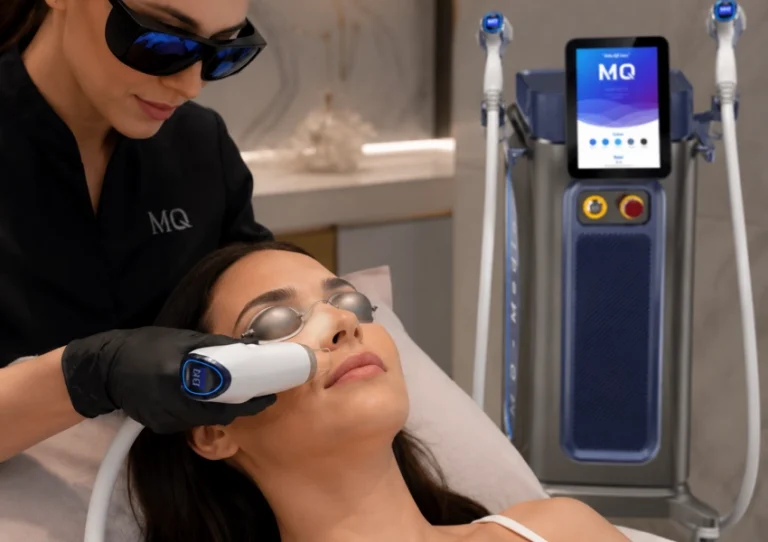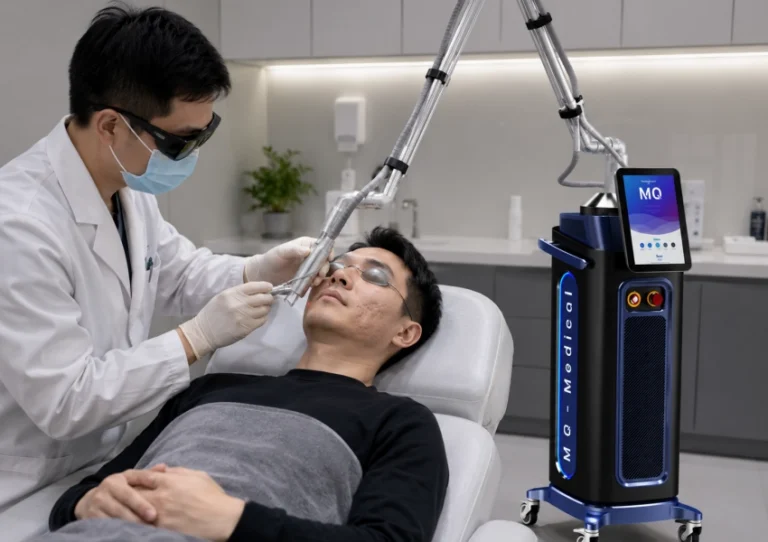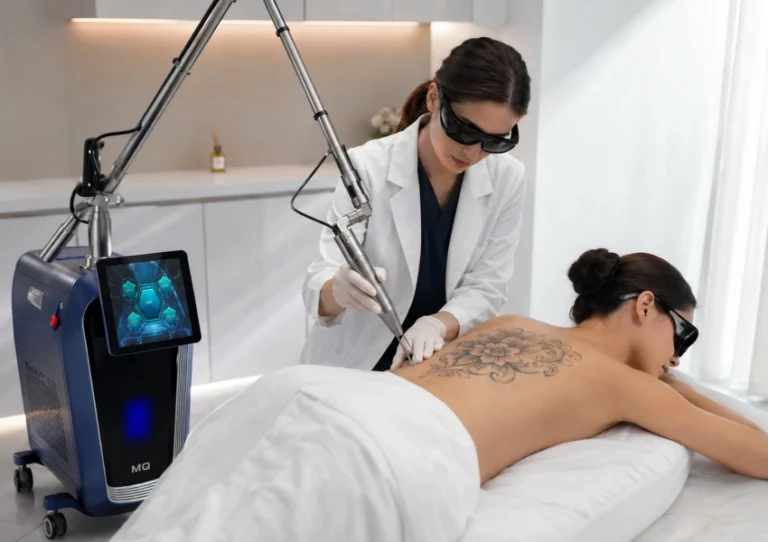
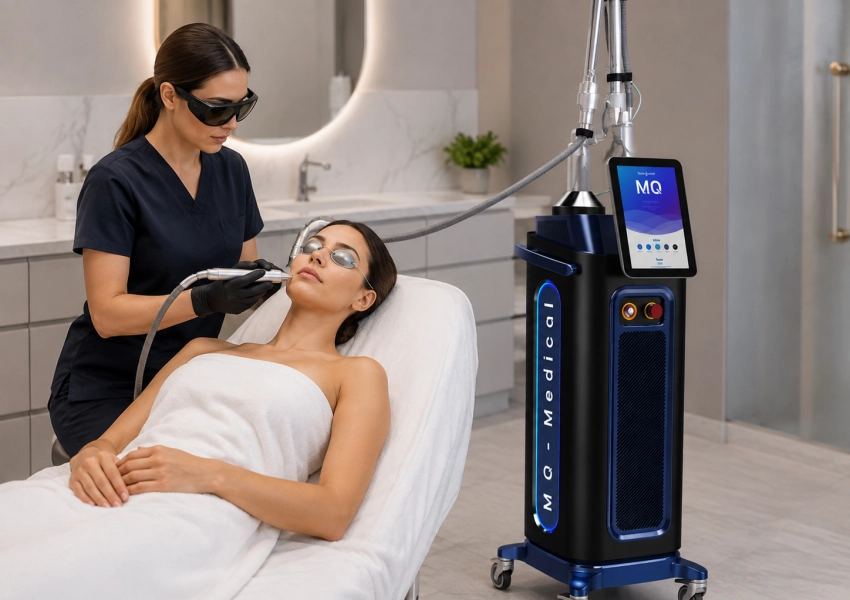
Clients rarely ask about scan patterns or pulse width first. They ask when redness settles, when makeup can return, and whether they can schedule a meeting two days later. For a beauty business, CO₂ fractional laser recovery time is therefore not just a skin response topic. It affects consultation scripts, booking gaps, package design, client reviews, and whether the same client returns for the next service.
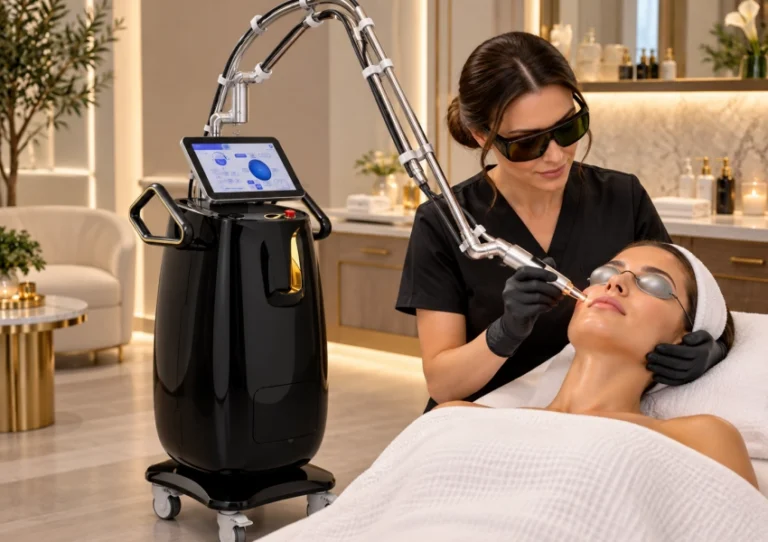
A stable device gives staff a better base for that conversation. DEPPLUS is built as a stationary fractional CO₂ laser platform with a 10600 nm wavelength, a 360-degree light-guiding arm, multiple scan modes, adjustable duration and interval settings, and tube options that include a USA Coherent RF-excited metal tube or glass laser tube. Those details matter because downtime communication should match the way energy is delivered.
Recovery Time Starts With Treatment Depth
A single recovery promise is risky. Superficial work, mixed-depth resurfacing, and deeper scar-focused work create different expectations. You can tell clients that lighter fractional settings may look calmer within a few days, while stronger resurfacing can need one to four weeks before the skin looks settled enough for public-facing plans. The business mistake is treating every CO₂ laser client consultation as the same script.
Use DEPPLUS Modes To Set Clear Expectations
DEPPLUS gives operators several ways to shape the service. Sequence, Random, Continue, and Ultra Pulse scan modes let a trained user adjust how dots are distributed across the target area. Its spiral pattern and smart spot design are useful for service planning because the superficial spiral approach is positioned for faster visible recovery, while combo work joins dots and spiral lines in one shot for broader correction needs.
For a new client or a client with a near-term event, the consultation should favor conservative scheduling. A deeper program may serve the business well when the client accepts longer fractional laser downtime. A lighter first session can be better when trust and repeat booking matter more than one aggressive visit.
Translate Energy Choices Into Booking Rules
The DEPPLUS has a scan scope up to 20 mm x 20 mm, a duration from 0.1 to 9.9 ms, a distance from 0.1 to 2.0 mm, an interval from 0.1 to 2 seconds, a repeat from 1 to 10, and power options from 15 W to 70 W. Those numbers should not be recited to clients. Higher density, shorter spacing, or stronger passes need more conservative follow-up windows.
Aftercare Should Sound Practical, Not Frightening
CO₂ laser aftercare expects warmth and redness first; avoid picking; keep the area clean; follow the trained operator’s product guidance; avoid strong sun exposure; and book follow-up checks based on the service depth.
Give Clients A Timeline They Can Use
A useful timeline separates early redness, dry texture, small crusting, and gradual tone improvement. DEPPLUS has a shorter recovery around lighter spiral-style work and lists broader CO₂ recovery as variable, from about 7 to 30 days depending on depth and skin response. It helps staff steer clients away from booking a deeper service right before travel, photography, or public events. For beauty businesses, the safest consultation line is not a guaranteed date. It is a planning window. Light resurfacing may fit a shorter social break; deeper programs should be booked when the client can accept visible recovery.
Connect Aftercare To Machine Maintenance
Aftercare confidence depends on device consistency. DEPPLUS uses air and water cooling, and the CO₂ user guidance highlights clean optics, clean accessories, good ventilation, proper water use, and routine power calibration. A salon buyer should treat those items as part of client care. If output drifts or optics are dirty, staff cannot communicate recovery time with the same confidence.
DEPPLUS Features That Help Staff Control Service Experience
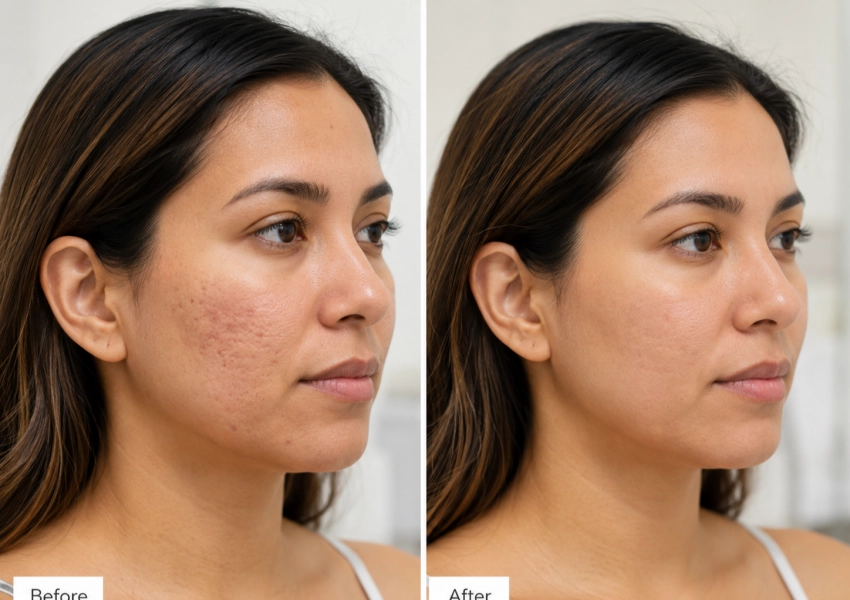
A fractional CO₂ laser machine for a busy beauty business has to do more than fire energy. It should make daily work repeatable. DEPPLUS supports Fractional Working Mode and Cutting Working Mode, plus software-based scan control. The 360-degree light guiding arm helps operators move smoothly, and the stable optical path supports consistent delivery across the service area.
Tube Choice And Power Stability Matter
The USA Coherent RF-excited metal tube option is positioned for long life and stable output. It has 70 W high energy, a 10600 nm wavelength, and power stability around +/-3%. For buyers, that stability supports repeatable protocols across staff and branches. It also helps reduce the gap between what sales staff promise and what operators can deliver.
The business does. Tube life, power stability, cooling structure, and maintenance access affect service cost and downtime. When those items are weak, the machine may still work, but the business loses consistency.
Use Presets As A Service Language
DEPPLUS work modes can be translated into service tiers. A mild texture program can be sold with a shorter downtime window. A combo program can be positioned for clients who accept a longer recovery plan. A deeper resurfacing visit should be scheduled with stronger follow-up and clearer aftercare notes. This is where product detail becomes business value.
Buyer Checks Before Adding CO₂ Services
CO₂ service success depends on the whole room. Before ordering, confirm power supply, room ventilation, staff training, cleaning procedure, cooling water rules, accessory replacement, and technical support. The user guidance for CO₂ systems calls for trained operation, clean treatment heads after each session, water circulation checks, dust control, and annual power calibration. Those points are not back-office details; they reduce avoidable service variation.
MQLASER can support this side of the purchase through product training, 1V1 service, marketing support, distributor support, and after-sales guarantees. The company also has an experienced R&D team, supports OEM/ODM projects, invests 15% of annual turnover into new product development, and supplies products with CE, ISO, and RoHS certification support. For distributors, MQLASER is more than a hardware name when project support and repeat ordering matter.
If a buyer plans to add CO₂ services across several locations, MQLASER project support should be reviewed together with training documents, spare parts, warranty terms, and software update policy. A good machine helps. A good rollout plan protects the margin.
Conclusion
CO₂ fractional laser recovery time should be presented as a managed planning window, not a promise squeezed into one number. DEPPLUS gives beauty businesses the technical base for that conversation: 10600 nm CO₂ energy, stable light guidance, multiple scan modes, Smart Spot and Spiral Pattern options, adjustable parameters, cooling support, and tube choices for long-term service. When staff connect those features to aftercare, booking intervals, and maintenance discipline, CO₂ services become easier to sell responsibly and easier to repeat. If you are also wondering more, our article answers that.
FAQ
Q1: How long is CO₂ fractional laser recovery time?
A1: It depends on depth and settings. Light work may calm within days, while deeper resurfacing can need about 7 to 30 days before the appearance fully settles.
Q2: What should CO₂ laser aftercare include?
A2: Keep the area clean, avoid picking, follow approved product guidance, protect from strong sun exposure, and book follow-up based on service depth.
Q3: Why does DEPPLUS help client consultation?
A3: DEPPLUS offers scan modes, adjustable settings, stable optical guidance, and tube options, helping staff match downtime language to the selected service level.