An EMS seat purchase looks simple until the buyer starts counting daily appointments, operator time, coil cooling, warranty calls, and whether the machine can be adapted for a local salon chain. BTL Emsella has strong brand recognition in pelvic wellness. DEPMAX is positioned differently: a factory-direct EMS seat machine for beauty businesses, wellness centers, distributors, and postpartum service providers that need stronger buying flexibility. This DEPMAX vs BTL Emsella comparison is built around sourcing questions a buyer can actually test. The aim is to help you decide whether a premium imported system or DEPMAX fits your service model, budget, and support plan better.
Start With Technology, Not Brand Memory
Both systems sit in the same basic category: non-invasive electromagnetic stimulation for seated pelvic-floor programs. The business difference comes from magnetic intensity, contraction count, cooling structure, operating freedom, and cost. For a buyer ordering several units, those details can affect monthly revenue more than brand recognition alone.
HIFEM Positioning And Session Output
BTL Emsella is positioned as a HIFEM platform that can induce about 11,200 contractions in a 30-minute session. DEPMAX is also built around focused magnetic HIFEM technology, with about 15,000 contractions in 30 minutes and a 1-100 Hz frequency range for program control.
For a distributor, that difference should be tested. Ask for a live energy test, a continuous-run demonstration, and a written service protocol. DEPMAX can support on-site energy testing, useful when a sales team needs proof before a larger order.
Magnetic Strength And Penetration Depth
BTL Emsella can up to 2.5 Tesla. DEPMAX is from 3 to 7 Tesla, with an 8 cm listed depth, a 7 to 10 cm depth range, and a 3.0 to 4.0 Tesla peak reference. Stronger maximum output is useful only when the coil, cooling, software, and comfort design keep the session stable. A practical EMS seat comparison should ask how energy feels through clothing, how the operator adjusts intensity, and whether the machine can keep output steady during repeated bookings.
Instrument Performance And Core Parameters
| Area | BTL Emsella | DEPMAX From MQLASER |
| Technology type | HIFEM electromagnetic stimulation, widely recognized in pelvic wellness markets. | HIFEM focused magnetic EMS seat for beauty business and distributor purchasing. |
| Contractions per session | About 11,200 contractions in 30 minutes. | About 15,000 contractions in 30 minutes; thousands of supramaximal contractions are positioned for one session. |
| Magnetic intensity | Up to 2.5 Tesla for the EMSELLA applicator. | 3-7 Tesla specification. |
| Frequency range | HIFEM stimulation. | 1-100 Hz, useful for program planning and operator control. |
| Stimulation depth | Positioned for deep pelvic-floor musculature coverage. | 8 cm. |
| Session protocol | About 30 minutes per session. | 30-minute EMS seat sessions; duration and intensity can be adjusted by the operator. |
| Comfort and privacy | Fully clothed, non-invasive, no downtime, strong client acceptance. | Fully clothed, non-invasive, operator-light workflow, portable iPad control, no pads or gels required. |
| Cooling and durability | Advanced circulating cooling is positioned for high-volume use. | Air cooling, stable output, no energy drop during continuous use, and 24-hour continuous-work support. |
| Size and weight | Not published on the reviewed public page. | 110 x 60 x 50 cm; 95 kg; 110/220 V power supply. |
Business Fit, ROI, And Procurement Risk
The second layer is commercial. An EMS seat may have no consumables, but it still carries costs: purchase price, service downtime, operator training, shipping, parts, warranty handling, and marketing support. A high-priced branded seat can work well where clients already ask for the name. A factory-direct platform can work better where the buyer must place multiple machines or sell through dealers.
Price Logic And Payback Period
DEPMAX gives a reference price around USD 3,000, subject to configuration, shipping, taxes, and order terms. BTL Emsella is positioned as a higher-priced imported device. If a premium brand supports higher session pricing, payback can still work. If the local market is price-sensitive, DEPMAX can reduce the booked sessions needed before breakeven.
For example, a wellness center adding one EMS seat may care most about brand trust. A distributor ordering five or ten seats will likely care more about landed unit cost, customization, delivery schedule, spare parts, and whether the pelvic floor chair supplier can support dealer training.
Maintenance And No-Consumable Service Design
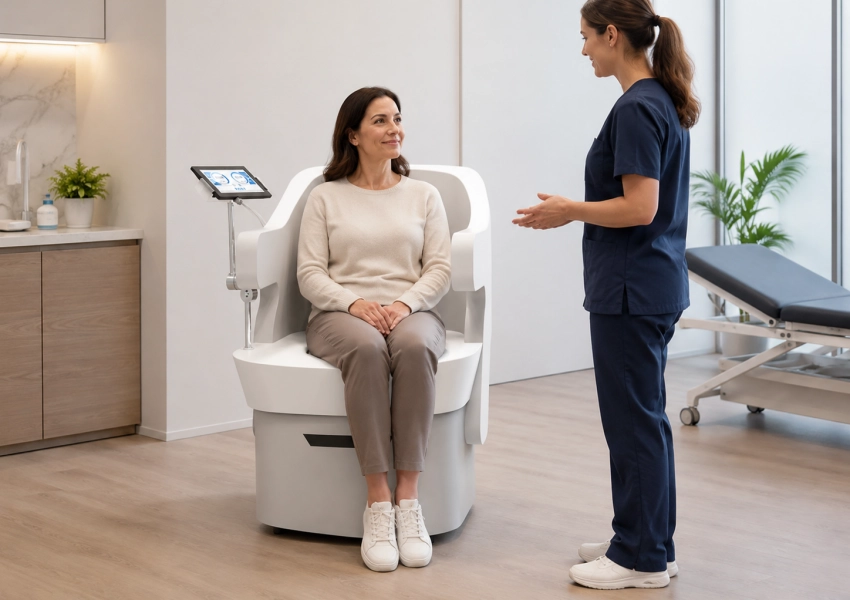
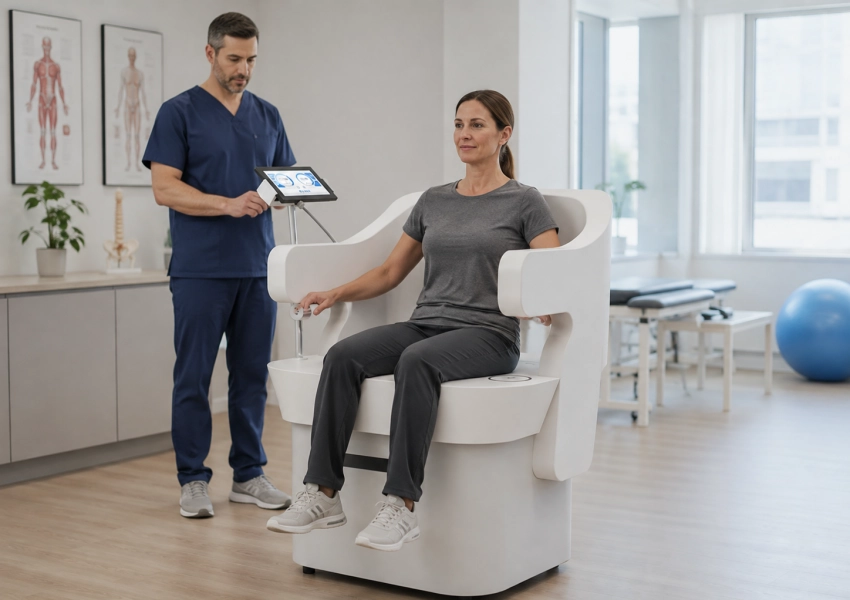
DEPMAX has a strong operational argument: no gels, electrode pads, lubricants, or similar consumables are needed for the standard seated program. Clients remain fully clothed, and the operator can manage energy intensity and time from an iPad-style control interface. For staff scheduling, that reduces setup time and keeps the room easy to reset between appointments.
B2B Cooperation Comparison
A serious EMS seat order should also compare supplier cooperation. This is where MQLASER has a different value profile from a tightly controlled premium platform. The buyer still needs compliance checks in the destination market, but DEPMAX offers more room for local business planning.
| B2B Factor | BTL Emsella | DEPMAX From MQLASER |
| Customization | Usually purchased as a branded premium system with limited private-label flexibility. | Supports technical parameter, software, appearance, and project-level customization discussion. |
| Cost-performance | Strong where premium brand pull supports higher service pricing. | Stronger for distributors, chains, and salons needing lower entry cost and flexible package pricing. |
| R&D cooperation | Technology updates follow the brand’s internal roadmap. | MQLASER has an experienced R&D team and invests 15% of annual turnover into new product development. |
| Market flexibility | Best where the brand already carries demand. | Fits mixed markets: postpartum centers, beauty salons, wellness rooms, dealers, and regional private-label projects. |
| After-sales and supply | Buyers should confirm local service response, parts lead time, and warranty scope. | 1V1 service, product training, marketing support, after-sales guarantee, distributor support, and OEM/ODM discussion. |
| Certification support | Premium brand documentation should be checked by target market. | CE, ISO, and RoHS support help B2B buyers prepare import and sales documentation. |
How To Choose Before Ordering
The better EMS seat depends on who will sell it and how quickly the machine must pay back. BTL Emsella can be a strong choice for high-end buyers who rely on name recognition and can charge a premium session price. DEPMAX is more attractive when you need an Emsella alternative with lower procurement pressure, flexible branding, and direct supplier communication.
Before placing an order, ask for magnetic intensity test data, frequency range, cooling design, session protocol, warranty terms, spare-part lead time, and training materials. If the order is for resale, ask whether the supplier can help with packaging, interface language, marketing documents, and market-specific program settings. The broader EMS seat machine category and MQLASER support structure can help buyers plan a complete channel package rather than a one-off purchase.
MQLASER’s OEM/ODM ability matters most when the buyer wants to build a differentiated offer. Appearance, software, service menu language, and documentation can carry real commercial value. That is especially true for distributors who want a stable pelvic floor chair supplier rather than a one-time machine seller.
Conclusion
DEPMAX vs BTL Emsella is not a simple premium versus low-cost choice. BTL Emsella brings strong brand recognition, public HIFEM positioning, fully clothed sessions, and no downtime. DEPMAX brings a sharper B2B case: 15,000 contractions in 30 minutes, 3-7 Tesla, a 1-100 Hz frequency range, an 8 cm listed depth, air cooling, no consumables, customization options, and a lower cost base. For beauty businesses and distributors, DEPMAX deserves a serious test when ROI and market flexibility matter as much as brand awareness. Continue reading our other guide.
FAQ
Q1: Is DEPMAX an Emsella alternative?
A1: No. DEPMAX is an EMS seat using HIFEM focused magnetic technology, with 1-100 Hz frequency, 3-7 Tesla specification, and fully clothed seated sessions.
Q2: Which machine has stronger listed magnetic intensity?
A2: BTL up to 2.5 Tesla. DEPMAX is 3-7 Tesla.
Q3: Why does no-consumable operation matter?
A3: No pads, gels, or similar consumables reduce setup time, recurring cost, storage pressure, and room reset work for salons and distributors.