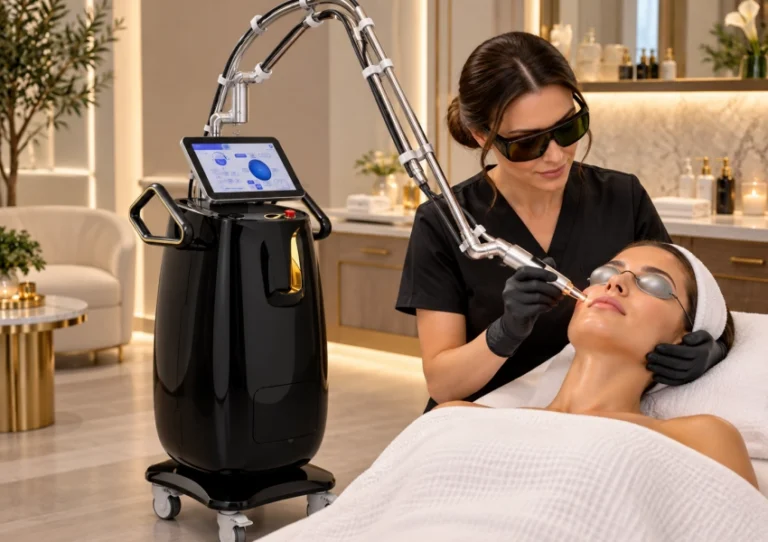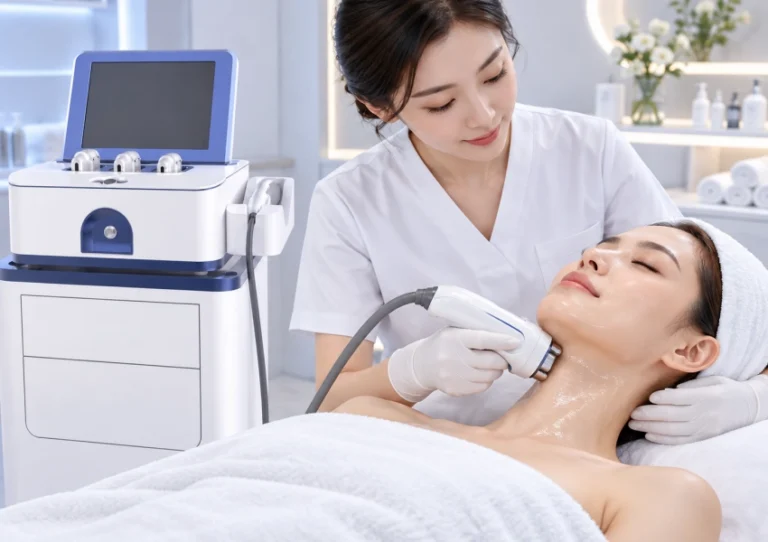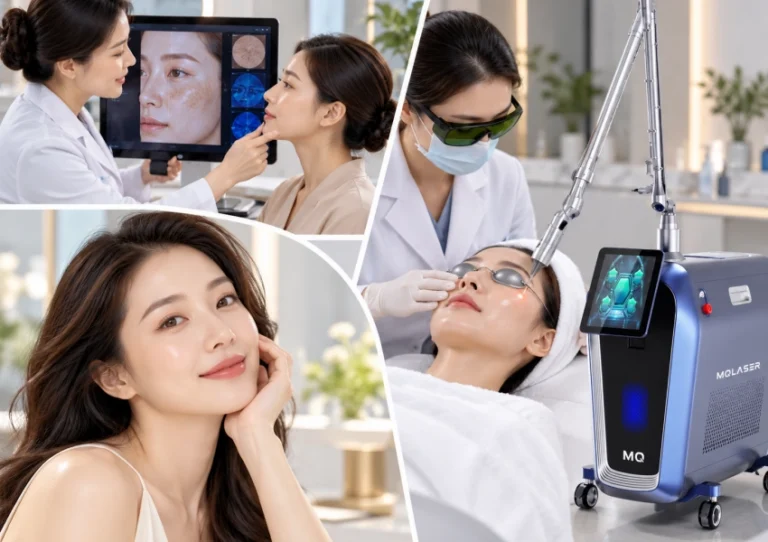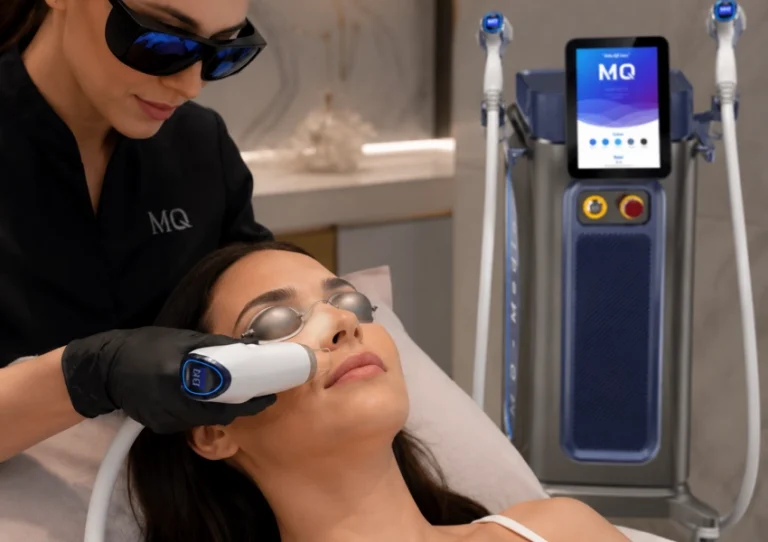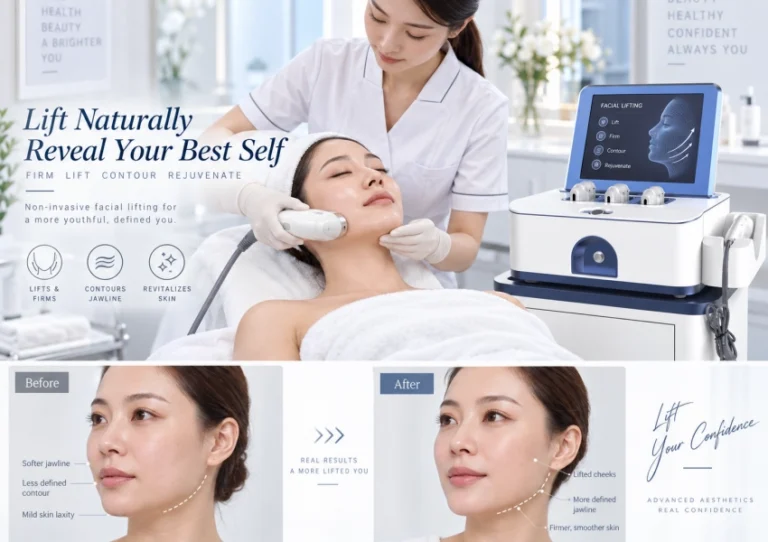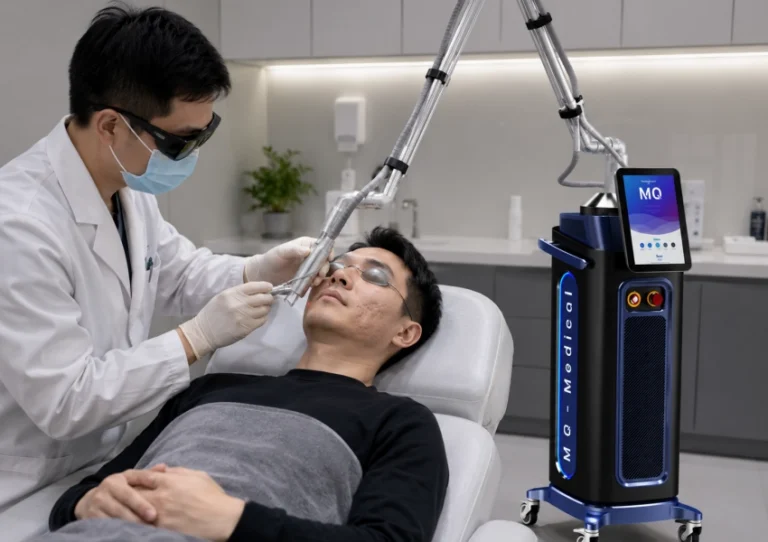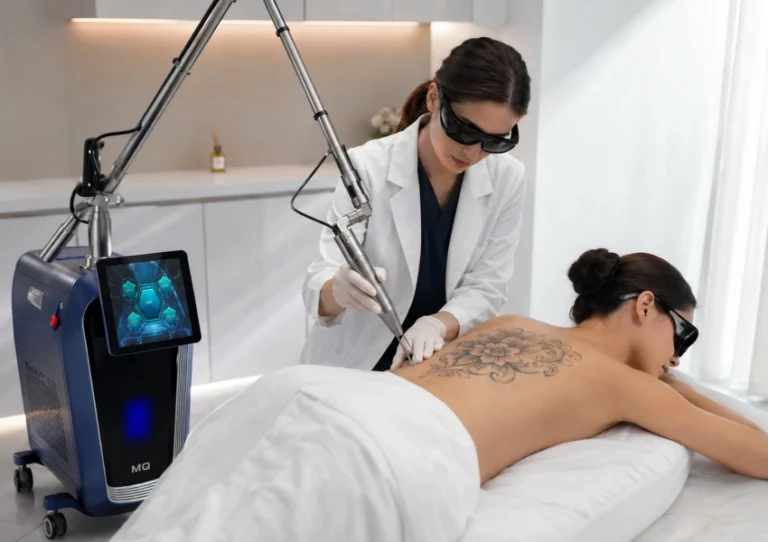
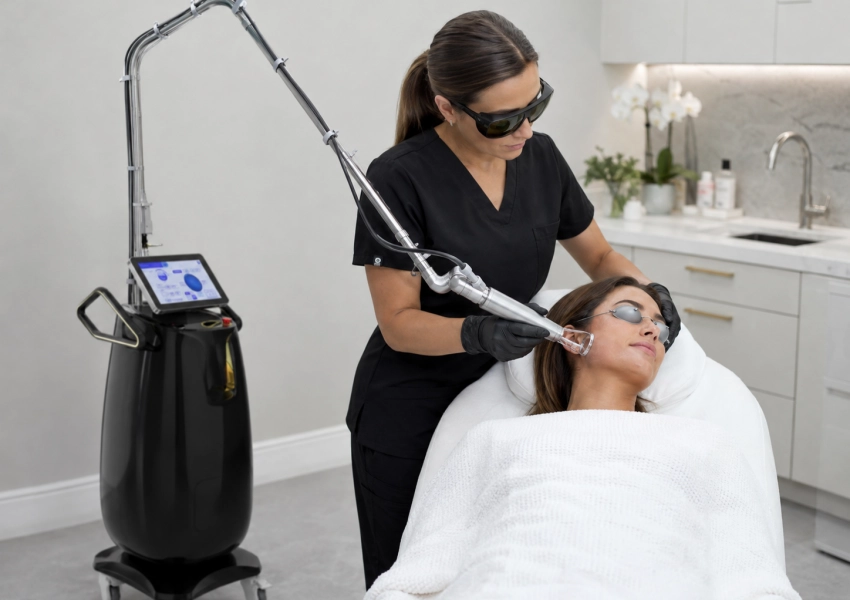
Low-downtime skin programs are attractive because they fit real calendars. Clients may accept mild redness, a sandpaper-like texture, or a few days of visible dryness, but many do not want a long recovery window. That is why 1927 nm thulium systems have become a serious category for beauty clinics and distributors.
Cynosure Lutronic Ultra vs MQLASER ThuliWave is not only a brand comparison. It is a 1927 nm thulium laser comparison about treatment pace, tip design, ownership cost, interface control, and how well the platform fits year-round skin brightening, texture, pore, and pigment programs. ThuliWave is MQLASER’s 1927 nm thulium laser machine for buyers who want low downtime with factory-direct flexibility.
Low-Downtime 1927 nm Programs Need The Right Device Logic
A 1927 nm laser sits in a useful middle ground. It targets water strongly enough to create controlled epidermal and upper dermal heating, yet it does not behave like an aggressive fractional CO₂ system. That lets you build lighter repeat programs instead of selling every case as deep resurfacing.
Why 1927 nm Sits Between Gentle And Aggressive
1927 nm thulium energy is targeting the lower epidermis and upper dermis, where pigmentation, discoloration, wrinkles, pore texture, and early laxity are often addressed in aesthetic programs. Its water absorption is higher than 1550 nm Er:Glass and lower than 10600nm CO₂, giving buyers a practical route between non-ablative gentleness and ablative downtime.
Lutronic Ultra is also positioned around 1927 nm thulium work. It has 200 μm microbeams, controlled fractional delivery, and low-downtime resurfacing programs. For a clinic, the decision is not whether 1927 nm is useful. It is how much device control, tip flexibility, supplier support, and cost structure the business needs around that wavelength.
Client Scheduling Makes Downtime A Business Issue
Low downtime changes the service calendar. A clinic can place 1927 nm programs around lunch breaks, monthly maintenance, seasonal brightening, or pre-event texture improvement. It creates repeat booking potential, but staff must still explain that lower downtime does not mean no reaction or one-session perfection.
ThuliWave is built around non-ablative or sub-ablative fractionated treatments that can be tuned from mild to more aggressive. It has all-year use, low cost of ownership, no shot limit per procedure, non-consumable thulium fiber, and easy delegation. Those details matter when a low-downtime program needs steady appointment volume rather than occasional high-ticket resurfacing work.
Performance Comparison: Ultra And ThuliWave
Lutronic Ultra has strong premium positioning and refined tracking features. ThuliWave gives more factory-level parameter visibility, which helps distributors and multi-site buyers discuss service design before placing an order.
Energy Delivery And Treatment Speed
ThuliWave delivers a maximum of 20W power and uses a top-hat beam profile for consistent treatment coverage. It has a 200 μm beam diameter, 200-300 μm maximum ablative depth, and full-face treatment in about 6-8 minutes. Those values are useful for buyers planning room turnover, staff workload, and package pricing.
Lutronic Ultra has a 15-20 minute treatment positioning, 200 μm microbeams, non-ablative fractional delivery, IntelliTrak speed sensing, and Controlled Chaos pattern delivery. That supports premium workflow consistency. A buyer should test whether the extra tracking features justify the acquisition cost in the intended market.
| Factor | Cynosure Lutronic Ultra | MQLASER ThuliWave |
| Wavelength | 1927 nm thulium laser platform for low-downtime resurfacing. | 1927 nm thulium laser for non-ablative or sub-ablative fractionated programs. |
| Beam / microbeam | 200 μm microbeams. | 200 μm beam diameter with top-hat beam profile for consistent coverage. |
| Treatment time | Around 15-20 minutes. | Full face treatment can be about 6-8 minutes. |
| Power and depth | Detailed power values are not always presented. | Maximum 20W power; maximum ablative depth around 200-300um for superficial epidermal pigment work. |
| Workflow control | IntelliTrak and Controlled Chaos support consistent motion and pattern delivery. | Separate pulse duration and power settings, graphical interface, replaceable tips, and roller tip support service control. |
| Tip options | Premium system supports guided fractional delivery and branded consumables/accessories. | Tip 10mm, 15mm, 20mm, 30mm, roller tip, and ergonomic handpiece for multiple areas. |
Handpiece, Tips, And Interface Control
Handpiece behavior can decide whether a 1927 nm program feels easy to delegate. A heavy, awkward, or limited handpiece slows appointments and raises training friction. ThuliWave uses an ergonomic handpiece, replaceable tips, a flexible tube and rack, and an ultra-clear graphical interface. The system can also support printed branding on machine appearance and software for private-label projects.
That matters for a 1927 nm laser machine sold through distributors. A single flagship clinic may prefer a premium name and a locked workflow. A regional chain may value tip variety, interface localization, lower cost of ownership, and easier staff training across several sites.
Procurement Factors Beyond The Treatment Room
Once the performance comparison is clear, the buying conversation shifts to finance and support. Low-downtime programs often depend on repeat visits and modest per-session pricing. If the device cost, consumables, or service delays are too heavy, the calendar can look full while the payback still moves slowly.
Cost Of Ownership And Maintenance Exposure
ThuliWave has a strong ownership case: non-consumable thulium fiber, long lifetime, low maintenance cost, no shot limit per procedure, and minimal cost of ownership. These points fit clinics selling series packages without counting every shot as a hidden cost.
Training, Branding, And Channel Adaptation
Training should cover settings, pass patterns, endpoint language, contraindication screening, aftercare, and when to step up or down in intensity. ThuliWave separates pulse duration and power settings, which helps staff build mild, standard, and stronger treatment menus. A buyer can also use replaceable tips to match face, neck, and selected body-area programs.
MQLASER supplier support includes OEM/ODM, interface and appearance discussions, product training, and project support. Its R&D team invests 15% of annual turnover into new product development, while CE, ISO, and RoHS systems support B2B documentation. These supplier factors should not appear at the top of a sales page, but they matter once a buyer is deciding whether a device can scale beyond one room.
Choosing The Better Fit For Your Market
A 1927 nm thulium laser comparison should end with market fit. The better platform depends on your pricing power, staff experience, client expectations, and whether your business model is single-site premium treatment or multi-site distribution.
When A Premium Platform Makes Sense
The Cynosure Lutronic Ultra may fit clinics that want a premium 1927 nm name, guided speed sensing, branded positioning, and strong recognition among providers who already follow that category. If your city supports higher pricing and your staff can turn premium demand into full booking days, the acquisition cost may be easier to justify.
The main risk is overbuying for a low-downtime menu that will be sold at moderate local prices. A buyer should calculate payback using realistic weekly sessions, not only ideal utilization. Also ask about service response, handpiece replacement, software support, and training costs before using premium recognition as the only deciding factor.
When ThuliWave Gives More Commercial Room
ThuliWave is stronger when the buyer wants a thulium laser resurfacing platform with visible parameter detail, short full-face treatment time, replaceable tips, low maintenance exposure, and private label room. It fits beauty clinics, distributors, and salon chains that need a practical 1927 nm service menu without locking all margin into equipment acquisition.
| B2B Factor | Cynosure Lutronic Ultra | MQLASER ThuliWave |
| Customization | Usually sold as a premium branded system with a more standardized positioning. | OEM/ODM can discuss machine appearance, software branding, language, and local package material. |
| Cost-performance | Strong where premium recognition supports higher session prices. | Stronger where lower cost of ownership and no shot-limit workflow improve payback. |
| New technology cooperation | Updates follow the premium brand roadmap. | R&D feedback can move through MQLASER project cooperation and annual development investment. |
| Market flexibility | Best for premium clinics with existing demand for the brand. | Fits clinics, salons, distributors, and private-label projects needing a 1927 nm program layer. |
| After-sales and supply | Buyers should confirm local service, parts timing, and training scope. | Training, project support, certification files, and supplier communication support channel rollout. |
Conclusion
The Cynosure Lutronic Ultra has strong premium value for clinics that want brand recognition, tracking features, and a polished 1927 nm service story. MQLASER ThuliWave is stronger where buyers need a practical 1927 nm laser machine with 20W maximum power, top-hat beam profile, a 200 μm beam diameter, a 6-8 minute full-face workflow, 10-30 mm tips, low maintenance cost, no shot limit, and OEM/ODM support. For low-downtime programs, ThuliWave gives more room to control payback and market positioning. For more detail, see our guide on this article.
FAQ
Q1: Is ThuliWave a direct replacement for Lutronic Ultra?
A1: It is a 1927 nm thulium alternative for buyers comparing workflow, parameter control, ownership cost, and supplier flexibility, not a claim of identical design.
Q2: What downtime should clinics discuss for 1927 nm programs?
A2: Discuss mild redness, dryness, and texture changes first. Downtime depends on settings, passes, skin condition, and aftercare quality.
Q3: Why does no shot limit matter?
A3: No shot limit helps clinics plan repeat programs with clearer cost control, especially when pricing depends on packages rather than one-off premium sessions.